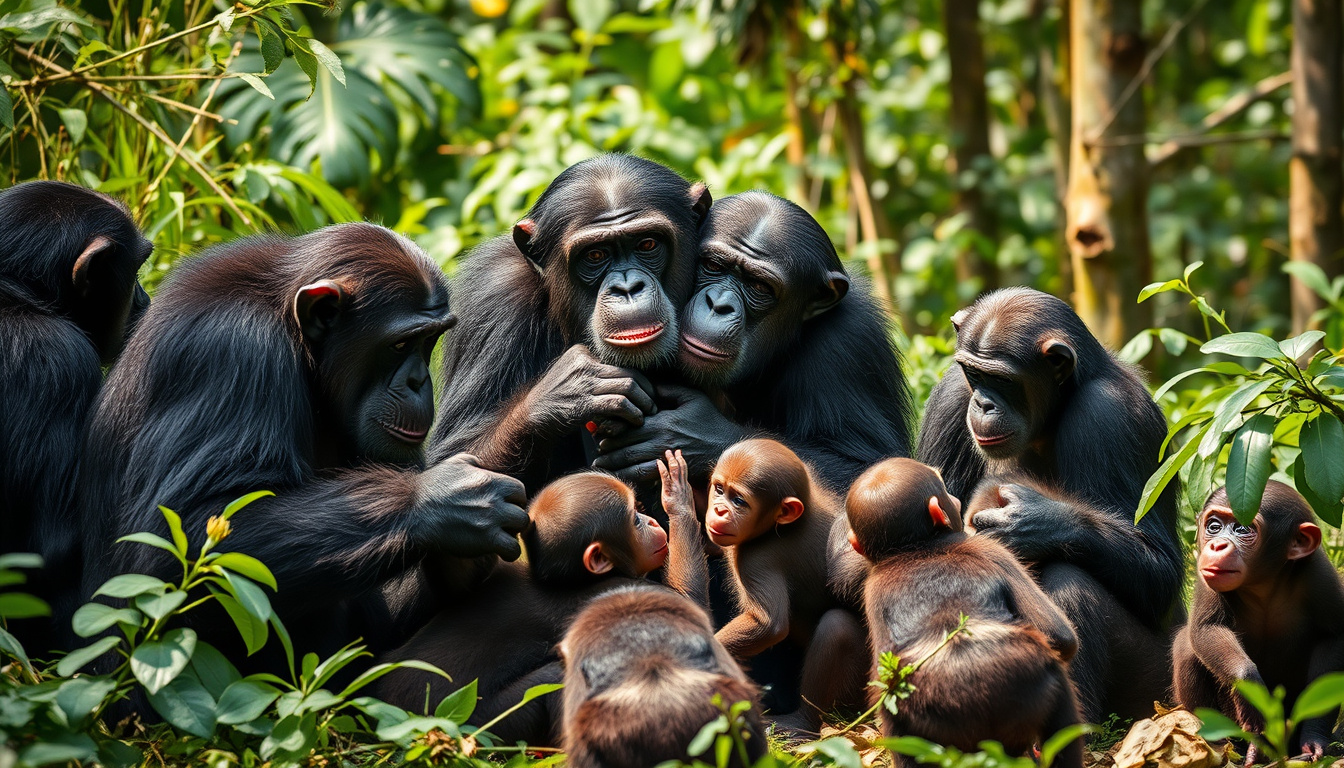

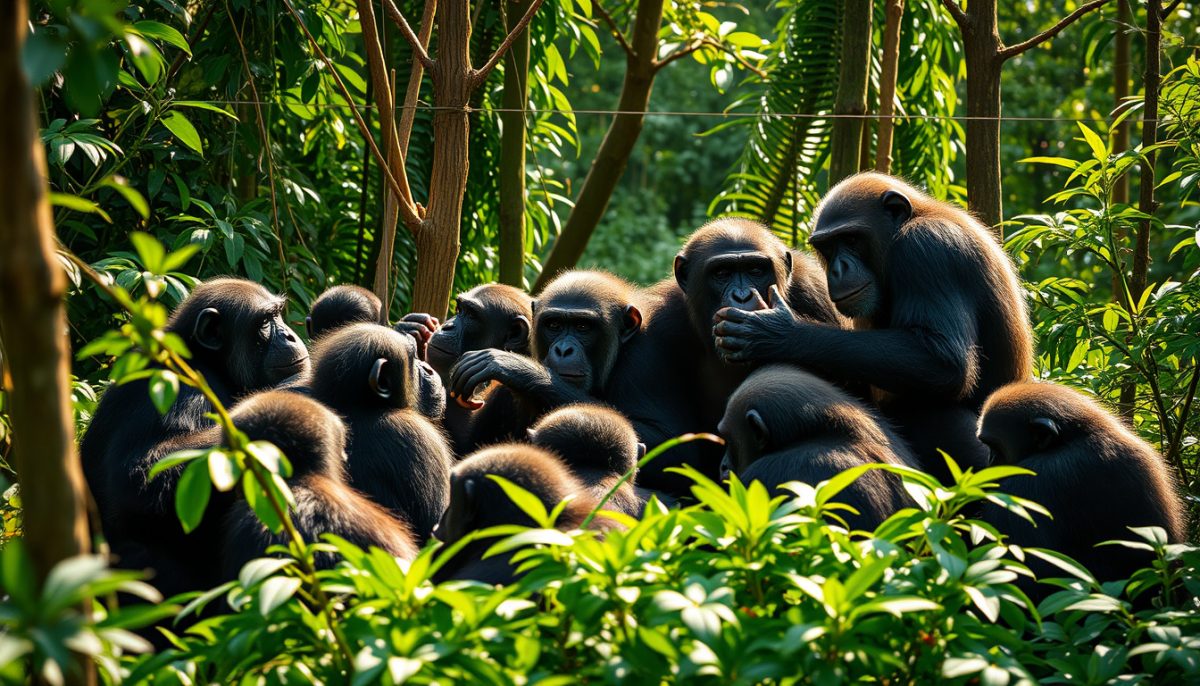
In the dense, misty jungles of Uganda, the rustling leaves challenge a moment of tranquility as a troop of chimpanzees playfully tumbles and glides through the branches.
This lively scene is not just a whimsical display of nature; it’s a window into an intricate world of chimpanzee group dynamics.
Here, social structures dictate the very essence of life, shaping interactions, forging alliances, and navigating conflicts within these remarkable primate societies.
As we delve into the captivating lives of our closest relatives, we will uncover the complexities of their social hierarchies, the weight of friendships, and the unyielding bonds that govern their communities.
From the vital roles that each member plays to the lessons we can glean for our own society and conservation efforts, the study of chimpanzee group dynamics offers a compelling narrative worth exploring.
 Igwara Lodge](https://www.igwara.com/).
Nestled within nature, it offers both tranquility and luxury, allowing you to relax and recharge after a day of adventure amid these fascinating primates.
## Conclusion
Chimpanzee group dynamics unveil layers of complexity that echo our own societal structures and interactions.
Studying their clever methods of communication, alliance building, and conflict resolution provides not only a window into the lives of these incredible primates but also insights into the evolutionary underpinnings of our own behaviors.
As you ponder this connection, consider how engaging with chimpanzees in Uganda can enrich your understanding of life itself.
From familial bonds to social strategies, the world of chimpanzees invites you to explore the untold stories of our closest relatives.
To take a step closer to these captivating experiences, request the top 3 curated Uganda chimpanzee tours by texting “chimpanzee” to info@bushmansafaris.com or +256 704 902398 (WhatsApp).
Discover the enchantment of these primate communities for yourself!
The Importance of Hierarchy in Chimpanzee Groups
Chimpanzee group dynamics are profoundly influenced by a complex hierarchy that governs their social interactions.
Within these intricate communities, individuals are often stratified into a rank order, where dominant males typically wield significant influence over feeding and mating opportunities.
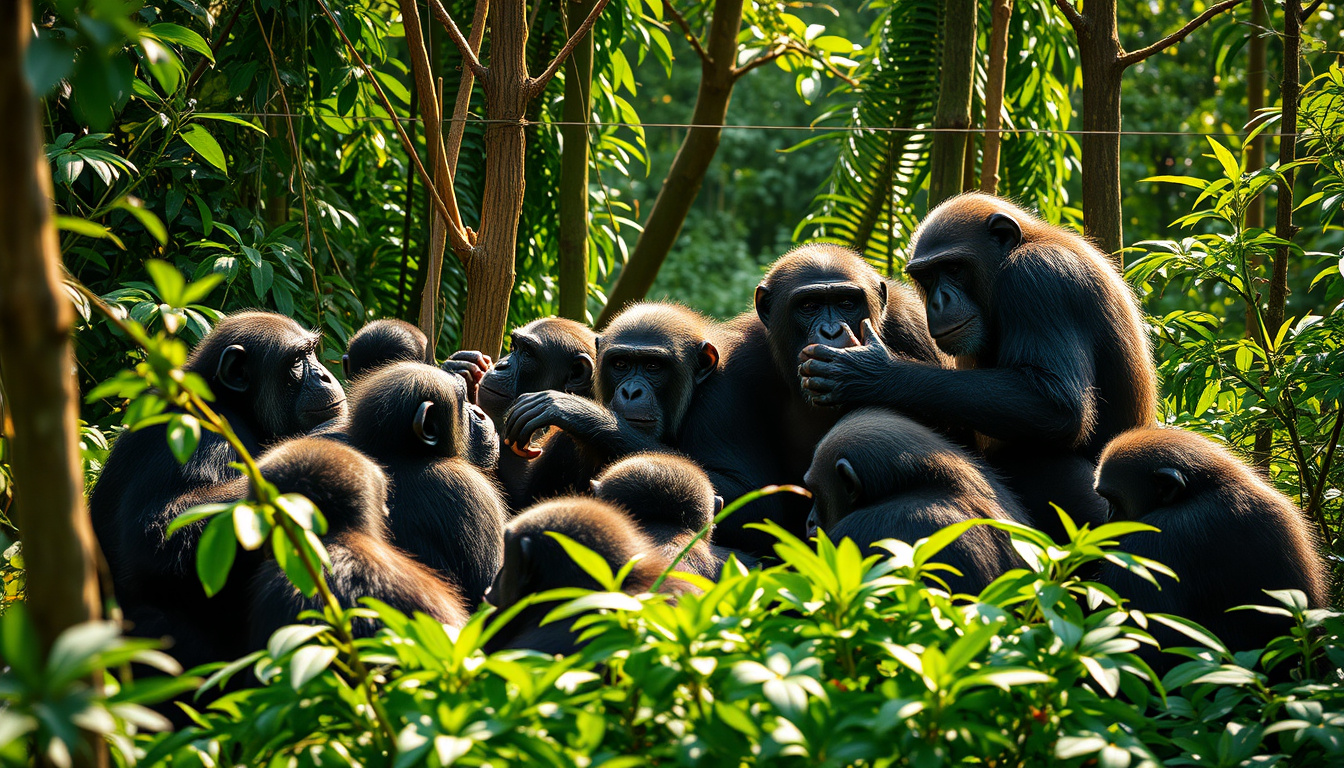
This power structure is not merely about aggression or strength; it encompasses sophisticated behaviors, such as grooming and coalition-building, which reinforce bonds and alliances among chimps.
For example, lower-ranking individuals may engage in grooming sessions with more dominant members to secure favor, highlighting the social negotiation that occurs within their daily lives.
This social stratification is crucial for the stability of the group; a clear hierarchy helps reduce conflict over resources and can enhance survival by fostering teamwork in seeking food and protecting against external threats.
Understanding chimpanzee group dynamics offers invaluable insights into their behavior, revealing parallels to human social structures and the evolutionary roots of our own social interactions.
When visiting Uganda’s lush forests, witnessing these interactions firsthand can deepen our appreciation for the complexities of life within chimpanzee communities.
‘The greatness of a nation and its moral progress can be judged by the way its animals are treated.’ – Mahatma Gandhi
Social Bonds: Friendships and Alliances among Chimpanzees
## Social Bonds: Friendships and Alliances among Chimpanzees
Chimpanzee group dynamics reveal a complex web of relationships that parallel human social structures in profound ways.
Within their communities, these intelligent primates forge friendships and alliances that are critical for survival and social harmony.
Unlike solitary animals, chimpanzees thrive on social interactions and form intricate bonds with their peers.
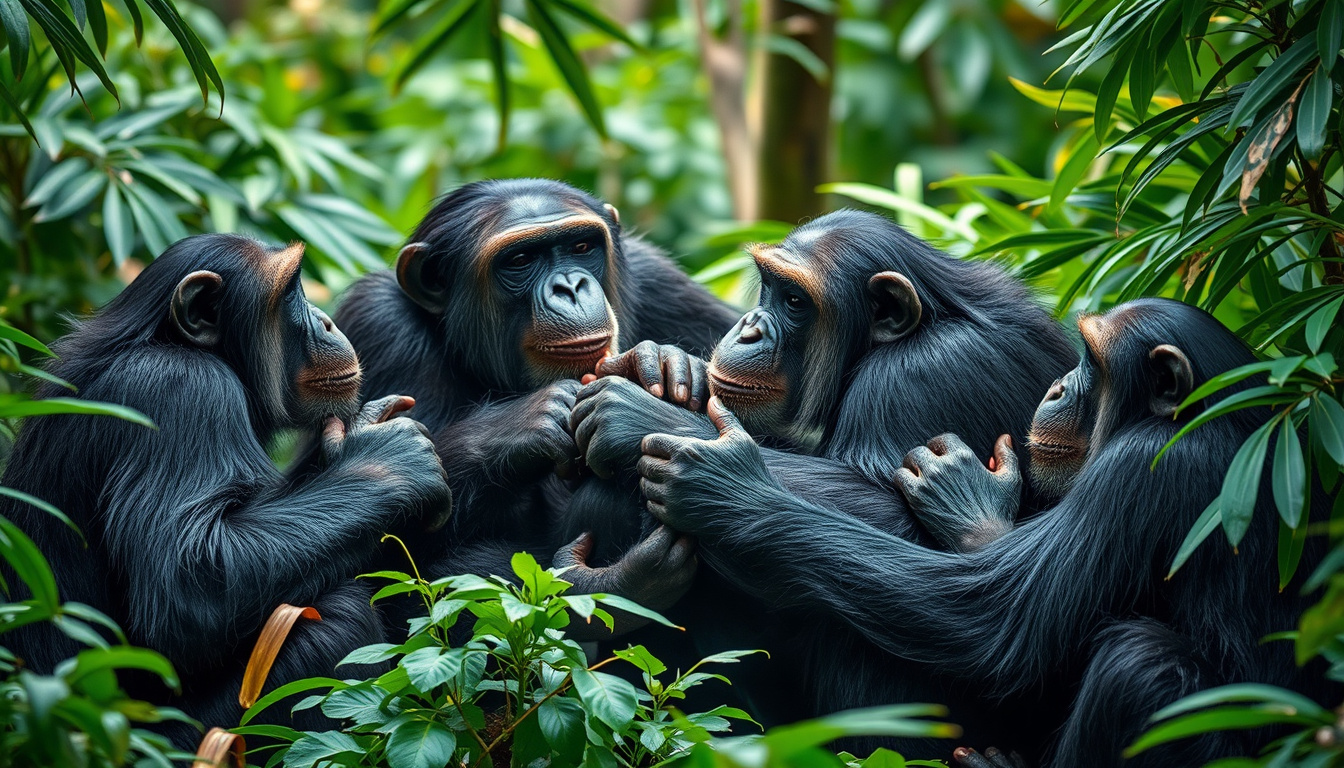
They engage in grooming, play, and coalition-building, which not only strengthens their ties but also establishes social hierarchies crucial for maintaining order within the group.
These dynamics can shift dramatically, influenced by factors like age, sex, and individual personalities.
For instance, younger chimps often seek social validation from older peers, while dominant males may form alliances to bolster their power.
Interestingly, it’s not unusual to see unexpected friendships flourish across different age groups or even between competing males, showcasing a level of social flexibility that enhances group cohesion.
This fascinating interplay provides insights into the emotional lives of chimpanzees, illustrating their capacity for empathy, rivalry, and alliance-making.
Understanding chimpanzee group dynamics enriches our perspective on their evolution and behavior while offering a glimpse into the realities of living within a social framework.
For anyone keen to observe these captivating social structures in action, tracking chimpanzees in Uganda presents an unparalleled opportunity.
Want to experience this in the wild?
You can request our top chimpanzee tracking experiences in Uganda by messaging “chimpanzee” to info@bushmansafaris.com or +256 704
902398.
Conflict Resolution and Cooperation in Chimpanzee Communities
In the heart of Africa’s lush forests, where sunlight filters through a mosaic of green leaves, chimpanzee communities thrive, showcasing a complex web of relationships governed by chimpanzee group dynamics.
These interactions often reveal the subtle balance between conflict resolution and cooperation, which are essential for the survival and harmony within these social structures.
Chimpanzees, our closest living relatives, are known for their profound intelligence and emotional depth, traits that influence how they navigate disputes and forge alliances in their tightly knit groups.
Conflicts in chimpanzee communities typically arise over resources such as food and mates, and these disputes can escalate quickly if left unchecked.
However, chimpanzees have developed sophisticated strategies for conflict resolution.
Dominant individuals often play a key role in mediating conflicts to maintain peace, employing tactics such as reassurance gestures or grooming to alleviate tensions.
Grooming is not merely a hygiene activity; it serves as a social glue, reinforcing bonds and mending rifts between individuals, ultimately fostering cooperation within the group.
The process of reconciliation after a conflict often involves an array of social behaviors, including hugging, kissing, and vocalizations that signal a desire for harmony.
Through these actions, chimpanzees exhibit a remarkable understanding of social dynamics, prioritizing the long-term stability of their community over short-term conflicts.
The dual reliance on cooperation and conflict resolution lays the foundation for strong social bonds, reflecting a profound comprehension of the importance of group cohesion for their collective survival.