
Discovering Ol Pejeta: An Epic Day Trip to Witness the Last Northern White Rhinos
Imagine standing in the presence of creatures so rare, that only two northern white rhinos remain in the entire world. This is the reality at Ol Pejeta Conservancy in Kenya, a critical sanctuary for wildlife conservation, including the last of the northern white rhinos. A visit here is more than a safari—it’s a journey into the fragile future of these majestic creatures, an emotional encounter with nature’s resilience and human ingenuity. Join me as we explore Ol Pejeta, where science, hope, and legacy converge to save a species on the brink of extinction.
Discovering Ol Pejeta: Home to the Last Northern White Rhinos
Ol Pejeta Conservancy is not just a wildlife sanctuary; it is the largest black rhino sanctuary in East Africa and a growing beacon for endangered species. Nestled on the equator in Kenya’s Laikipia County, the conservancy spans over 90,000 acres of savannah, providing refuge for an impressive array of wildlife, including the critically endangered northern white rhino.
Once abundant across Central Africa, the northern white rhino subspecies is now reduced to just two living females. All efforts to save them have converged at Ol Pejeta, where these iconic animals receive dedicated care. Alongside rhino protection, Ol Pejeta emphasizes conservation through anti-poaching initiatives and educational programs, playing a crucial role in protecting Africa’s threatened wildlife.
The Plight of the Northern White Rhino
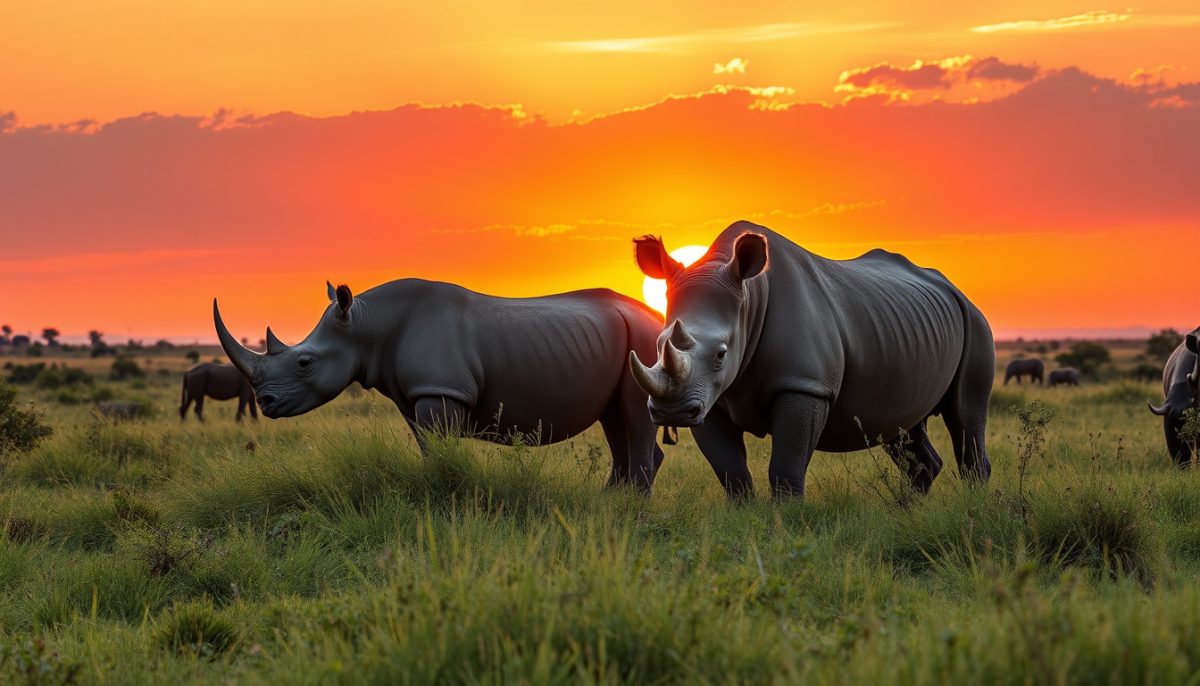
The northern white rhino once roamed the swamps and grasslands of Uganda, Sudan, and the Democratic Republic of Congo. Decades of poaching and habitat loss have pushed this majestic species to the brink of extinction. Today, the last known northern white rhinos, mother Najin and daughter Fatu, live under 24/7 surveillance at Ol Pejeta.
The poignant reality is that both rhinos are female, rendering natural breeding impossible. Following the loss of the last males, scientists have turned to assisted reproductive technologies like artificial insemination and in vitro fertilization to attempt to preserve their lineage.
The Northern White Rhino Conservation Efforts: A Journey of Hope
Our journey at Ol Pejeta begins at dawn, greeted by our guide Jeremy and the vibrant sounds of Kenya’s wilderness. Jeremy relates the survival story of the northern white rhinos, including a relocation effort from the Czech Republic aimed at breeding—which, unfortunately, did not succeed.
However, hope persists. Scientists have preserved semen samples from deceased males, endeavoring to create embryos in the lab. To date, they have successfully produced twelve northern white rhino embryos, now stored safely in Italian labs, with plans to implant them into southern white rhino surrogates at Ol Pejeta.
This unprecedented method could chart a new course for conserving critically endangered species and reviving the northern white rhino population.
Encounter with Baraka and the Role of Southern White Rhinos
Upon arriving at the conservancy, the presence of free-roaming southern white rhinos provides a sense of optimism. One majestic male named Baraka captures our attention in his spacious 140-acre enclosure. His demeanor is calm as he enjoys his diet of carrots, alfalfa, and occasionally, chicken pellets.
Distinguishing between the two rhino species, we notice the finer ear texture and visible folds of the northern whites, contrasted by the smoother, taller ears of the southern whites. Their differing diets are also evident, with northern whites having pointed mouths for picking leaves, unlike the broader lips of southern whites, adapted for grazing.
The Challenges of Captivity for Northern White Rhinos
While northern white rhinos can live up to 40 years in the wild, those under human care, like Najin and Fatu, might reach between 50 to 60 years. Despite their protected status and constant veterinary care, they face significant reproductive health issues that hinder natural breeding.
Yet, their welfare remains a priority, underscoring the importance of dedicated conservation efforts to maintain the final remnants of this species.
Conservation Lessons from Ol Pejeta: Balancing Nature and Innovation
Visiting Ol Pejeta unveils critical insights into conservation. It shows the limitations of traditional methods in preserving highly endangered species, necessitating innovative scientific intervention. Moreover, it highlights humanity’s dual role as both a contributor to species decline and a potential savior through determined scientific and conservation efforts.
This complex interaction demands humility, respect, and proactive stewardship from us all.
The Fragile Future of the Northern White Rhino
The fate of the northern white rhino hangs in balance. Scientists await approval to proceed with embryo implantations, a breakthrough that could signal a monumental success in conservation efforts. If successful, this could serve as a model for reviving other endangered species.
Ol Pejeta is more than a conservancy; it’s a sanctuary of hope and a testament to the possibilities that arise when conservation combines urgency with innovative scientific practices.
Why the Story of the Northern White Rhinos at Ol Pejeta Matters
In the heart of Kenya, Ol Pejeta stands as a symbol of resilience and hope. The narrative of the northern white rhinos is a poignant reminder of what is at stake but also a call to action, fueled by dedication and advanced scientific endeavors.
As we depart from the conservancy, the indelible image of Najin and Fatu remains with us—a reminder of a species fighting not just for survival, but for a chance to flourish once again. Their story compels us to rethink conservation as an active, innovative, and empathetic endeavor.
The future of the northern white rhino represents not just a challenge, but a profound responsibility to safeguard the wild essence of our planet.
Keywords: Ol Pejeta Conservancy, northern white rhino, last northern white rhinos, northern white rhino conservation, northern white rhino breeding, endangered species Kenya, rhino in vitro fertilization, wildlife conservation Kenya
If this story sparked your curiosity, you can experience it firsthand.
Bushman Safaris offers curated chimpanzee tracking experiences in Uganda, including access to Kibale National Park and the Ngogo region where these remarkable behaviors have been observed.
For our top 3 recommended Uganda chimpanzee tours, simply text “chimpanzee” to info@bushmansafaris.com
or WhatsApp +256 704 902398, and we’ll send you tailored options based on your travel preferences.