


Exploring Chimpanzee Aggression and Its Evolution in Ugandan Civil War
In the vibrant Ugandan rainforest, where birds sing amidst the rustling of leaves, a remarkable scene unfolds. A troop of chimpanzees, bonded by tight social relationships, suddenly halts—tension escalates as they brace for a violent clash. This is not just a skirmish over territory but a glimpse into the prolonged civil war among genetically similar chimpanzees, offering insights into the evolution of chimpanzee aggression and possibly the origins of human warfare.
The Uganda Chimpanzee Civil War: An Unfolding Tragedy
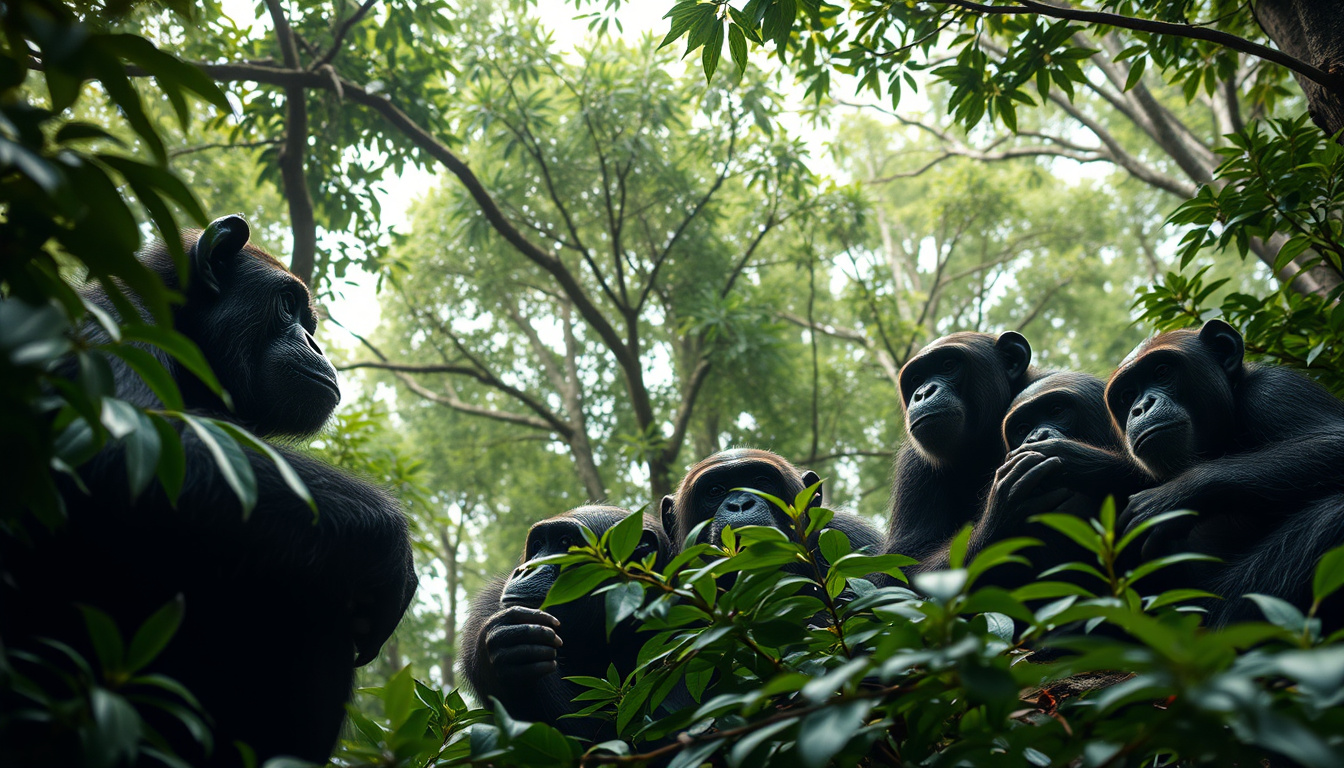
Within Uganda’s Kibale National Park, the Ngogo chimpanzees once lived united. With a population between 150 and 200, they demonstrated complex social dynamics and cooperation over many years. However, in June 2015, a disruptive event led to their division into two factions. One group remained central, while the other migrated west.
Subsequently, violence escalated. Raids became commonplace and deadly. The battles over territory intensified. From 2018 to 2025, the western faction executed 24 lethal incursions, resulting in numerous deaths among mature males and young chimps alike. This brutal conflict mirrors aspects of human civil wars, with strategic attacks and shifting identities culminating in significant losses.
Causes and Behavior Behind the Rift
What triggers such intense aggression among chimps? The primary reason is competition for territory, as both factions competed for resources and overlapping lands. The conflict intensified following the deaths of key chimpanzees in 2014, which weakened their social fabric.
Chimpanzee societies are built on rigid hierarchies. Typically, males remain in their birth groups, ascending the ranks through alliances and strength. A shift in alpha leadership during this period disrupted long-standing bonds, and a devastating illness in 2017 further exacerbated tensions, eliminating 25 chimps, including key peacekeepers, and dashing any hope for reconciliation.
The Conflict: Raids, Coordination, and Violence That Mirror Human Warfare
This war extends beyond random skirmishes. It consists of orchestrated raids on enemy territories. The chimpanzees engage in meticulous patrolling, forming tight coalitions, and timing their attacks strategically to target rival males and vulnerable young. These behaviors reflect the structured nature of human warfare, where group identity solidifies against ‘others’ and violence serves as a means to an end.
Such organized violence is rare among animals, but chimpanzees demonstrate a unique proficiency. Their protracted and fierce battles stem from deep evolutionary roots of aggression, teamwork, and competition.
Insight: What Chimpanzee Warfare Reveals About Human Evolution
The ongoing Ngogo civil war reveals much about the origins of human conflict and aggression. Some scientists believe our propensity for warfare has deep evolutionary roots, suggesting that lethal conflicts can arise even without complex language or religious differences.
With chimpanzees sharing 98.7% of their DNA with humans, it’s conceivable that our tendencies for group conflict are inherited. This challenges the notion that warfare is solely a modern or cultural phenomenon. Routine social interactions, power struggles, and alliances all play roles in the escalation and resolution of violence in both species.
Studying chimpanzee aggression compels us to consider weighty questions. Is warfare an intrinsic part of our nature, or do we harbor a profound capacity for peace and reconciliation? Sometimes, mere acts of peace can significantly alter the course of violence, offering a potent lesson from nature.
Experience This Unfolding Drama in Uganda
If you are captivated by this story, witness it in person. Uganda, particularly Kibale National Park, is one of the rare places where you can observe chimpanzees living freely in their natural habitat.
Interested in seeing this behavior firsthand? Request our premium chimpanzee tracking experiences in Uganda by messaging “chimpanzee” to info@bushmansafaris.com or +256 704 902398.
These tours offer an up-close view of these remarkable animals, demonstrating their behaviors, actions, and life dynamics.
After adventurous days in Kibale’s rainforests, retreat to Igwara Lodge, located approximately five hours away. This serene, premium lodge provides a peaceful respite, complementing your safari with tranquil luxury. Reflect on Uganda’s raw beauty and its underlying struggles. Learn more about Igwara Lodge here.
Reflecting on Chimpanzee Aggression Evolution
The Ngogo civil war provides a profound glimpse into the evolution of chimpanzee aggression, underscoring that human-like violence may not be unique to our species. It highlights the fine line between conflict and cooperation seen among primates.
Observing these chimpanzees reminds us that our tendencies toward aggression are ancient, yet peace, empathy, and community also hold great significance in shaping our societies.
Consider a journey to Uganda, where watching wild chimpanzees turns evolutionary history into a vivid, real-time narrative. It’s an experience that melds survival, evolution, and the complex web of social ties in an unforgettable adventure under the forest canopy.
Request the top 3 chimpanzee tours by texting “chimpanzee” to:
- info@bushmansafaris.com
- +256 704 902398
Unlock an extraordinary safari experience. This tour blends wild observation with cultural enrichment and luxurious rest. The story of chimpanzee aggression evolution is best observed in person.