

The Gombe Chimpanzee War: Lessons from a Brutal Struggle in Nature
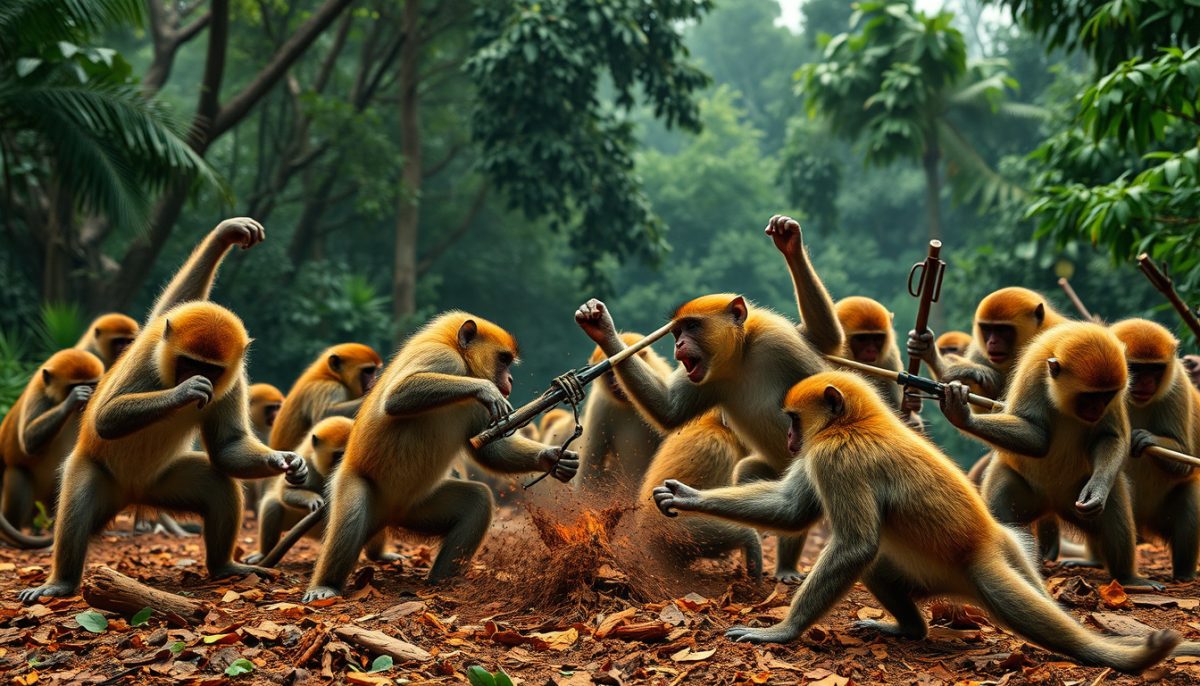
In the depths of Tanzania’s Gombe National Park, a swift and ruthless war unfolded from 1974 to 1978, not only enriching the pages of natural history books but also offering novel insights into human evolution and social behavior. This conflict, known today as the “Gombe Chimpanzee War,” showcased nature’s merciless side and the complex social dynamics at play among weaponless, rarely vocal, but socially intricate and tool-using chimpanzees, strikingly similar to humans.
Gombe Chimpanzee War Overview: Background and Location
Gombe National Park, located in western Tanzania beside Lake Victoria, is renowned for its expansive forests and rich biodiversity. In the late 1960s and early 1970s, chimpanzee groups in the park drew scientific attention, sparking long-term observational studies.
Following the death of Leakey, the long-term alpha male, in 1971, a significant leadership vacuum emerged. Three brothers—Humphrey, Hugh, and Charlie—vied for dominance. Their rivalry led to the formation of two main groups, Kasakela and Kahama, as two brothers split from the rest to establish a new group.
With Jane Goodall’s arrival in 1974, detailed observations of chimpanzee behaviors began. Goodall recorded escalating tensions between the two groups, often erupting into violent conflicts. The first recorded chimpanzee murder occurred on January 7, 1974, when the Kasakela group found and killed a lone male from the Kahama group named Godi while he was eating fruit in a tree.
Drivers and Social Dynamics of the War in Gombe
The complex social structure and biological instincts of chimpanzees played a critical role in the conflict. Under the leadership of alpha male Humphrey, the aggressive Kasakela group aimed to dominate bordering territories, leading to inevitable hostilities. Their expanding territorial demands and efforts to suppress rival groups were the main causes of violent clashes.
Additionally, chimpanzees fought not only for power balance but also for resource sharing—including food and habitats. Social bonds, alliances, and individual loyalties deepened the power struggles within and between groups.
Throughout the war, chimpanzees resorted to using stones to crush their enemies’ skulls, kidnapping females, and killing rival males—an approach rarely observed in the animal kingdom that marked a planned and organized type of assault.
Key Events During the Gombe War
Jane Goodall’s four-year observational study vividly documented the developments of the war. The Kasakela group was seen systematically hunting down and weakening the Kahama group, eventually taking over their lands. The systematic extermination or exile of Kahama’s males radically shifted the social balance.
Goodall witnessed many horrifying moments of the war, discussing its psychological impacts and its brutal reflection in nature. Events like Satan’s injury, Rodolph’s stone hits, and Jomeo’s assault against a female showcased the chimpanzees’ ruthless nature.
Ultimately, Kasakela’s victory expanded their territory, but the new power balance led to further conflicts with another group called Kalende. Numerically and physically superior, the Kalende group initiated counterattacks, forcing Kasakela to retreat.
The Gombe War’s Meaning for Both Humans and Nature: A Mirror of Evolution
The Gombe Chimpanzee War is more than a mere display of nature’s ferocity. It demonstrates the complexity of violence, alliances, and warfare dynamics, not exclusive to human societies. The chimpanzees displayed strategic thinking, planning, loyalty, and revenge—emotions showing our evolutionary kin’s capability for both communal living and antagonistic survival, purging the weak to preserve the group.
The insights revealed are poignant: chimpanzees’ complex tool use and social maneuvering closely mimic those of human communities. Additionally, the persistent need for new combatants underscores the ongoing struggle for ecological and social balance, illuminating the continuous battle for adaptation and competition in evolutionary processes.
Chimpanzee Hunting and Feeding Strategies: Their Fierce Carnivorous Nature
Many presume chimpanzees only consume fruits and leaves. Yet, discoveries by Jane Goodall have shown that their diet is versatile and complex. They use sticks and stones masterfully in termite hunting, displaying significant tool-skill.
Furthermore, chimpanzees conduct effective hunting parties, particularly targeting their primate cousins, the colobus monkeys. Observations from Uganda’s Kibale National Park between 1995 and 2014 recorded chimpanzees making 556 hunting attempts, with 356 directed at colobus monkeys, resulting in approximately 912 monkeys hunted—a stark indication of their predatory nature.
Their successful hunting strategies, highlighting coordination and teamwork, are comparable to those of humans and lions. The chimpanzees’ collective action and rapid reflexes underpin their high success rates, while the colobus monkeys often opt to defend their territories, making them susceptible to these adept predators.
Conclusion: Life and Wars to Learn from Gombe
The Gombe War, dominated by complex and fierce primate engagements, isn’t just an animal conflict but a profound battle where social structure, strategy, and brutality converge. We have much to learn from chimpanzees: strength is crucial, but so is developing the right strategy and respecting the balance of nature.
Viewing nature solely as innocent and peaceful can mislead us. The wars in Gombe remind us that nature can be as cruel and complex as humanity, often dramatically. Learning from chimpanzees provides a crucial mirror for reflecting on our own evolutionary journey and reshaping our view of our societies.
Post-Gombe, returning to passive nature observation is impossible. The events there remind us that nature is not so different from us, often more merciless and complex, and offers significant lessons for humanity.