

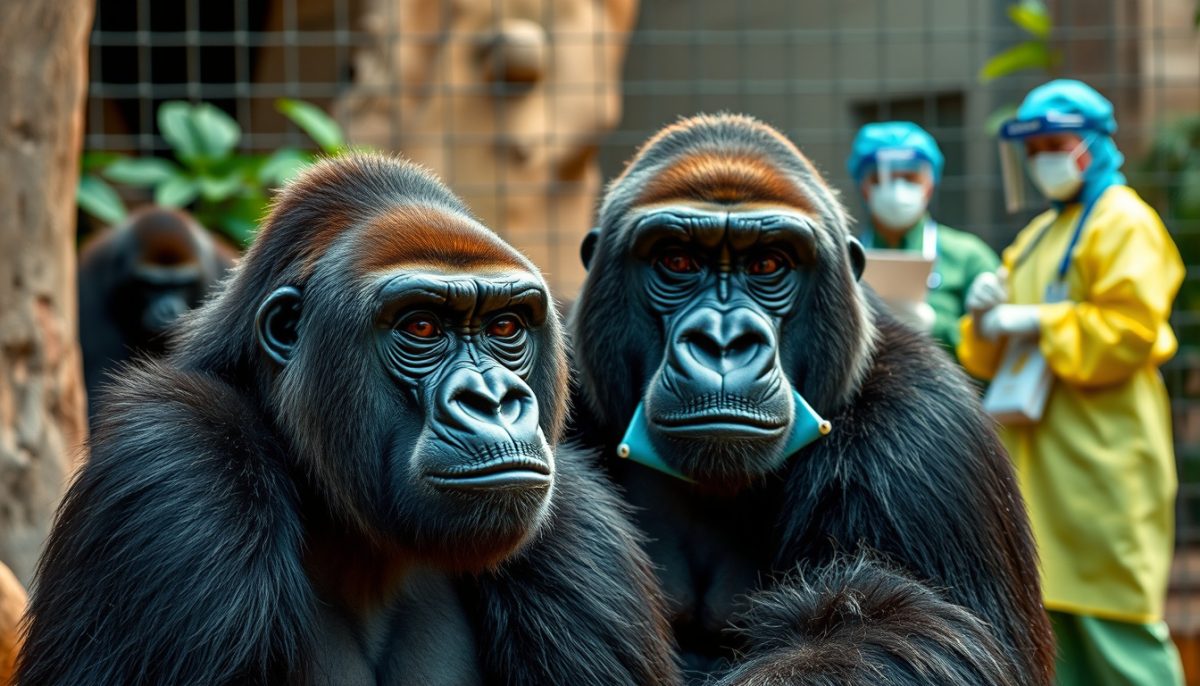
Shocking Outbreak: COVID-19 Affects Gorillas in Zoos – What Does It Mean for Great Apes?
Introduction: When COVID-19 Crosses Species Boundaries
In a world gripped by the relentless grip of the COVID-19 pandemic, the spotlight has primarily been on human health and the colossal economic challenges the virus has unleashed. Yet, beneath this global focus, a dangerous and less visible drama is unfolding: the threat of COVID-19 to our closest living relatives—the great apes. Imagine a silent virus breach crossing the species barrier, infiltrating populations of gorillas, chimpanzees, bonobos, and orangutans, whose numbers have already been dwindling for decades. Recently, shocking reports surfaced of gorillas at a zoo testing positive for COVID-19 great apes. This news jolts conservationists and scientists alike, raising urgent questions about the vulnerability of great apes to human diseases and what that means for their survival. Could this newest human virus precipitate a crisis that wipes out entire species?
Understanding the Great Apes and Their Perilous Status
Great apes—gorillas, chimpanzees, bonobos, and orangutans—are not just our close relatives biologically but guardians of vital ecological roles in their habitats. They share approximately 98% of our DNA, an astonishing genetic closeness that also makes them susceptible to many human infectious diseases.
Across Africa and Southeast Asia, these majestic creatures have witnessed unprecedented population declines over the past century. Their natural habitats, often dense tropical forests, are shrinking rapidly due to deforestation, agricultural development, and mining. Simultaneously, poaching and disease outbreaks compound their existential threats.
The International Union for Conservation of Nature (IUCN) has classified all great ape species as either endangered or critically endangered. Notably, infectious diseases rank alongside habitat loss and poaching as a top-three threat. These animals are not strangers to disease outbreaks—Ebola has devastated gorilla and chimpanzee populations in Central Africa, killing thousands and leaving long-lasting effects on population dynamics.
The Emerging Threat: COVID-19 and Great Apes
Historically, research has documented the interchange of viruses between humans and great apes. For example, chimpanzees have contracted common colds from humans, with severe consequences. Now, with the SARS-CoV-2 virus (COVID-19) circulating globally among humans, conservationists urge caution: all great ape species must be assumed vulnerable until proven otherwise.
The first confirmed cases of COVID-19 in great apes came from a zoo where several gorillas tested positive. This development is alarming because it confirms that transmission of the virus from humans to apes is possible, and potentially damaging. The outbreak raises critical concerns about the health of wild ape populations and the effectiveness of conservation protocols, especially when human interaction is involved.
Conservation Efforts: A Fragile Success Story
Despite these perils, conservation work over past decades has achieved some remarkable successes. Intensive strategies combining habitat protection, anti-poaching patrols, and community engagement have helped stabilize or even increase the populations of certain species.
Mountain gorillas in Uganda’s Bwindi Impenetrable Forest National Park and the Virunga Mountains are a notable example. These parks harbor over half of the remaining mountain gorilla population, which has climbed to more than 1,000 individuals from the brink of extinction, thanks largely to sustained conservation efforts.
Chimpanzee populations, although still vulnerable, have also seen a slow increase since hitting historical lows in the 1970s. Protected sanctuaries and national parks, like Uganda’s Kabbale National Park, have been instrumental in preserving sizeable populations living in their natural habitat.
How COVID-19 Lockdowns Disrupt Conservation
The pandemic’s ripple effects extend beyond disease transmission. Lockdown restrictions worldwide have shuttered the doors of national parks and wildlife sanctuaries that depend heavily on tourist revenue. Ecotourism has long been a lifeline, funding conservation projects, staffing rangers, and providing alternative livelihoods for local communities.
At Gamba Island Chimpanzee Sanctuary on Lake Victoria, a haven for orphaned chimpanzees rescued from the illegal wildlife trade, the pandemic has upended operational routines. With gates closed, fewer staff members now manage the care of around 50 chimps under challenging conditions—working prolonged shifts while isolated on the island to minimize infection risk.
Personal protective equipment (PPE) is in short supply. Staff wear overalls, masks, and gloves for extended periods, conserving these critical resources amid scarcity. Sanitation frequencies have increased dramatically despite financial strain, yet the threat of virus exposure continues to loom large. Direct close contact activities such as feeding, behavioral training, and research have been suspended—practices essential for animal well-being and scientific monitoring.
The Daily Life and Dependency of Sanctuary Apes
Chimpanzees in captivity maintain a routine reminiscent of their wild behaviors: waking at dawn, greeting one another with hoots and calls, and spending much of the day within the confines of forested enclosures. While the forest might supply some natural food, the 38-hectare area on Gamba Island is insufficient for a thriving chimpanzee community. In contrast, wild chimpanzee groups of a similar size would require at least five times that area.
The programs are heavily reliant on regular feedings by their caretakers. Their diets—comprising fruit, vegetables, cabbage, and nutritionally enhanced porridge—are essential for maintaining their health. The annual cost to feed and provide medical care for just one chimpanzee reaches around $4,000—a sum increasingly difficult to secure as tourism income disappears.
Conservation at a Crossroads: The Broader Impact
The pandemic exposes a severe paradox: while humans shelter themselves against COVID-19, great apes simultaneously face heightened risks from indirect consequences. With few rangers and conservation staff in the field, there’s a rising danger of increased poaching, habitat encroachment, and dwindling oversight. Reports hint at a resurgence of illegal activities in vulnerable protected areas—a grim trend that could erode decades of conservation gains.
Peter Apolo from Uganda’s Jane Goodall Institute underscores that conservation represents a delicate balance sustained by continuous community involvement, law enforcement, education, and alternative economic opportunities. The COVID-19 crisis could unravel these intertwined efforts, reversing the hard-earned progress toward species recovery.
Concluding Insight: Human Interconnectedness and Shared Vulnerabilities
This crisis highlights our profound shared vulnerability, rooted in our close evolutionary kinship with great apes. Our genetic similarities are a double-edged sword: while they illuminate our common heritage, they also highlight that diseases can readily jump between species. Conservation strategies must now incorporate pandemic preparedness as a core principle to safeguard both human and ape health.
Another revealing insight is how conservation depends not only on ecology but also on global social and economic systems. The collapse of ecotourism revenue during the pandemic exposes how intertwined economies and conservation efforts are. This crisis compels stakeholders to rethink sustainable funding mechanisms—ones resilient to global shocks and prioritizing long-term biodiversity protection beyond tourism income.
Conclusion: Protecting Our Closest Relatives in an Uncertain Future
The COVID-19 outbreak among gorillas at a zoo is more than a shocking headline—it underscores the vulnerabilities facing great apes everywhere. Their survival hinges on effectively integrating disease prevention into conservation, maintaining essential protection even amid global upheavals, and fostering resilient local and global partnerships.
As we reflect on this pandemic, the fate of great apes reminds us that our health is linked with theirs. The preservation of these magnificent creatures demands urgent, concerted action—not only for their sake but as a testament to our responsibility as stewards of the natural world. The question now is, will humanity rise to meet this profound challenge, or will we witness irreversible losses that echo beyond the forests and zoos? Our shared future depends on the answer.
If this story sparked your curiosity, you can experience it firsthand.
Bushman Safaris offers curated chimpanzee tracking experiences in Uganda, including access to Kibale National Park and the Ngogo region where these remarkable behaviors have been observed.
For our top 3 recommended Uganda chimpanzee tours, simply text “chimpanzee” to info@bushmansafaris.com
or WhatsApp +256 704 902398, and we’ll send you tailored options based on your travel preferences.