


“`html
Chimpanzee War Explained: Unraveling the Conflict Among Primates in Uganda
Step into Uganda’s Kibale National Park, where the echoes of the chimpanzee civil war are palpable amidst the chorus of bird calls and the lush greenery of thick, verdant trees. The forest buzzes with secrets of old; listen closely to the chimpanzee hoots and the startling screams emerging from the underbrush. These sounds mark fierce fights among our closest animal kin. But what ignites these intense battles? How do these conflicts unfold, and what can they reveal about the roots of human warfare? This article delves into the underlying narrative of these primate battles, inviting you to explore these riveting events in Uganda. 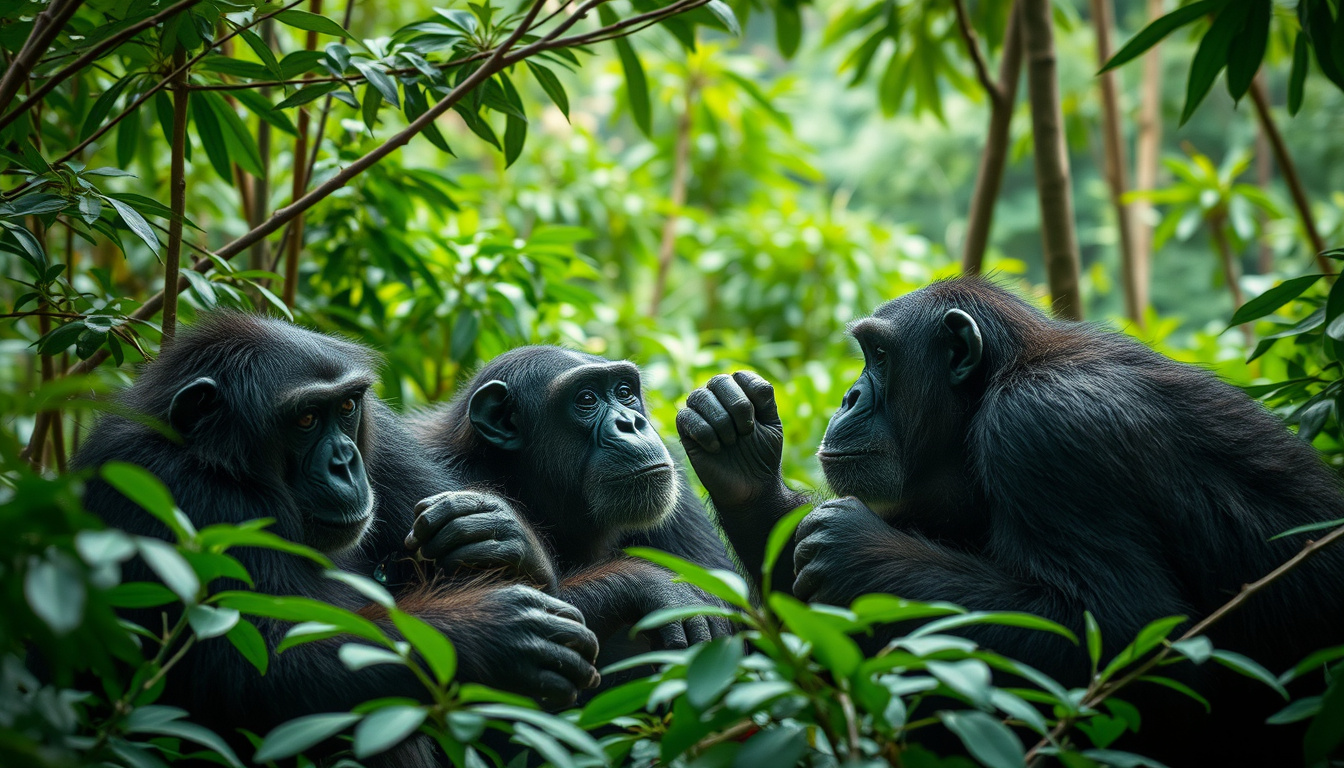
Understanding the Uganda Chimpanzee Civil War
Chimpanzee warfare is not random. It is an organized and strategic fight arising from social, territorial, and evolutionary causes. One focal observation has been the Ngogo group in Kibale National Park, the largest known chimpanzee community. This group experienced a formidable split, leading to premeditated attacks amongst themselves.
This war echoes historical events. Recall the Gombe Chimpanzee War seen by Jane Goodall in the 1970s in Tanzania. However, the Ngogo conflict unveils deeper enigmas.
The Causes Behind the Conflict: Territory, Hierarchy, and Group Dynamics
Chimpanzee groups thrive on a structured hierarchy where males lead patrols and protect their domain. Their battles often stem from competitions over food and mating rights, drawing parallels to human conflicts.
Territorial Conflict
With overlapping territories, each chimpanzee group vigorously defends its central territory. As communities like Ngogo grow to nearly 200 members, resources like food become scarce, intensifying stress and leading to potential splits. These subgroups might initially aim to reduce internal conflict but can turn hostile quickly.
Social Hierarchy
Within these groups, male chimpanzees vie for dominance. Their intense competition for leadership can disrupt longstanding bonds, especially if pivotal members are lost.
Group Dynamics and Fission
Occasionally, a chimpanzee group might divide into two. While not always violent, the separation at Ngogo led to heightened aggression due to severed social connections. By 2018, the emergence of two distinctly hostile communities was evident.
The Conflict in Action: Raids, Coordination, and Violence
The war’s dynamics are evident. Male chimpanzees orchestrate covert patrols and execute ambushes akin to military raids.
The characteristics of these raids include:
- Meticulous planning: Small teams of males stealthily navigate the dense forest to surprise lone rivals.
- Brutality: Their attacks are fierce, aimed at incapacitating or eliminating adversaries.
- Strategic objectives: The ultimate goal is territorial dominance and defeating the rival faction.
Since 2018, the Ngogo community has witnessed numerous fatal assaults, with males killing several adult opponents and many juveniles from the antagonistic group.
This deliberate, strategic aggression mirrors aspects of human warfare, highlighting the similarities between chimpanzee and human group conflicts.
Insight: Chimpanzee vs. Human Conflict—Evolutionary Implications
Unlike humans, chimpanzees do not justify warfare with religion, beliefs, or culture. Yet, the Ngogo chimpanzee civil war underscores how shifts in alliances alone can catalyze lethal skirmishes. This observation challenges the notion that culture is a necessary precursor to warfare, suggesting instead that violent tendencies may have deep evolutionary roots. The instincts for territory, strong alliances, and competition are profound and influential.
Studying the nuances of chimpanzee warfare offers a reflective lens on human conflict, reminding us that our ancestors, too, grappled with disputes over land and power.
Want to See This Behavior in the Wild?
Experience the life of chimpanzees firsthand—observing everything from grooming to their tactical raids. Uganda provides unique opportunities to track chimpanzees in their natural habitats, especially in Kibale National Park.
Interested in witnessing this behavior in the wild? You can embark on our premier chimpanzee tracking experiences in Uganda by contacting us at info@bushmansafaris.com or +256 704 902398.
Our expert trackers will narrate the intricate stories of the chimps, their social structures, and the details of the chimpanzee civil war.
After Your Chimpanzee Safari: Unwind at Igwara Lodge
Following your adventure in chimp tracking, relax at Igwara Lodge, a serene retreat nestled in Uganda’s stunning landscapes. Although a 5-hour drive from Kibale, it perfectly complements a comprehensive safari journey.
Igwara Lodge offers a tranquil environment, ideal for reflecting on chimp social dynamics and your experiences in the wild.
Discover more about the lodge at https://www.igwara.com/.
Reflecting on the Primate War Within Our Forests
The chimpanzee civil war is more than just an unusual animal conflict. It showcases intense bonds, fierce competition, and survival instincts—themes that resonate with our own notions of community, conflict, and peace.
Observing these primates in Uganda offers a narrative that transcends species, prompting us to consider the fine line between allies and adversaries, and between collaboration and confrontation.
As you depart from the forest and watch the chimpanzees blend back into the greenery, remember our shared lineage with these creatures. We share stories of social strife, alliances, and indeed, warfare.
For a comprehensive experience of chimpanzee tracking and authentic encounters with Uganda’s wild primates, remember to book our top 3 chimpanzee tours by reaching out to info@bushmansafaris.com or +256 704 902398 today. Your journey into the heart of chimpanzee society awaits.
“`