
The Shocking Truth Behind the 10-Year Ngogo Chimpanzee Civil War in Uganda
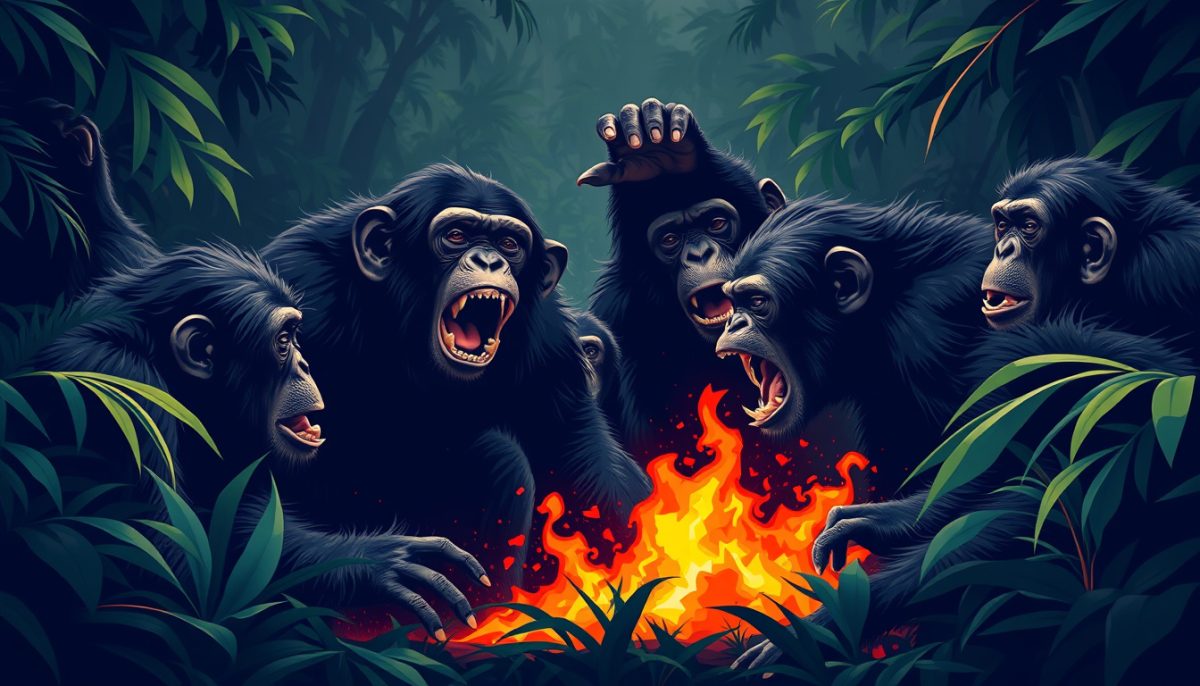
Imagine waking up in a misty jungle, the air thick with tension, as a silent figure watches from the shadows—a silent predator not hunting for food, but targeting a former ally. This scenario depicts the Ngogo chimpanzee war, a chilling portrait of a decade-long chimpanzee civil war. Here, the collapse of the Ngogo community—the largest recorded chimpanzee society—highlights the brutal realities of animal behavior and reflects humanity’s own struggles with conflict and division.
The Ngogo Community: A Colossal Empire in the Heart of Uganda
Nestled deep within Uganda’s Kibale National Park, the Ngogo chimpanzee community thrived as a sprawling empire of over 200 members. For decades, this vibrant society was a bastion of resilience and power, displaying complex social dynamics among the largest troop of wild chimpanzees ever observed by scientists. The scale and stability of Ngogo made its eventual disintegration all the more shocking.
For 20 years, researchers documented the fluid and cooperative nature of Ngogo’s social life. The chimpanzees moved effortlessly between smaller subgroups to forage, yet always returned to the collective whole, sharing territory, resources, and rich social bonds. However, this picture of unity began to falter in 2014 when key older males, often considered the social pillars of the community, passed away. The loss of these leaders precipitated the unraveling of the Ngogo empire, with visible divisions emerging by 2015.
From Unity to Division: The Anatomy of a Community’s Collapse
The community that had seamlessly integrated over generations soon split into two hostile groups: the Western Group and the Central Group. Their once shared territory became a contested borderland, marked by frequent and violent clashes. By 2018, the fracture was complete and irrevocable. This breakup was not just a social split; it was a declaration of war.
Between 2018 and 2024, researchers documented no fewer than 24 violent encounters. These were not random brawls but calculated attacks—a grim testament to how deep the enmity had grown. Seven adult males from the Central Group were killed during this period, victims of ambushes and coordinated raids. Moreover, 17 infants fell victim to this brutal conflict, a chilling strategy aimed at eradicating the enemy’s future generations.
The Ngogo War and Its Dark Mirror: The Legacy of Gombe
The Ngogo civil war hauntingly mirrors the grim chapter of the Gombe War, famously documented by primatologist Jane Goodall in the 1970s at Gombe Stream National Park in Tanzania. This earlier conflict spanned four relentless years and was the first scientific revelation of chimpanzees’ capacity for organized, lethal aggression akin to human warfare.
Both wars share striking parallels: initiation triggered by critical social shifts, fights among former allies, and sustained, strategic violence. Yet, unlike Gombe—where some speculated that human interference may have exacerbated tensions—the Ngogo war unfolded in a pristine setting free from such influences. This confirms a chilling truth: these violent civil wars are a natural part of chimpanzee behavior.
Jane Goodall’s initial shock evolved into a profound reassessment of chimpanzee nature, dismantling the myth of the gentle primate and revealing the species’ remarkable capacity for calculated violence and complex social strife.
Unpacking the Collapse: Why Did Ngogo Fall Apart?
Understanding how a mighty chimpanzee empire disintegrated requires peeling back layers of social complexity. Scientists characterize the collapse as a staged process: initial polarization where the two subgroups began avoiding one another; followed by aggressive territorial patrols; and finally, full social and reproductive separation.
Several factors converged to create a perfect storm:
- Overpopulation and Competition: With over 200 members, intense competition for power among adult males arose.
- Leadership Void: The deaths of influential elder males dismantled the social glue binding the group.
- Disease Outbreak: A fatal illness further destabilized the community.
- Shifted Social Alliances: Changing loyalties disrupted established bonds and hierarchies.
This blend of internal pressures cascaded into irreversible conflict—a powerful reminder that even the most stable societies can fatally undermine foundational relationships.
The War Tactics: Organized Carnage in the Jungle
The violence was anything but chaotic. Both groups engaged in highly organized attacks:
- Territorial Patrols: Groups ventured deep into enemy zones on deliberate missions.
- Ambushes: Lone individuals were targeted in swift, coordinated assaults.
- Collective Strategy: Attacks were not isolated incidents but concerted campaigns, ultimately targeting infants to weaken future adversaries.
Remarkably, the smaller Western Group initiated all recorded attacks, defying expectations that numerical superiority guarantees dominance. This underscores an essential insight: cohesion, strategic planning, and organization can triumph over mere numbers.
Insight: What Chimpanzee Wars Reveal About Human Conflict
Stepping away from the dense foliage of the jungle, the Ngogo conflict offers profound lessons about the roots of human strife. When societies fracture to the point of violent civil warfare, underlying social bonds are often at the core of the matter.
The horrific reality that former allies turned lethal enemies forces us to confront the instinctual “us versus them” divide, a mentality that has fueled countless human conflicts throughout history.
Introducing the Relational Dynamics Hypothesis, a compelling scientific framework suggesting that complex factors like ideology, religion, or nationalism are not prerequisites for war. Instead, conflict can erupt from the breakdown of personal relationships and social alliances—simple, primal fissures in social cohesion.
This insight reveals something both unsettling and insightful: cultural divides may be superimposed narratives that justify an innate biological impulse to fracture when trust dissolves. Our species’ cultural wars might, at their core, stem from the most elemental social ruptures.
Yet, this understanding also carries hope. If war can ignite from broken personal bonds, perhaps peace can emerge from restoring those connections. The monumental task of preventing conflict does not solely hinge on grand treaties but on daily acts that nurture and maintain the fragile threads of community.
Conclusion: Lessons from Our Closest Relatives
The decade-long civil war within the Ngogo chimpanzee community is more than a tale of animal aggression—it’s a narrative echoing the complexities and vulnerabilities of social structures, including our own. From the dramatic fragmentation of the largest known chimpanzee empire to the organized tactics of jungle warfare, the story exposes fundamental truths about conflict’s primal origins.
By examining how small ruptures in trust can cascade into devastating wars, we gain fresh perspectives on humanity’s own divisions. It compels us to reflect on the power of social bonds and the profound consequences when they are broken.
Could the key to lasting peace lie not only in global diplomacy but in cultivating empathy and cohesion within our immediate circles? Exploring our primate roots invites us to reconsider where conflict begins—and more importantly, where peace truly starts.
Stay curious about the natural world and its lessons for humanity. Understanding our closest relatives might just hold the key to a more harmonious future. What are your thoughts on how these primal dynamics shape human societies? Share your insights and join the conversation.
Meta description:
Explore the riveting tale of the Ngogo chimpanzee war, a decade-long civil conflict that mirrors humanity’s own struggles with conflict and peace in Uganda.
If this story sparked your curiosity, you can experience it firsthand.
Bushman Safaris offers curated chimpanzee tracking experiences in Uganda, including access to Kibale National Park and the Ngogo region where these remarkable behaviors have been observed.
For our top 3 recommended Uganda chimpanzee tours, simply text “chimpanzee” to info@bushmansafaris.com
or WhatsApp +256 704 902398, and we’ll send you tailored options based on your travel preferences.