

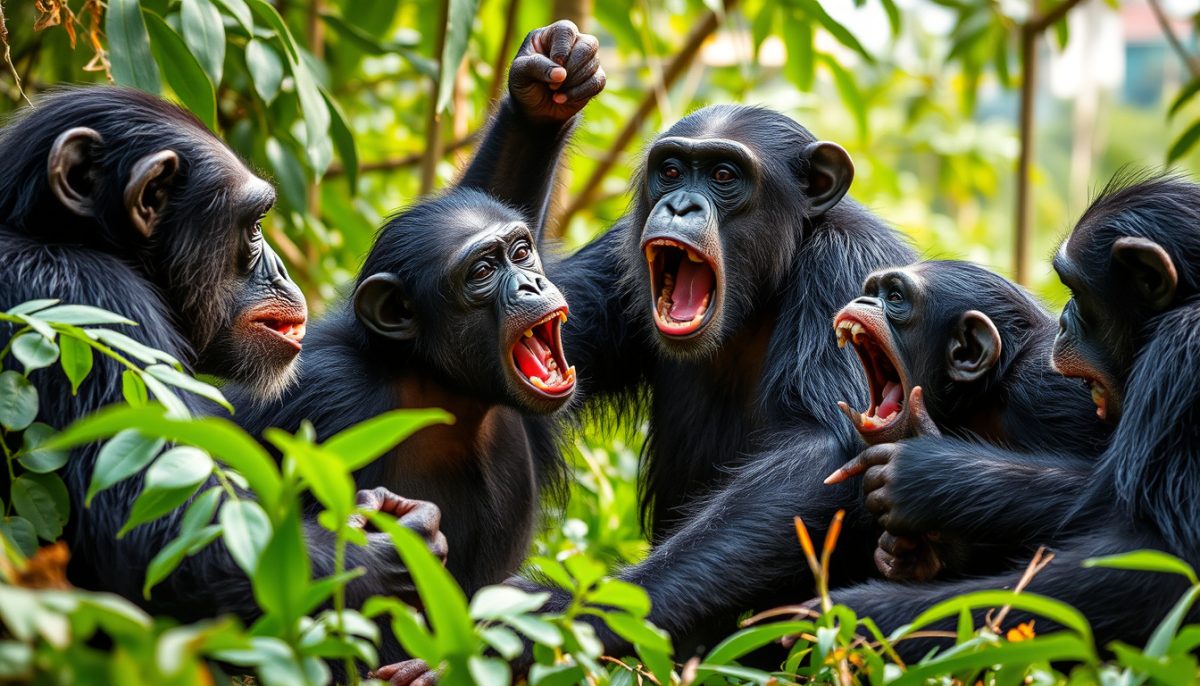
Unveiling Primate Warfare Behavior: Key Insights into Aggression and Social Dynamics
Deep in the lush, sun-dappled forests of Africa and the dense jungles of South America, a hidden world of complex social interactions unfolds among primates.
Here, the air buzzes not only with the calls of birds but also with the echoes of raw and visceral encounters—acts of aggression that can, at times, spiral into what scientists term ‘primate warfare behavior.’ This riveting phenomenon offers a glimpse into the survival strategies and social hierarchies that define these extraordinary creatures.
As researchers delve into this compelling narrative, they reveal that the conflicts among primate troops are more than mere skirmishes; they are reflections of deep-rooted evolutionary traits that shape their communities and interactions.
In this article, we will unravel the intricate web of primate warfare behavior, exploring the evolutionary origins of aggression, the social structures that influence conflict, and the broader implications for both primate conservation and our understanding of human behavior.
Key Takeaways
- Primate warfare behavior reflects deep evolutionary roots of aggression.
- Social structures among primates significantly influence their warfare tactics.
- Case studies reveal various forms and outcomes of primate conflicts.
- Understanding primate warfare behavior is crucial for conservation efforts.
- The study of primate aggression offers insights into broader social dynamics and human behavior.
Introduction to Primate Warfare Behavior
As the sun begins to rise over the lush forests of Uganda, a symphony of rustling leaves and distant calls awakens the primal world of primates.
Amongst the canopy’s shadows, a fascinating and often unsettling reality unfolds: the existence of ‘primate warfare behavior.’ This refers to the aggressive interactions between groups of primates, a phenomenon that can mirror complex human behaviors.
Unlike the occasional skirmishes or territorial disputes common in other animal species, primate warfare can involve sophisticated planning, alliances, and a clear understanding of group dynamics.
Throughout this article, we will delve into the nature of these behaviors, uncover the underlying causes, and explore the implications for our understanding of both primate societies and our own.
In the vibrant jungles of Uganda, where chimpanzees and other primates thrive, witnessing such behaviors reveals the intricate tapestry of life that bridges the gap between humanity and our closest evolutionary relatives.
The Evolution of Aggression in Primates
In a world that feels increasingly polarized, the exploration of primate warfare behavior holds a mirror to our own conflicts, revealing deep-rooted evolutionary patterns.
Primates, our closest relatives in the animal kingdom, exhibit complex social structures and, at times, violent interactions.
This behavior is not merely a reflection of their environment, but a product of evolutionary pressures that have sculpted their interactions over millennia.
When observing these conflicts, one might note that aggression among primate groups often arises over territory, resources, and mating rights, much like human disputes.
Studies have documented instances of organized aggression, particularly among species such as chimpanzees and baboons, where coalitions form strategies reminiscent of human warfare, including ambush and coordinated attacks.
Such behaviors raise questions about the origins of aggression—are they hard-wired survival mechanisms or learned behaviors from their social environments?
As researchers delve into the ramifications of these findings, it becomes clear that understanding primate warfare behavior not only enriches our comprehension of primate dynamics but also invites introspection into the roots of human conflict.
‘The greatest danger in times of turbulence is not the turbulence; it is to act with yesterday’s logic.’ – Peter Drucker

Social Structures and Their Impact on Warfare
Understanding primate warfare behavior begins with examining their intricate social structures.
In various primate species, hierarchical relationships dictate not only day-to-day interactions but also responses during times of conflict.
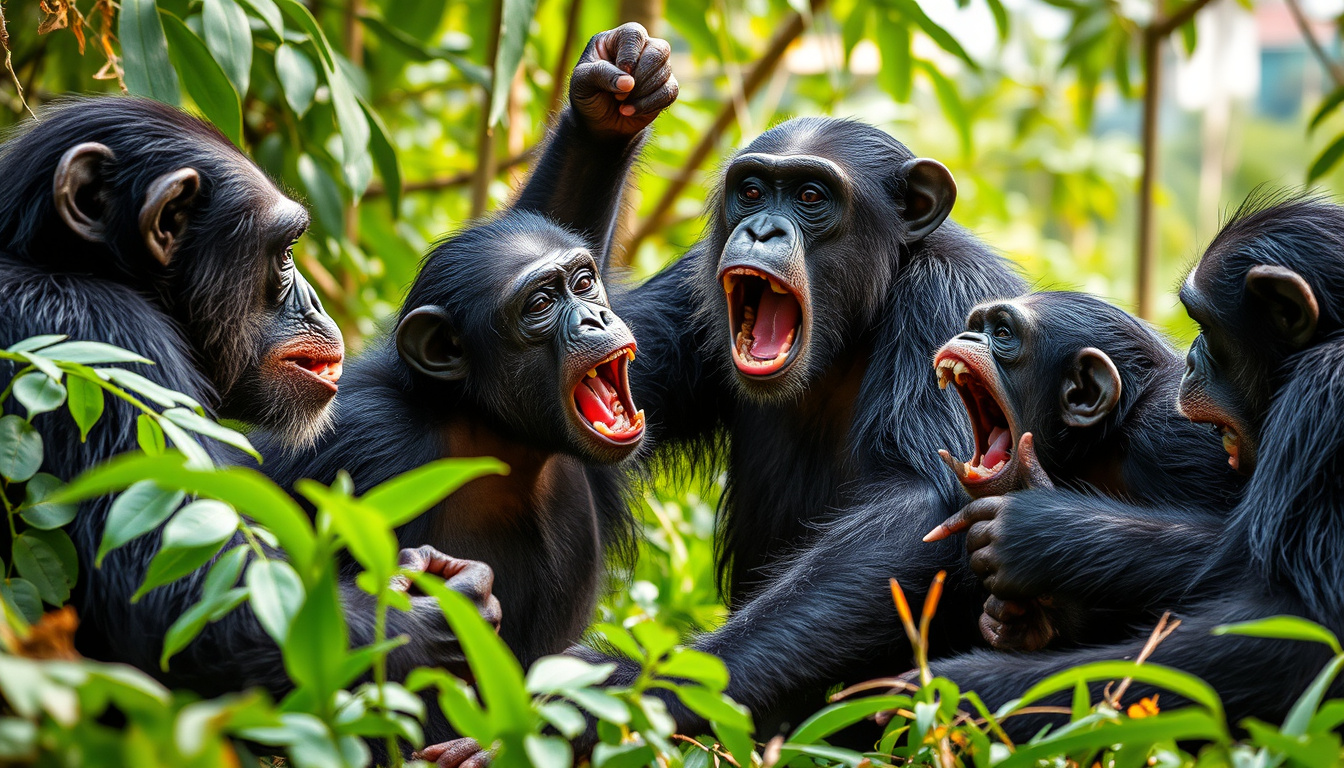
For instance, in species like chimpanzees and bonobos, social bonds are critical as they can either mitigate or exacerbate the likelihood of conflict.
Chimpanzees, known for their aggressive tendencies, maintain complex social hierarchies where dominance plays a pivotal role.
Higher-ranking individuals often lead raids against neighboring groups, with revenge and territorial disputes serving as underlying motives for these confrontations.
Social alliances formed through grooming, food sharing, and support during conflicts can significantly influence these warlike behaviors.
The presence of cohesive groups tends to increase aggression, suggesting that the tighter knit the social structure, the more pronounced the potential for organized aggression.
In contrast, bonobos exhibit a markedly different approach.
Their social structures are matriarchal, emphasizing peace and social bonding over aggression.
Bonobos tend to resolve disputes through sexual behaviors and social play, showcasing a differing form of cooperation.
This difference highlights the influence of social dynamics in shaping warlike behaviors across primate species.
By examining these behaviors, researchers can draw parallels between primate warfare and early human conflicts, giving insights into the evolutionary roots of violence and cooperation in our own species.
Understanding these social frameworks provides a deeper comprehension of how primate warfare behavior is less about survival and more about social politics within their communities.
Case Studies of Primate Conflicts
The topic of primate warfare behavior invites a deep dive into the fascinating yet often unsettling realm of how our closest relatives interact, sometimes violently, amidst their social groups.
Across various species, incidents have been documented that resemble the complexities of human conflict, revealing a deep-seated instinct for territory and survival.
One compelling case study involves the chimpanzees of the Taï National Park in Côte d’Ivoire.
Here, rival groups have been noted engaging in systematic hunting raids, often leading to fierce skirmishes that can result in casualties.
This behavior showcases a notable level of aggression directed not just for immediate resources, but also as a strategy for territorial expansion and social dominance.
Similar behaviors can be observed in the red colobus monkeys and the savannah baboons, where group cohesion is tested through encounters that often escalate into broader collective actions.
Such instances where primate warfare behavior comes to light underscore a vital point: the intricate tapestry of primate social dynamics is woven with threads of both cooperation and conflict, challenging our understanding of the evolutionary aspects behind these behaviors.
These cases illustrate that warfare among primates is not merely about survival; it carries implications for social learning, group identity, and even the evolution of altruism within their communities.
For those captivated by these striking revelations, experiencing these creatures in the wild offers an unprecedented opportunity to witness their behaviors firsthand.
Want to experience this in the wild?
You can request our top chimpanzee tracking experiences in Uganda by messaging ‘chimpanzee’ to info@bushmansafaris.com or +256 704
902398.
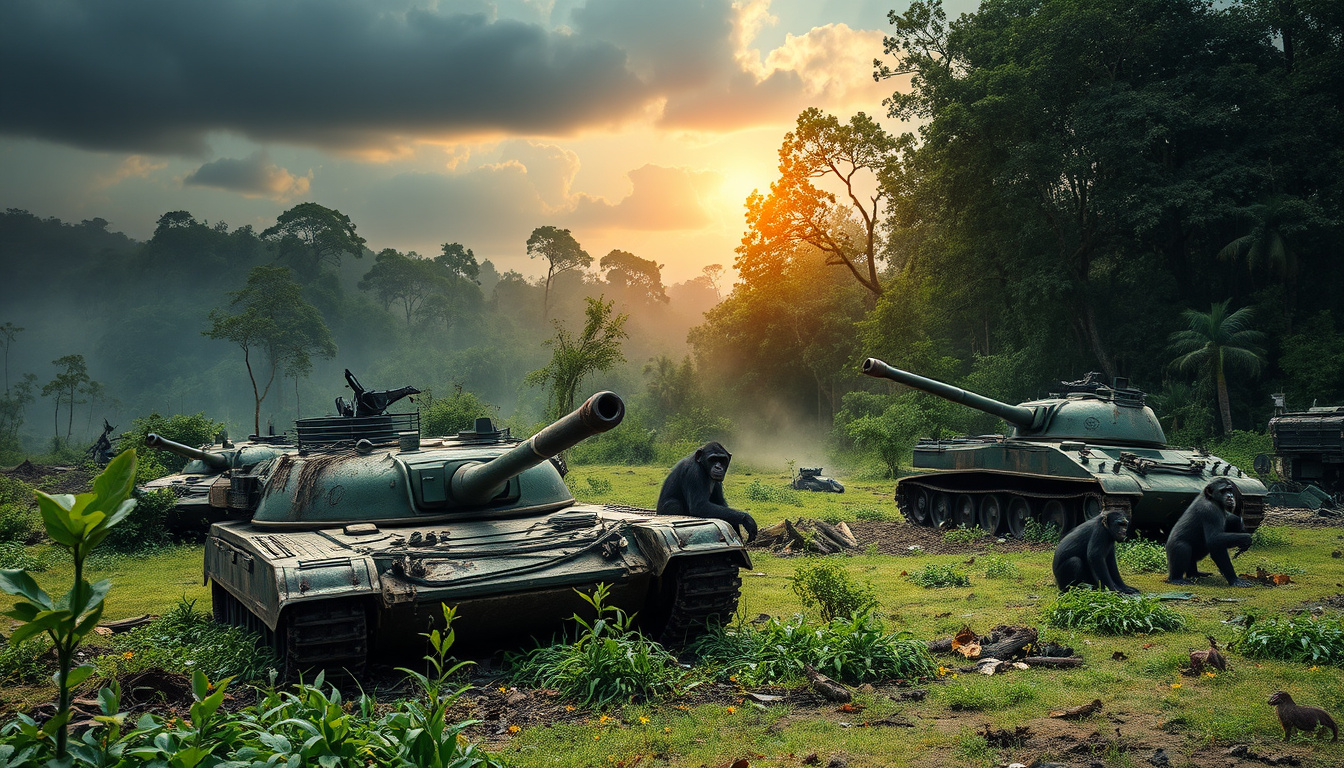
Implications of Warfare Behavior on Conservation
Understanding primate warfare behavior is not just an academic exercise; it has profound implications for conservation efforts.
In various primate species, social dynamics often mimic aspects of human conflict, showcasing lethal aggression over territory, resources, and even mates.
This aggression influences population structures and survival rates, highlighting the need for nuanced conservation approaches that consider not just environmental but also social factors.
For instance, in species such as chimpanzees and savanna baboons, the presence of contentious behaviors can lead to increased mortality rates.
Thus, effective conservation strategies must incorporate insights from behavioral ecology to mitigate conflict and foster peaceful coexistence, not only within primate communities but also between human populations and wildlife.
By addressing the underlying causes of aggression and promoting harmonious interactions, conservationists can work towards sustainable solutions that preserve both the species and their habitats.
Conclusion: Understanding Primate Warfare in a Broader Context
In the intriguing world of primatology, the exploration of primate warfare behavior unveils more than just the savage interactions among species; it offers a window into the complexities of social structures, resource acquisition, and survival strategies within animal communities.
As we navigate through these behaviors, it becomes evident that primates are not merely reacting to external threats, but are also engaging in a sophisticated tapestry of interactions that reflect broader evolutionary principles.
In a world where humanity often grapples with its own conflicts and social hierarchies, studying primate warfare behavior prompts us to reconsider our understanding of aggression, cooperation, and group dynamics.
By observing how these remarkable creatures establish boundaries, engage in social alliances, and sometimes resort to violence, we gain insight not only into their lives but also into our own existence.
Ultimately, contemplating primate warfare invites us to reflect on the interconnectedness of all species and the shared evolutionary paths that guide behavior.
As we deepen our understanding, we may find pathways toward fostering empathy and cooperation, not just within our species, but across the wider tapestry of life on our planet.
Frequently Asked Questions
What is Primate Warfare Behavior?
Primate warfare behavior refers to organized, aggressive conflicts between groups of primates, which can include territorial battles, resource competition, and defense against rival groups.
How has aggression evolved in primates?
Aggression in primates has evolved as a survival mechanism, influencing their social structures, mating strategies, and overall reproductive success over millions of years.
What role do social structures play in primate warfare?
Social structures significantly impact primate warfare by determining group hierarchy, alliances, and the strategies used during conflicts.
Highly structured groups may experience more organized conflicts.
Can you provide examples of primate conflicts?
Yes, case studies include territorial disputes among chimpanzee communities, where coordinated attacks can result in severe injury or death, and conflicts between baboon troops fighting for dominance.
What are the implications of Primate Warfare Behavior for conservation efforts?
Understanding primate warfare behavior is crucial for conservation, as it can influence group dynamics, population health, and the effectiveness of protection strategies in their natural habitats.
If this story sparked your curiosity, you can experience it firsthand.
Bushman Safaris offers curated chimpanzee tracking experiences in Uganda, including access to Kibale National Park and the Ngogo region where these remarkable behaviors have been observed.
For our top 3 recommended Uganda chimpanzee tours, simply text “chimpanzee” to info@bushmansafaris.com
or WhatsApp +256 704 902398, and we’ll send you tailored options based on your travel preferences.