

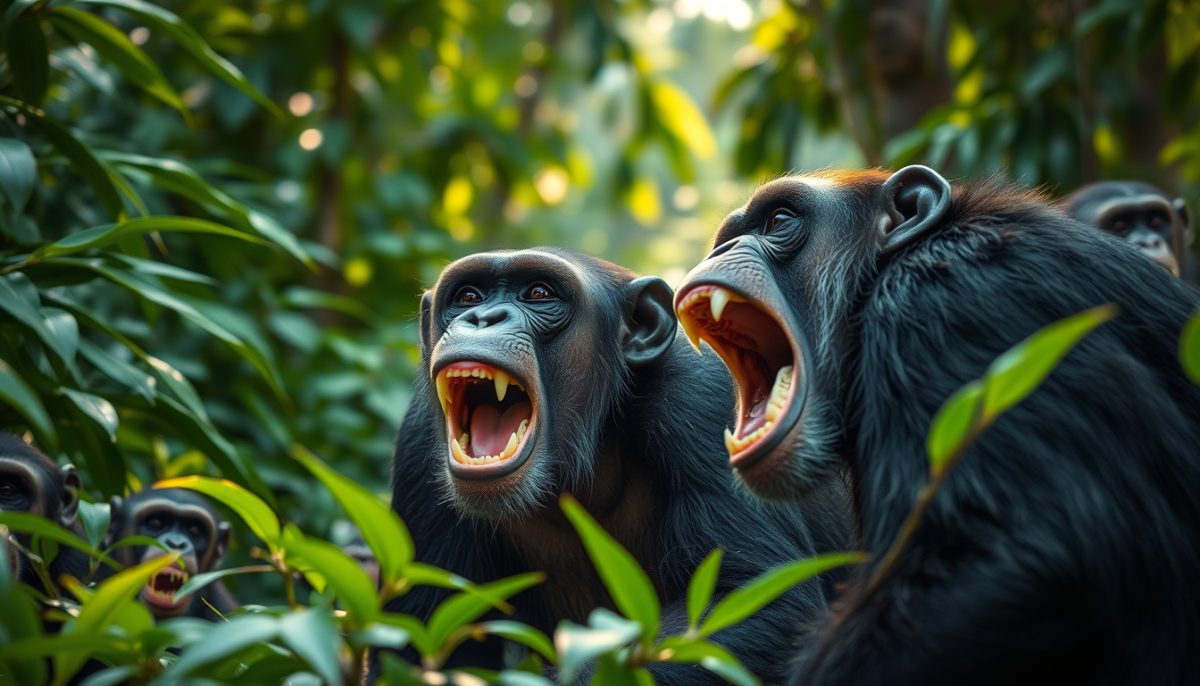
Unraveling the Mystery: Why Chimpanzees Display Aggressive Behavior
In the heart of Uganda’s lush rainforests, the sounds of the wild resonate deeply, echoing the complexities of life within. As the sun breaks through the dense foliage, the chattering of chimpanzees fills the air—a reminder of our closest living relatives and their intricate world. Yet, amid the playful antics, moments of aggression emerge, raising a beacon of curiosity: Why do chimpanzees display aggressive behavior?
Understanding this phenomenon not only unveils the layers of their social structure but also holds insights into their survival, environmental interactions, and the broader implications for conservation.
Join us as we unravel the causes behind this captivating behavior and explore its significance in the wilds of Uganda.
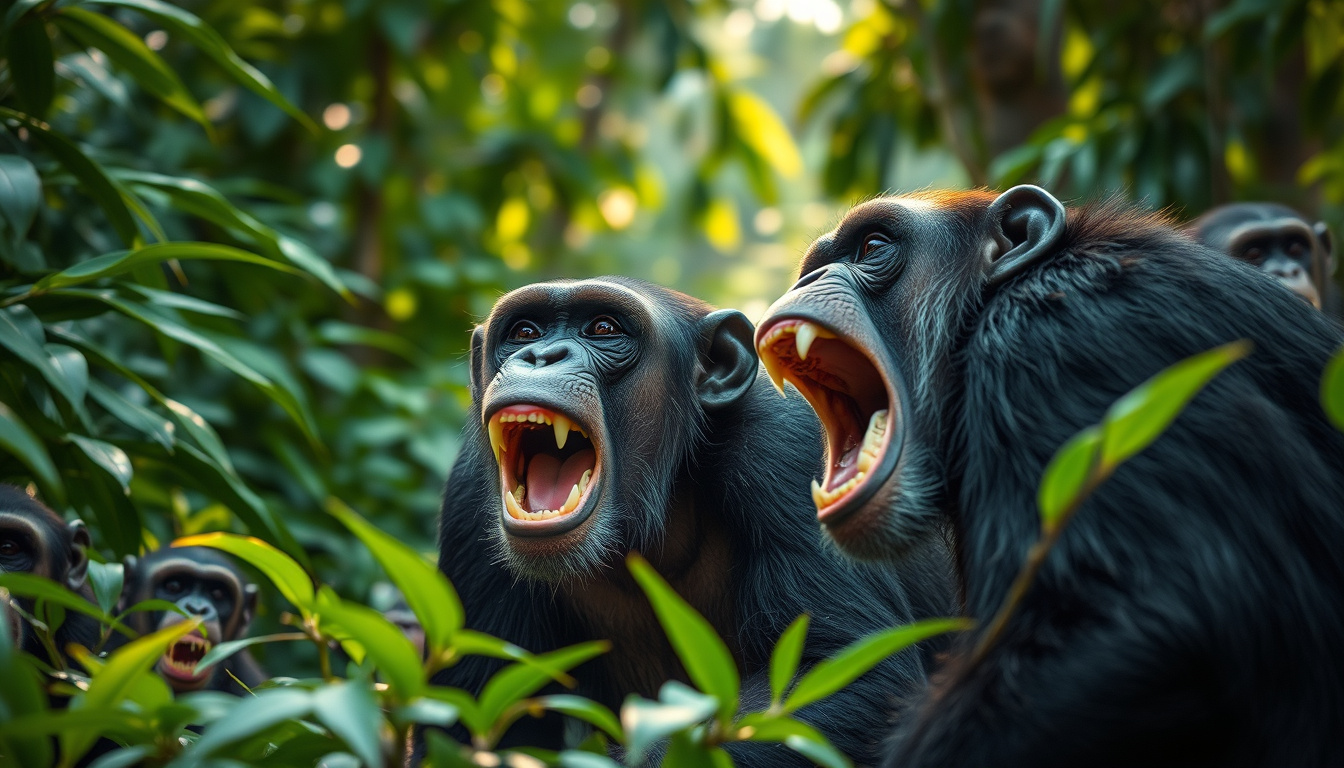
Key Takeaways
- Chimpanzee aggression is influenced by complex social hierarchies and interactions.
- Environmental factors such as habitat loss play a significant role in aggressive behavior.
- Stress and resource scarcity can exacerbate aggression among chimpanzees.
- Aggressive behavior may serve as an evolutionary strategy for survival and competition.
- Implementing effective mitigation strategies can help reduce aggression in captive chimpanzee populations.
Understanding Chimpanzee Aggression
Chimpanzees, our closest living relatives, exhibit a range of complex behaviors, one of which is aggression. But why are chimpanzees aggressive? This question resonates beyond simple animal behavior; it reflects the intricate dynamics of their social structures and evolutionary history.
Exploring these behaviors requires diving into the world of primatology, where researchers have observed that aggression can stem from various sources: competition for resources, territorial disputes, social hierarchy, and even the instinctual drive to protect loved ones.
Typically, these aggressive encounters manifest from direct confrontations over food or mates, showcasing their intelligent social capacities.
However, what sets chimpanzee aggression apart from other animals is not just the frequency of their conflicts but the underlying emotions, strategies, and social bonding that emerge from these encounters.
For example, chimpanzees are known to form alliances and use calculated strategies to assert dominance, which can sometimes lead to violent skirmishes among groups.
Moreover, their ability to experience emotions similar to humans—including jealousy and fear—makes their aggressive tendencies particularly fascinating.
The Role of Social Hierarchy in Aggressive Interactions
Chimpanzee aggression can be perplexing, especially for those unfamiliar with their complex social structures. The question of why chimpanzees are aggressive often intersects with their social hierarchy.
In chimpanzee communities, a well-defined pecking order governs interactions. Dominant individuals often exhibit aggressive behaviors to maintain their status and control over resources, such as food and mating opportunities. These aggressive encounters occur not only between males competing for dominance but also among females and across group dynamics.
Research indicates that aggression is sometimes a strategy to establish bonds, assert power, or reinforce social ties.
Intriguingly, aggression can be both a tool for conflict resolution and a means of fostering social hierarchy, reflecting a nuanced balance between competition and cooperation in the lives of these fascinating primates.
‘In every walk with nature one receives far more than he seeks.’ – John Muir
Environmental Factors Influencing Aggression in Chimpanzees
When contemplating the question of why chimpanzees are aggressive, one must consider the complex interplay of environmental factors that significantly influence their behavior.
In the lush forests of Uganda, where these fascinating primates reside, limited resources such as food and territory can lead to increased competition among individuals and groups. For instance, chimpanzees often rely on abundant fruit trees, which may become scarce during certain seasons, heightening tensions as they vie for access to these vital resources.
Additionally, habitat loss due to human encroachment and deforestation can force chimpanzees into smaller, fragmented territories, resulting in aggressive encounters as groups clash over diminishing space.
Moreover, social dynamics within chimpanzee communities also play a pivotal role in aggression. Hierarchies are established based on strength and alliances, with dominant males often exhibiting aggressive behaviors to maintain control and attract mates. Observations indicate that when resources are scarce, even typically peaceful chimpanzees may resort to aggressive behaviors as they defend their position within the group against rivals.
The Impact of Stress and Resource Scarcity on Chimpanzee Behavior
In the intricate world of chimpanzees, aggression often emerges as a complex response driven by stress and the scarcity of resources. Understanding why chimpanzees are aggressive requires delving into their social structure and the environmental challenges they face.
Chimpanzees, like humans, are affected by competition for food, mates, and territory. When resources like fruits and nuts become scarce, tensions rise within groups.
This fierce competition can lead to increased aggression as chimps vie for limited resources. For instance, during drought seasons, food availability declines drastically, forcing chimpanzees to expand their foraging territories and come into contact with neighboring communities. These encounters can escalate into conflicts, illustrating that aggression is often a survival mechanism rather than an inherent trait.
Additionally, the stress that arises from overcrowded living conditions, especially in habitats that are shrinking due to human encroachment, can lead to heightened aggression as individuals exhibit defensive behaviors to protect their social status within the troop. This understanding sheds light on the delicate balance of social dynamics among chimpanzees and serves as a reminder of the impact human activities have on their natural behaviors.
Aggression as a Survival Strategy: Evolutionary Perspectives
Chimpanzees, our closest living relatives in the animal kingdom, exhibit behavior that can often be perceived as aggressive. Understanding why chimpanzees are aggressive requires delving deep into their evolutionary history and natural instincts.
From an evolutionary perspective, aggression in chimpanzees serves as a crucial survival strategy. Within their complex social structures, aggression helps establish dominance hierarchies and assert control over resources like food and mating opportunities.
It is essential to recognize that what might appear as aggression is frequently a manifestation of social dynamics—playful wrestling among young chimps, for instance, can become rough and may seem aggressive. Additionally, in their natural habitat of the rich woodlands of Uganda, chimpanzees also demonstrate aggression toward competing groups, particularly during territorial disputes. Such confrontations can be violent and are often fueled by the need to protect their group’s resources and ensure reproductive success.
This dual role of aggression in both social bonding and territorial defense indicates a sophisticated evolutionary adaptation that has allowed chimpanzees to thrive in challenging environments. By observing these behaviors, we gain a deeper understanding of the nature of aggression, not just as hostility but as an essential aspect of survival within the animal kingdom.
Mitigation Strategies: How We Can Reduce Aggressive Behavior in Captivity
Chimpanzees, our closest living relatives, share approximately 98% of their DNA with humans. This remarkable genetic closeness sparks immense curiosity, yet it also uncovers challenging behaviors seen in the wild and captivity, leading many to ponder, ‘Why are chimpanzees aggressive?’ Aggression in chimpanzees can stem from various factors, including habitat encroachment, social dynamics, and environmental stressors.
In captivity, where chimpanzees face limited personal space and inconsistent social structures, aggression can become pronounced. It is essential to explore mitigation strategies to minimize this aggressive behavior, ensuring the well-being of these intelligent primates.
Effective strategies include creating enriching environments that promote natural behaviors, facilitating social interactions among peers with compatible temperaments, and employing positive reinforcement techniques during training. Such methods can help replicate a more natural setting and reduce stressors that often elevate aggressive tendencies.
Additionally, educating caretakers and the public about chimpanzee behavior fosters a deeper understanding and respect for their needs. By combining these strategies, we can create safer and healthier environments that acknowledge the complexities of chimpanzee nature, shifting the narrative surrounding their aggression and promoting a symbiotic relationship between humans and chimpanzees.
Frequently Asked Questions
What are the main reasons behind chimpanzee aggressive behavior?
Chimpanzee aggression can stem from various factors, including social hierarchy disputes, environmental stressors, and resource scarcity. These behaviors can also serve as survival strategies in the wild.
How does social hierarchy affect aggression among chimpanzees?
In chimpanzee communities, social hierarchy plays a crucial role in aggression. Higher-ranking individuals may display aggressive behavior to maintain their status, while lower-ranking members may use aggression to challenge their position or defend themselves.
What environmental factors contribute to aggression in chimpanzees?
Environmental factors such as habitat loss, changes in climate, and availability of resources like food and water can lead to increased aggression. Stress from these changes often heightens tensions within chimpanzee groups.
Can stress and resource scarcity lead to aggressive behavior in chimpanzees?
Yes, stress and resource scarcity can significantly impact chimpanzee behavior. Limited resources may lead to competition and aggression as individuals compete for necessities, which can escalate conflicts within groups.
What strategies can be employed to reduce aggressive behavior in captive chimpanzees?
To mitigate aggressive behavior in captivity, strategies include providing enrichment activities, ensuring ample resources, and creating environments that reduce stress, thus promoting a more harmonious social structure.
If this story sparked your curiosity, you can experience it firsthand.
Bushman Safaris offers curated chimpanzee tracking experiences in Uganda, including access to Kibale National Park and the Ngogo region where these remarkable behaviors have been observed.
For our top 3 recommended Uganda chimpanzee tours, simply text “chimpanzee” to info@bushmansafaris.com
or WhatsApp +256 704 902398, and we’ll send you tailored options based on your travel preferences.