

Unlocking Chimpanzee Behavior: Insights from Cutting-Edge Research
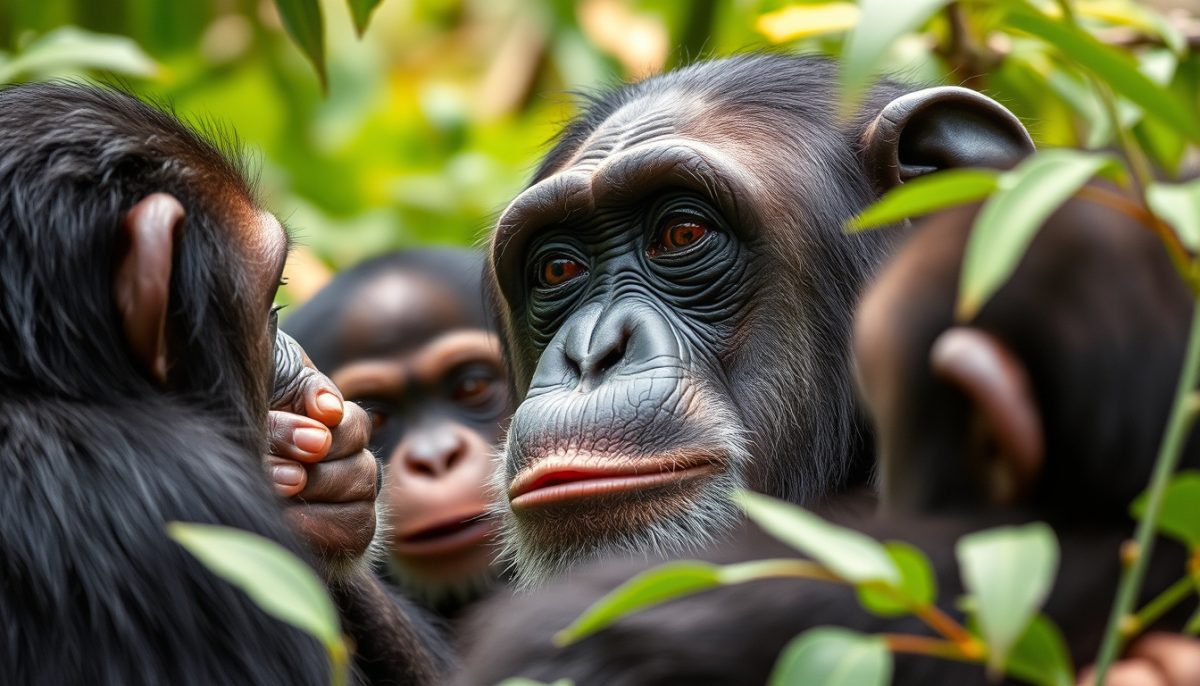
In the dense, emerald heart of Ugandan jungles, a world exists that mirrors our own yet spans back millions of years.
Here, chimpanzees—our closest relatives—play out dramas of survival, socialization, and communication that fascinate scientists and nature enthusiasts alike.
As researchers delve into the captivating realm of chimpanzee behavior research, they uncover profound insights into the complexities of these intelligent creatures.
From their intricate social structures to their innovative use of tools and communication methods, every discovery breathes life into our understanding of the bonds that connect not just chimpanzees but all living beings.
Could this knowledge help us redefine our relationship with our own world?
In this article, we will explore the many facets of chimpanzee behavior research, revealing secrets that might transform the way we perceive our furry cousins and the environments they inhabit.
Key Takeaways
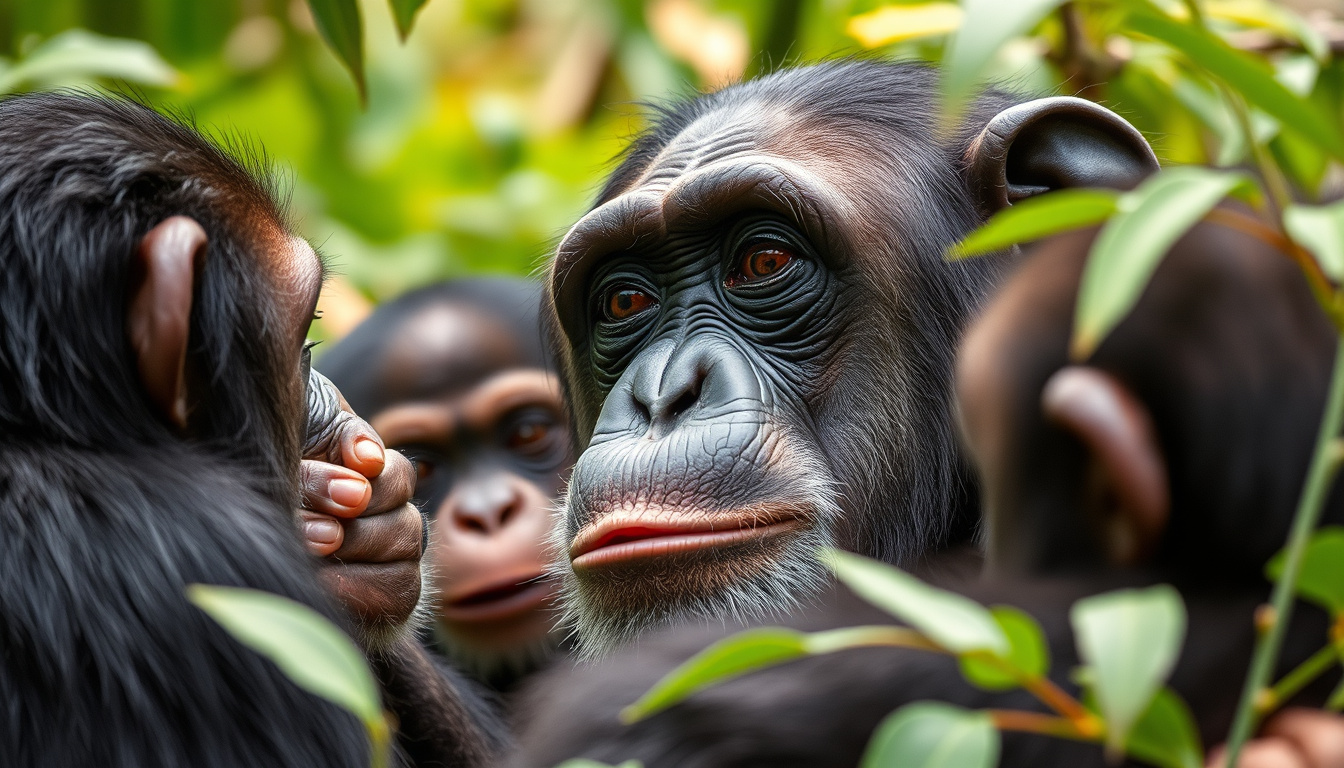
- Chimpanzee behavior research is crucial for understanding their complex social structures.
- Innovative research methods have led to groundbreaking insights in chimpanzee communication.
- Key findings highlight the sophisticated ways chimpanzees interact and convey meaning.
- Environmental factors play a significant role in shaping chimpanzee behavior and habits.
- Future research aims to deepen our knowledge of chimpanzee society and its implications for conservation.
Introduction to Chimpanzee Behavior Research
Imagine witnessing a scene deep in the rainforests of Uganda—trunks of ancient trees rise majestically above, while below, a troupe of chimpanzees interacts, their pant-hooting calls echoing through the greenery.
As they display their complex social structures and emotional bonds, one can’t help but wonder: what can we learn from their behavior?
Chimpanzee behavior research is not just an academic pursuit; it reveals critical insights into the very essence of what it means to be part of a community—mirroring our own human behaviors and relationships.
Overview of Chimpanzee Behavior Research
Chimpanzees (Pan troglodytes) share an astonishing 98% of their DNA with humans, making them one of our closest living relatives.
This similarity is why chimpanzee behavior research captivates both scientists and animal enthusiasts alike.
The study of these remarkable primates helps researchers understand their intricate social systems, communication methods, and cultural practices.
As we delve into their world, we begin to recognize the parallels between chimpanzee societies and our own, providing a unique lens through which we can evaluate human behavioral evolution.
Deep Dive into Chimpanzee Behavior
Social Structure and Relationships
Chimpanzees live in communities that usually consist of 20 to 150 members.
Their social relationships are complex and dynamic, featuring alliances, rivalries, and hierarchies.
For instance, dominant males maintain their status through assertive behaviors, but they must also build alliances with others to solidify their power.
Observing these intricate social structures allows researchers to draw parallels with human social interactions and leadership dynamics.
Communication and Emotional Expression
Unlike many animals, chimpanzees employ a wide range of vocalizations—like pant-hoots, screams, and barks—to convey messages across their social group.
They also express emotions such as joy, sadness, and empathy, showcasing behaviors such as hugging or comforting each other.
Studies on chimpanzee communication reveal and reinforce our understanding of the evolution of language and emotional intelligence.
Tool Use and Cultural Practices
Another fascinating aspect of chimpanzee behavior is their use of tools.
Whether using sticks to extract termites from mounds or rocks to crack nuts, this innovative problem-solving highlights their intelligence.
Various communities exhibit unique tool-use techniques, suggesting distinct cultural practices.
This cultural variation among chimpanzee groups underscores the role of environment and community feedback in behavioral development, a concept directly applicable to human societies.
Key Insights from Chimpanzee Behavior Research
Research into chimpanzee behavior not only enriches our understanding of non-human primates but shines a light on human evolution as well.
Comparing the behaviors of chimpanzees and humans can reveal the roots of cooperation, conflict, and social bonding, leading to compelling questions about morality and ethics.
Can we view empathy as a foundational pillar across species?
How do competitive behaviors influence social cohesion?
One of the original insights from recent studies compared how human infants and young chimpanzees learn social norms within their groups, illustrating a fascinating spectrum of learning and imitation in developing relationships.
Both species exhibit remarkable adaptability, yet humans display more advanced symbolic communication, shedding light on the evolutionary journey from simple social interactions to complex societal structures.
Experiencing Chimpanzees in the Wild
Now, imagine the thrill of observing these behaviors firsthand in Uganda.
While research is crucial, nothing compares to the immersive experience of trekking through dense forests, listening to the lively chatter of chimpanzees as you get up-close to their world.
Want to experience this in the wild?
You can request our top chimpanzee tracking experiences in Uganda by messaging “chimpanzee” to info@bushmansafaris.com or +256 704
902398.
After an exhilarating day of observing these incredible creatures, retreat to the tranquil settings of Igwara Lodge.
Nestled in nature, it offers a restful escape—a perfect sanctuary for travelers who appreciate the beauty of the wild while relishing in a premium experience.
Conclusion
In conclusion, chimpanzee behavior research opens a window into our understanding of both animal and human behaviors.
By exploring the social dynamics, communication styles, and cultural distinctions of chimpanzees, we not only uncover the mysteries of a closely related species but also provoke thought about our own societal practices.
As we witness these intelligent creatures living vibrant lives in their natural habitat, we might just learn invaluable lessons that resonate within our human experiences.
Ready to deepen your understanding of our wise cousins and explore their habitats?
Request the top 3 curated Uganda chimpanzee tours by texting “chimpanzee” to info@bushmansafaris.com or +256 704 902398 (WhatsApp).