

The Chimpanzee War in Uganda: Uncovering the Battle for Survival and Territory
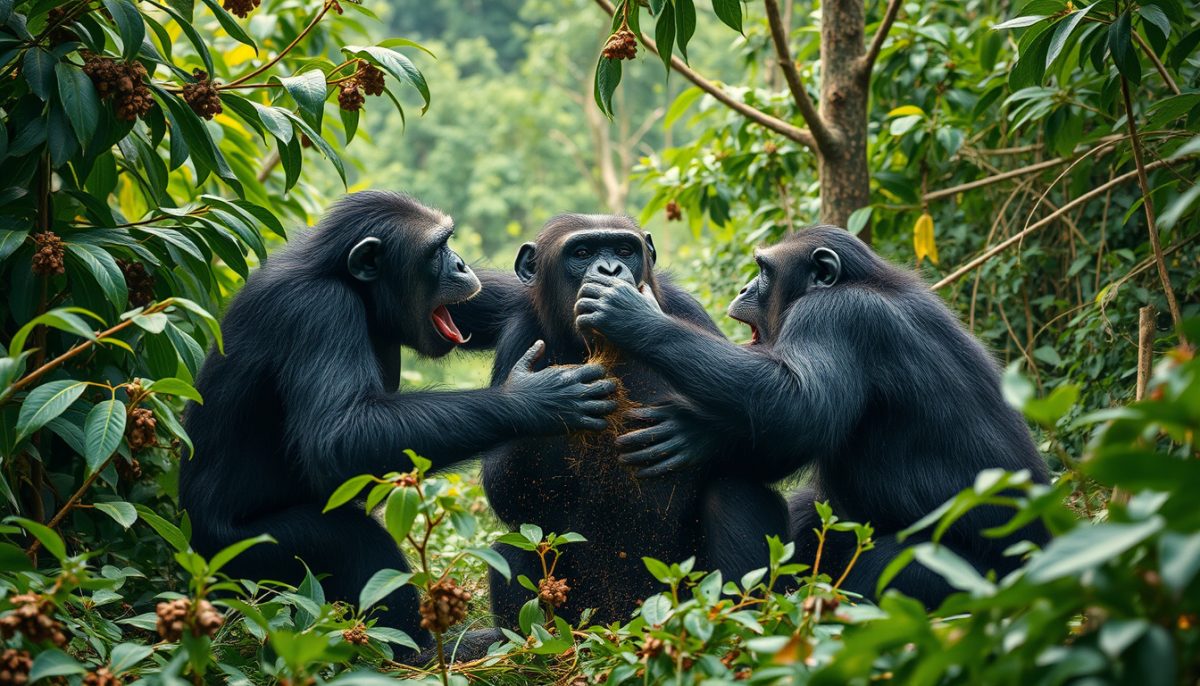
In the heart of Uganda’s lush forests, a saga unfolds — one not involving humans, but rather the intelligent, social creatures we share our planet with: chimpanzees.
The Chimpanzee War in Uganda is more than just a tale of territorial disputes; it is a complex narrative of survival, power struggles, and a quest for resources among these intriguing primates.
Set against the backdrop of rapidly changing ecosystems and encroaching human development, these battles reflect broader challenges facing wildlife in today’s world.
As the sun pierces through the dense canopy, the stakes heighten for these communities of chimpanzees, who are fighting not only for their territory but also for their very existence.
Key Takeaways
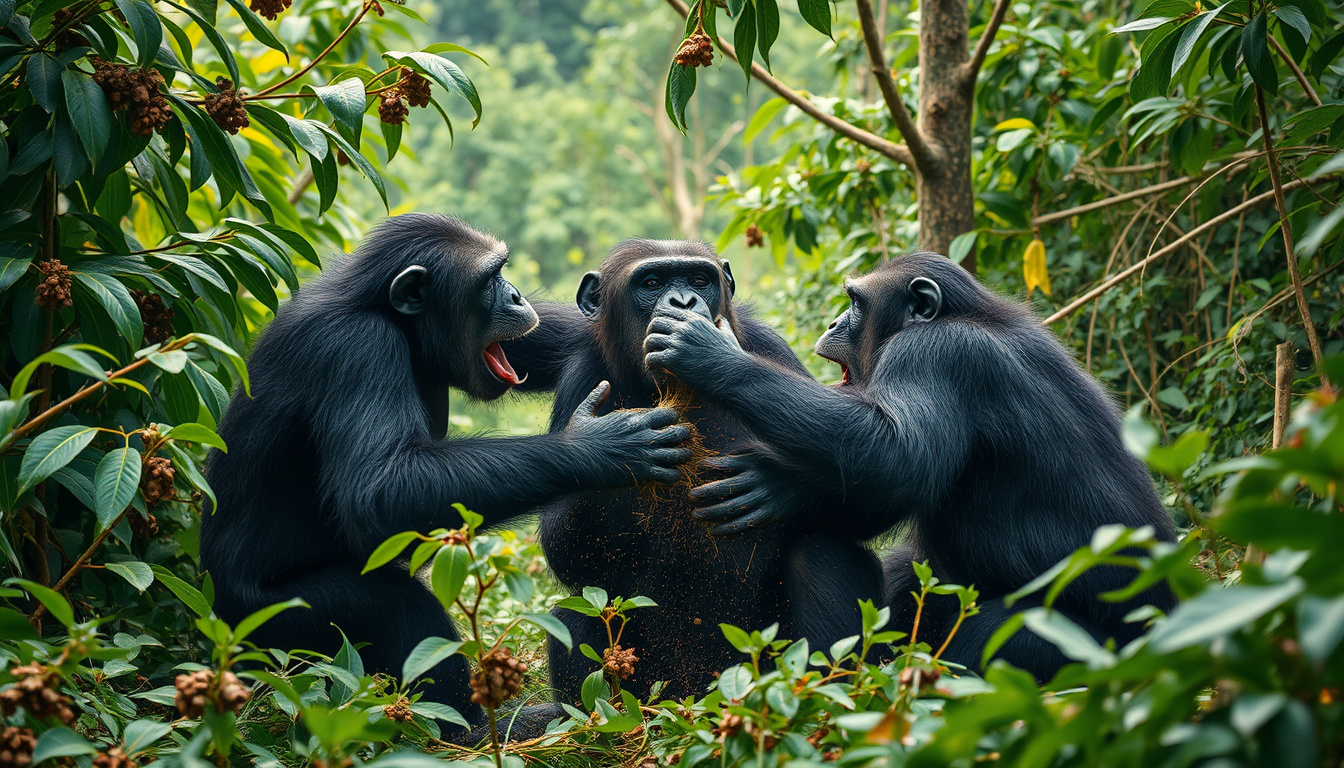
- Chimpanzees in Uganda are engaged in territorial battles that reflect their complex social structures.
- Historical context reveals significant changes in chimpanzee populations due to habitat loss and human encroachment.
- Key players in the Chimpanzee War include different tribes of chimpanzees competing for resources and territory.
- Factors such as food scarcity and environmental changes exacerbate conflicts among chimpanzee groups.
- Conservation efforts are crucial in mitigating conflicts and promoting the survival of Uganda’s chimpanzee populations.
Introduction to the Chimpanzee War
The Chimpanzee War in Uganda: A Fascinating Battle for Territory
In the lush forests of Uganda, a compelling and unusual conflict has unfolded—one not between humans, but among our closest relatives: chimpanzees.
Dubbed the ‘Chimpanzee War’ in Uganda, this gripping saga draws on survival strategies and societal structures reminiscent of our own history.
Imagine the shadowy depths of the trees, where tension mounts, alliances shift, and the calls of these incredible primates echo in the distance.
As they engage in fierce territorial disputes, they offer us a rare glimpse into the complexities of social behavior, communication, and the profound characteristics that connect us to these intelligent beings.
With approximately 5,000 chimpanzees residing in Uganda, particularly in Kibale National Park and surrounding areas, these populations are both culturally rich and endangered by human activity.
This profound conflict, termed the ‘Chimpanzee War,’ illuminates not just aggression but a struggle for resources and social standing within their communities.
This invites us to reflect on our own human conflicts, exploring themes of community, rivalry, and survival that transcend species.
As we delve into the dramatic nuances of chimpanzee behavior, it prompts us not only to appreciate their complexity but also to recognize the urgent need for conservation efforts in critical habitats.
Join us on this journey to uncover the intense saga of the chimpanzees in Uganda—a narrative that draws the curious traveler, the passionate conservationist, and anyone fascinated by the natural world.
Historical Context of Chimpanzee Populations in Uganda
To truly understand the challenges facing chimpanzees in Uganda today, it’s essential to explore their historical context, linked to the so-called ‘Chimpanzee War Uganda.’
As deforestation and hunting escalated, fueled by a growing human population and agrarian expansion, chimpanzee habitats shrank, leading to heightened competition for resources.
This period of intensification, beginning in the late 20th century, saw conflicts peak as both communities and chimpanzees clashed over land and survival.
The ‘war’ is not one of physical aggression in the traditional sense; rather, it symbolizes the struggle for coexistence within dwindling habitats.
Like humans, chimpanzees exhibit complex social structures with hierarchies and internal conflicts.
The impact of the Chimpanzee War in Uganda has led to adaptive behaviors in these primate societies, showcasing the need to understand these behaviors for effective conservation.
Engaging with the broader implications of this conflict offers deep insights—not just into the lives of chimpanzees but into our shared responsibility towards biodiversity conservation.
By exploring the motivations behind these struggles and ongoing rehabilitation efforts, we can aim for a more harmonious existence between humans and wildlife in Uganda.
‘In the end, we will conserve only what we love; we will love only what we understand; we will understand only what we are taught.’ – Baba Dioum
Key Players in the Territory Dispute
In Uganda’s verdant forests, a unique and often overlooked conflict unfolds—dubbed the ‘Chimpanzee War in Uganda.
This intriguing phenomenon highlights intricate behaviors where groups or communities fiercely compete over territory and resources.
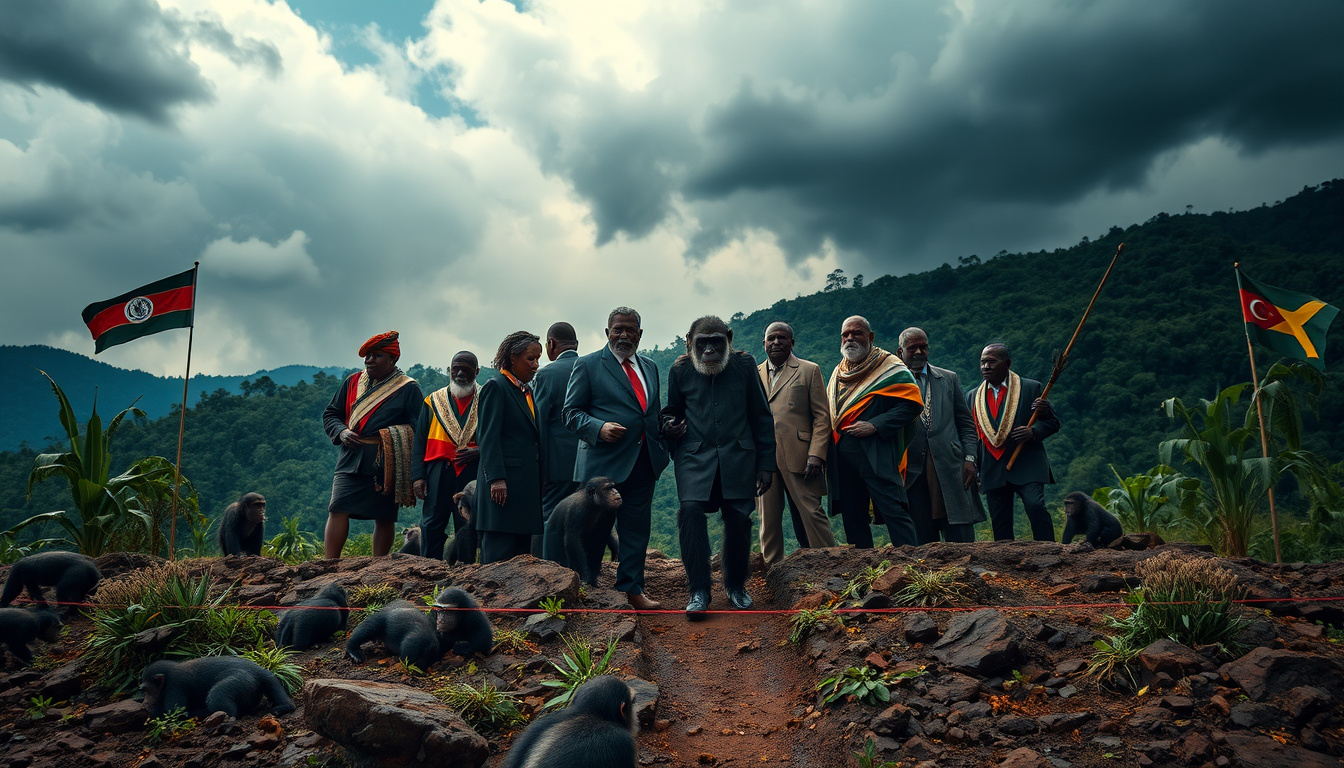
The main players are two neighboring communities, each led by dominant males known as alpha males. These males command respect within their groups and play critical roles in territory dynamics.
Their alliances can shift dramatically, and confrontations often ensue when one group seeks to disrupt established boundaries.
Alongside alpha males, females and their offspring also play crucial roles, influencing alliances and community stability.
The stakes in these territorial wars are high—they include essential resources needed for survival, such as food, breeding opportunities, and protection against predators.
Studying these disputes provides valuable insights into chimpanzee social structures, showcasing their complex social hierarchy and the raw, instinctual drive for survival ingrained in animal and human nature alike.