

Exploring Chimpanzee Communication: Unveiling the Language of Our Closest Relatives
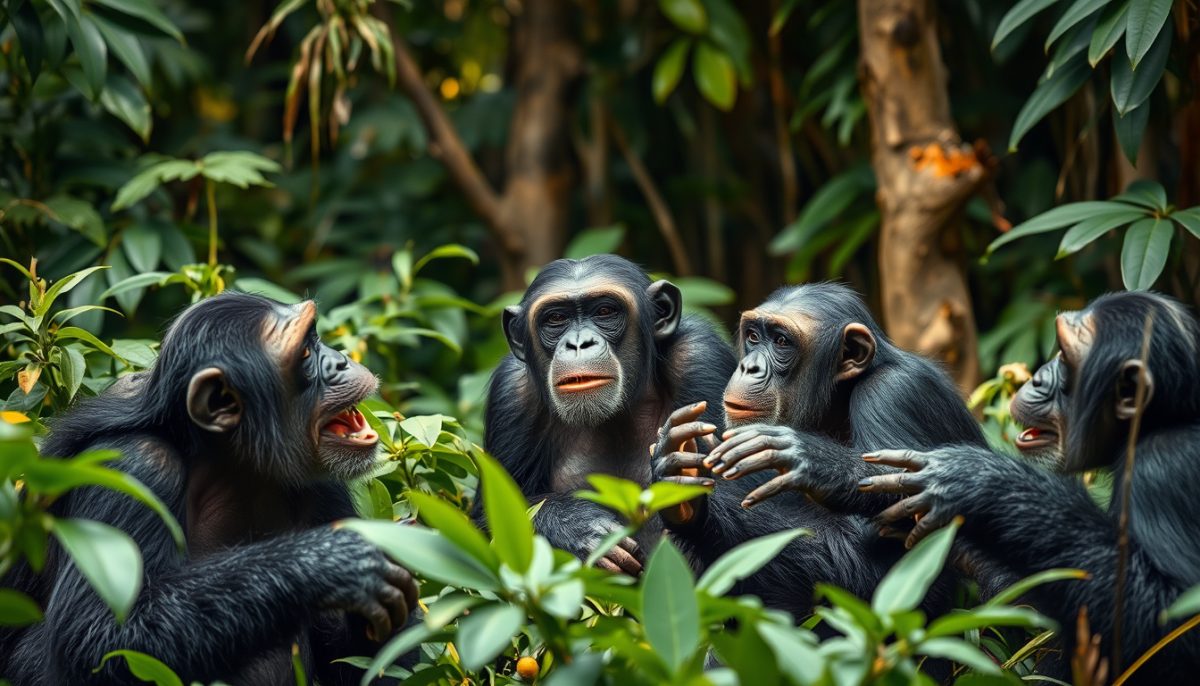
In the depths of Uganda’s verdant forests, where the symphony of nature comes alive, the intricate world of chimpanzee communication unfolds dramatically.
These intelligent primates, sharing over 98% of our DNA, possess an advanced communication system integrating vocalizations, gestures, and complex social cues.
Observing their interactions not only offers insight into their world but also casts light on our own evolutionary path.
Ready to uncover the secrets of their unique language?
Join us as we explore the fascinating realm of chimpanzee communication and unearth what these amazing creatures are communicating.
Key Takeaways
- Chimpanzees use a diverse mix of vocalizations to express emotions and share information.
- Gestures and body language also play a pivotal role in their communication.
- Social hierarchies greatly influence how chimpanzees interact within their groups.
- Research methods vary, offering unique glimpses into chimpanzee communication behaviors.
- Understanding their communication can boost conservation efforts and enhance human-wildlife relations.
Introduction to Chimpanzee Communication
In Uganda’s lush forests, amidst towering trees and whispers of rustling leaves, a complex web of interactions thrives— the realm of chimpanzee communication.
Imagine stepping into this vibrant ecosystem, where profound connections unfold through varied calls, gestures, and expressions.
As you observe these intelligent beings, recognizing their communication becomes vital not only for appreciating their social complexities but also for safeguarding their future.
From a soft pant-hoot echoing through the jungle to the affectionate displays within their clans, every behavior tells a story begging to be explored.
The Role of Vocalizations in Chimpanzee Communication
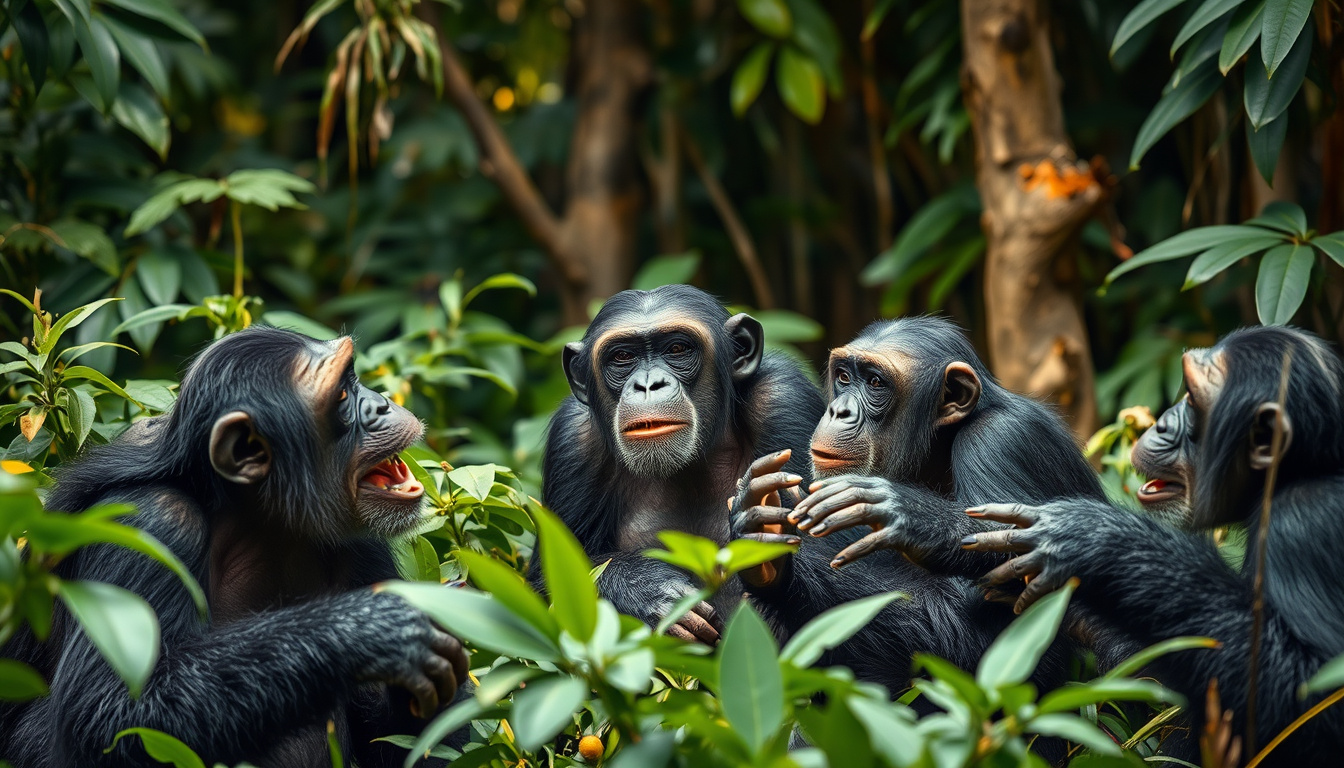
Chimpanzee communication is richly complex, featuring a fascinating array of vocalizations that mirror elements of human speech.
These vocal sounds perform various functions, from signaling food discovery to alerting others of potential dangers.
Researchers have cataloged numerous vocalizations, including hoots, screams, and grunts—each meaningful within its context.
For example, a loud hoot may signal the location of food, drawing others to gather, while a softer grunt might foster social bonds during grooming.
The nuances in tone, frequency, and volume also express emotions and intentions, showcasing their sophisticated social awareness.
‘The chimpanzee, as a species, embodies the most communicative aspects of the primate mind, reaching through vocalizations and gestures to weave a complex tapestry of social interaction.’ – Unknown
Non-verbal Communication: Gestures and Body Language
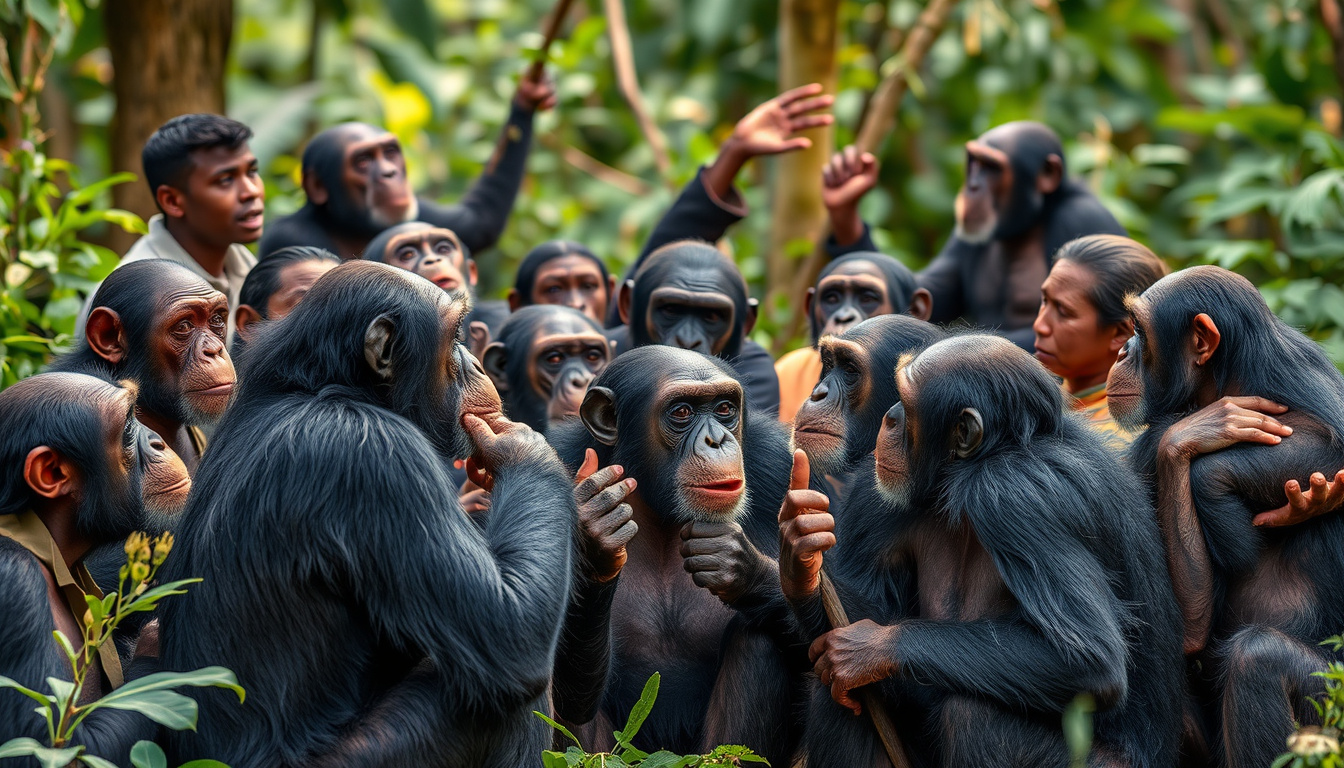
Chimpanzee communication extends beyond vocals, revealing the intricate ways these primates navigate their social worlds through body language.
Gesture-based communication governs much of their interactions, influencing group dynamics and individual relationships significantly.
For example, a raised arm might indicate alertness to threats, while gentle grooming expresses affection and strengthens bonds.
Understanding these signals enhances our knowledge of their complex social structures, drawing parallels to human communication.
The Influence of Social Structure on Communication Behavior
Imagine the vibrant jungles of Uganda, alive with the rustling of leaves and distant calls of wildlife.
Suddenly, a chorus of whoops and hoots envelops you, meshing you within a dynamic network communicating shared experiences and social hierarchies.
Understanding chimpanzee communication offers more than sounds; it opens a window into their elaborate social lives and the bonds that connect them.
Their communication style, rich and varied, is significantly shaped by their social structures, influencing how they interact, form relationships, and navigate their surrounding environment.
Research Methodologies in Studying Chimpanzee Communication
To fully grasp this communication spectrum, researchers deploy various methodologies, from long-term field observations in Uganda’s rich forests to sophisticated audio and video recording techniques for detailed analysis.
Experimental approaches also isolate specific variables to see how these impact interactions, enhanced by ethograms that catalog and interpret various behaviors within different contexts.
Implications of Understanding Chimpanzee Communication for Conservation and Human Interaction
Delving into chimpanzee communication offers essential insights, significantly impacting conservation efforts and our understanding of their cognitive abilities.
Informed by these studies, conservation strategies can better accommodate chimpanzee social structures and behaviors, critical for enhancing biodiversity and fostering enriching human-chimpanzee interactions.
Frequently Asked Questions
What are key vocalizations used in chimpanzee communication?
Chimpanzees deploy a range, from hoots and screams to grunts, each with specific social functions from alerts to emotional expressions.
How do chimpanzees use gestures in their communication?
Gestures like arm raises and hand claps are integral to their messaging, highlighting their complex understanding of non-verbal cues.
In what ways does social structure affect chimpanzee communication?
Social hierarchy and group cohesion critically influence their communication, with variations evident among different group members.
What research methodologies study chimpanzee communication?
Observational studies, controlled experiments, and advanced recording technologies are pivotal in analyzing their communicative behavior.
Why is understanding chimpanzee communication essential for conservation?
Knowing their communication aids in crafting conservation strategies, enhancing human interactions, and ensuring the stability of their populations.