
Exploring Chimpanzee Social Structure: An In-depth Study of Their Complex Communities
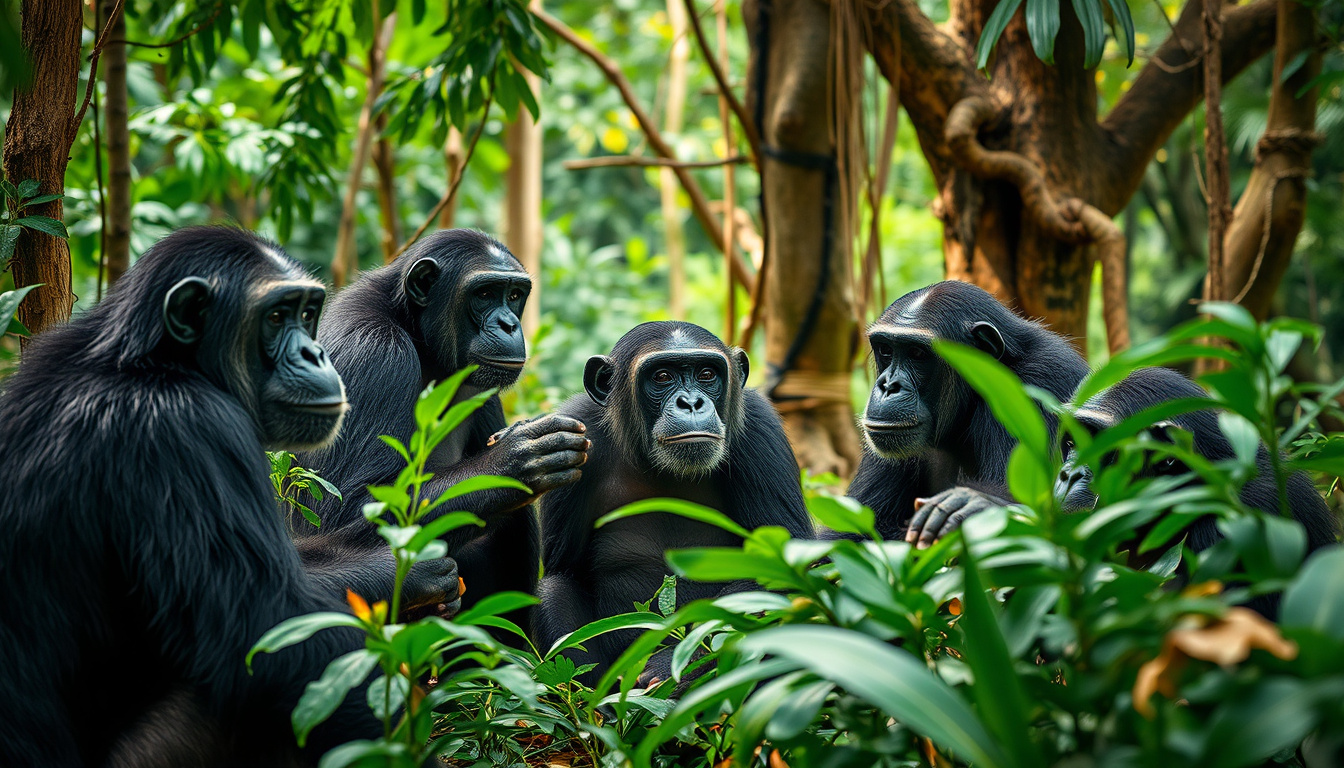
Deep within the lush valleys of Uganda, where vibrant greens meet the great blue skies, exists a world unlike any other. Imagine a family of chimpanzees—lively, social, and profoundly relational—navigating their daily existence with intelligence, emotion, and an intricate social fabric that rivals our own. The rich layers of their behaviors unfold in a captivating narrative that tells the story of survival, cooperation, and complexity.
This article delves into the remarkable chimpanzee social structure, uncovering insights that inform our understanding of these incredible primates, connecting us to their world, and beckoning us to explore their experiences within the jungles of Uganda.
Key Takeaways
- Chimpanzee social structure features complex hierarchies and relationships.
- Hierarchies within chimpanzee communities play a significant role in their social dynamics.
- Friendship and alliances are crucial for stability and support among chimpanzee groups.
- Communication patterns enhance social bonds and help to resolve conflicts among chimpanzees.
- Understanding these social behaviors is vital for effective conservation strategies.
Understanding Chimpanzee Social Structure: An Overview
Amidst a dynamic and intricate social framework, the complex hierarchy of chimpanzee social structure includes alpha males, females, and their offspring. Adult males typically dominate this hierarchy by leveraging their strength and social alliances to secure their status, while females play pivotal roles in nurturing the young and maintaining social networks.
In chimpanzee communities, which can range from 20 to over 100 individuals, relationships are characterized by grooming, sharing, and vocal communications—all essential for building bonds and reducing tension.
The survival of a group often thrives on cohesion and echoes the concepts of friendship and kinship we recognize in human society. For instance, grooming serves multiple purposes: it strengthens social connections and helps reduce stress among members. Researchers have noted that chimpanzees not only show empathy but also a remarkable capacity for cooperation, which is crucial for foraging and defending their territory. Understanding these dynamics enriches our appreciation for these fascinating creatures and their societies.
The Role of Hierarchy in Chimpanzee Communities
In the troop, a clear hierarchy is typically led by an alpha male who asserts dominance with displays of strength, intelligence, and social skills. This alpha is supported by a coalition of males, and while he is the central figure, significant roles are also assigned to females, particularly mothers and their offspring, who nurture the future generation.
What’s particularly intriguing about the chimpanzee social structure is how it mirrors human relationships, with kinship and friendships taking center stage. These primates engage in grooming as a form of social bonding, helping to solidify alliances and mitigate group tensions. This grooming behavior not only exemplifies a hierarchy but also a system of reciprocation that ensures stability and cooperation. As alliances shift and dynamics change, members may rise through social maneuvering, showcasing a level of intelligence that rivals humans in navigating social networks.
‘The greatest danger that we face is not that we will be unsuccessful in our attempts to save the planet’s biodiversity, but that we will fail to understand the complex social structures that exist within it.’ – Dr. Jane Goodall
Friendship and Alliances: Key Relationships among Chimpanzees
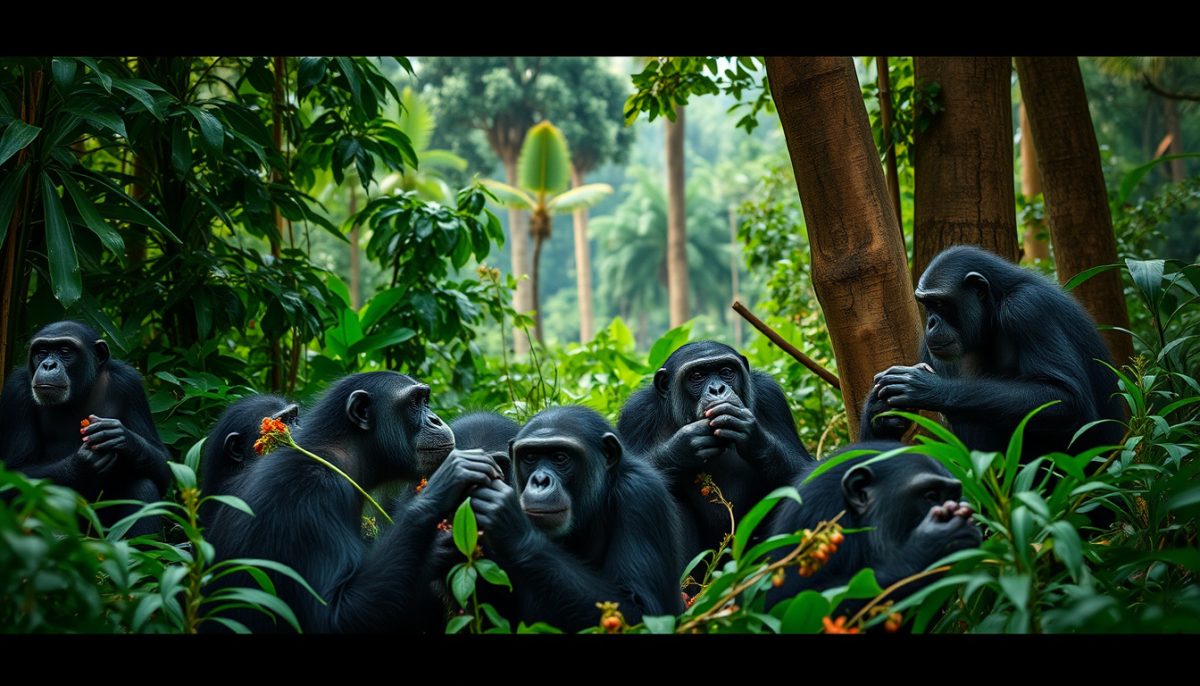
Exploring the chimpanzee social structure reveals a richly woven tapestry of friendships, alliances, and kinship that shapes their communities. Strong social bonds and intricate networks characterize their relationships, transcending hierarchies based on age, strength, and intelligence.
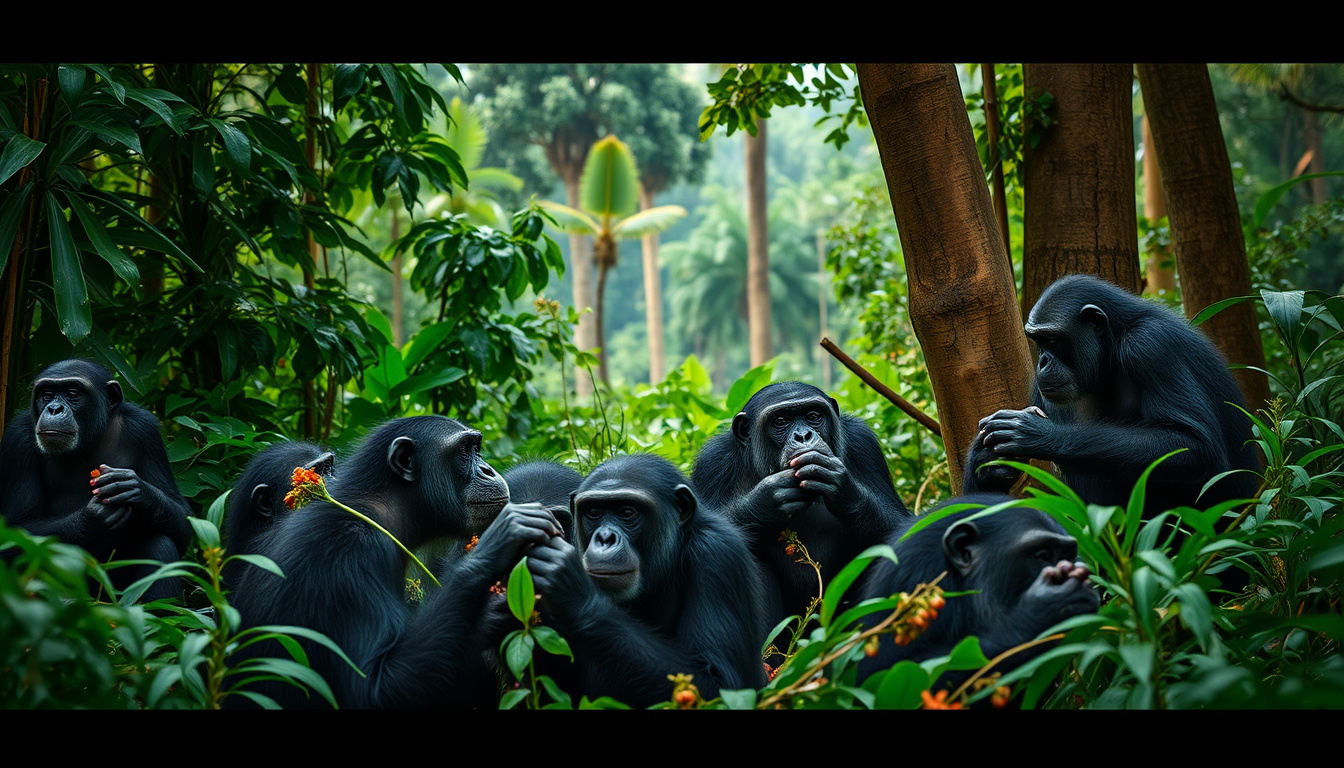
Friendships foster cooperation and enhance survival prospects, often seen when male chimpanzees form alliances during competitions for dominance or mating opportunities. These alliances foster trust and loyalty through behaviors like grooming. Females are equally adept, often nurturing younger chimpanzees or supporting each other in rearing offspring.
Moreover, the creation of alliances extends beyond immediate families. Grooming rituals, a vital social interaction, solidify relationships and maintain peace within communities, promoting harmony among members. Observing such intricate relationships deepens our appreciation for the emotional lives of these remarkable primates and underscores the importance of conservation efforts to protect their dynamic social environments.
Curious about experiencing these dynamics firsthand? Contact us at info@bushmansafaris.com or +256 704 902398 to explore our top-notch chimpanzee tracking experiences in Uganda.
Communication Patterns within Chimpanzee Social Groups
Chimpanzees, our close relatives, show incredible insights into the complexities of social behavior and communication within their tightly-knit communities.
The communication patterns within these social groups are nuanced, employing a tapestry of vocalizations, body language, and gestures. From pant-hoots signaling excitement to soft grunts that communicate affection, understanding these calls is essential for both personal social navigation and the cohesion of the entire community. This sophisticated communication system not only reinforces social bonds but also facilitates alliances and aids in conflict resolution, reminding us of the shared threads that connect all sentient beings.