

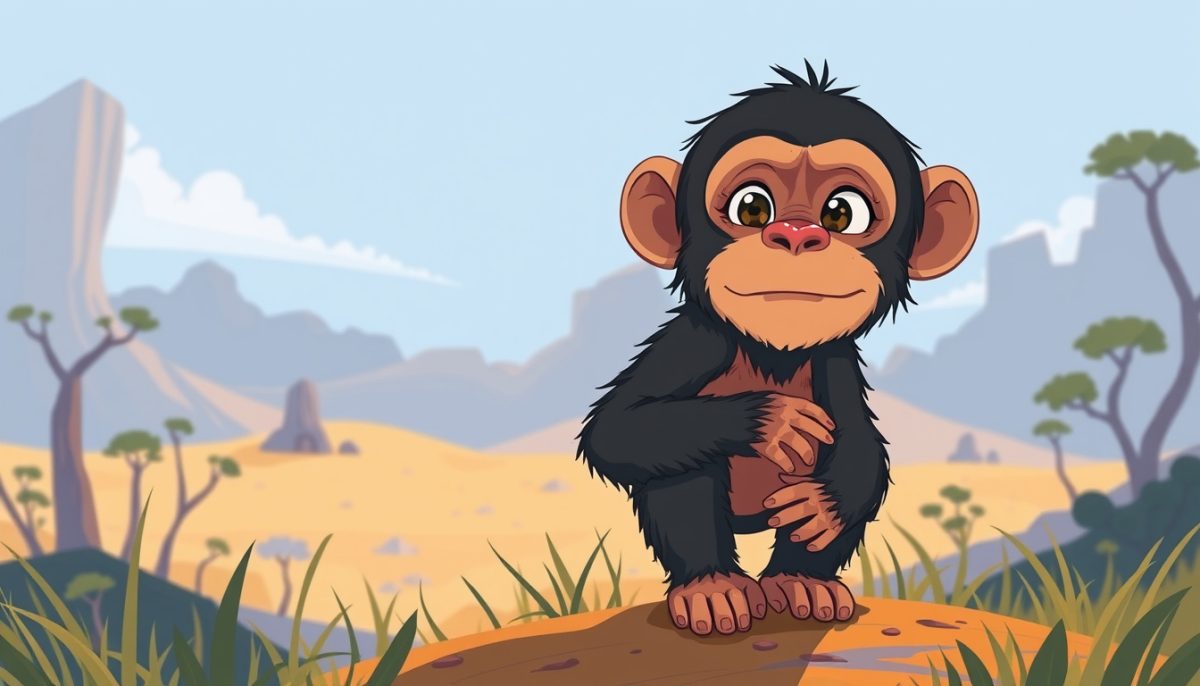
“`html
The Heartbreaking Journey of Lucy the Chimp: A Tale of Resilience and Sorrow
Imagine a chimpanzee like Lucy the Chimp, growing up eating at a fast-food restaurant, dressing herself, and even making tea — behaviors so human-like they blur the borders between species. This is not a scene from a science-fiction, but the real-life, heartbreaking tale of Lucy the Chimp. Born in captivity and raised as a human child, Lucy’s unique journey was an intense experiment aimed at exploring how much humanity can be nurtured into our closest animal relatives. Underneath this fascinating story lies a saga filled with ethical dilemmas, emotional turmoils, and a tragic descent into loneliness and despair.
Lucy’s Origins: Born into a Controversial Experiment
Lucy’s story started on a humid day in Florida in 1964 at Noel’s Ark Chimp Farm, a place with performing animals. Unlike other chimps destined for carnival entertainment, Lucy’s path changed dramatically when William Lemmon, a psychologist and primate researcher, bought her just two days after her birth. This early separation from her mother marked the beginning of an ethically complex experiment at the Oklahoma-based Institute for Primate Studies.
Raised by Maurice and Jane Timberland, Lucy entered an unusual household. She wasn’t raised as a typical chimpanzee but as a human child. She lived alongside the Timberlands’ 10-year-old son, wearing clothes, using utensils, and learning behaviors usually attributed only to humans. The Timberlands’ experiment was simple yet profound: to see if a chimpanzee’s natural instincts can be overridden by a human upbringing. How human, they wondered, could Lucy become?
The Experiment Unfolds: Childhood Between Species
Likewise, Lucy amazed her caretakers from her very early months. By the time she was two months old, she could hold her own bottle; by six months, she was climbing out of her crib, already adept at mobility on all fours. More astonishing were the milestones considered to be uniquely human — using eating utensils and dressing herself, skills she mastered with surprising ease.
At about six years old, Lucy started a new phase in her education under the guidance of primatologist Roger Fouts, known for teaching American Sign Language (ASL) to chimpanzees. Over time, Fouts taught Lucy about 100 ASL signs. But Lucy didn’t just repeat signs; she invented new ones, showing a cognitive capacity that challenged our assumptions about primate intelligence.
An illustrative moment occurred after she tasted watermelon for the first time; Lucy creatively combined the signs for “candy” and “drink” to describe the fruit. When faced with a spoiled radish, she crafted the expressive sign “cry hurt food.” Fouts even found that Lucy could grasp the concept of deception — when found responsible for a mishap, she used sign language to blame someone else.
Lucy’s Human-Like Behaviors: Beyond Tea Making
Lucy’s everyday life was filled with behaviors that narrowed the species divide. Known for making tea with skilled precision, Lucy would brew a cup for her human friends. Janice Carter, a graduate student and Lucy’s caretaker after 1976, described walking into the Timberland residence to find Lucy preparing tea, then settling down to listen to the radio or browse through magazines. These habits not only showed the impact of her unique upbringing but also foreshadowed the complexities of Lucy’s identity and social needs.
Lucy’s remarkable abilities soon attracted media attention, even earning her a feature in Life magazine. However, as Lucy grew older, troubling behaviors emerged beneath her calm exterior.
The Turning Point: From Charming to Challenging
As Lucy matured, her temperament evolved. The Timberlands found her increasingly difficult to manage — her aggressive behaviors mirrored human intensity. Eventually, she was confined to a cage on the roof, an isolating move that hinted at difficult times ahead.
Janice Carter, who bonded deeply with Lucy, defied the initial rules by touching Lucy when she requested grooming, a moment that sparked a deep and rare friendship. This highlighted Lucy’s unusual social adaptability once developed.
A Fateful Transition: Return to the Wild or a New Captivity?
In the mid-1970s, the Timberlands concluded that Lucy could no longer live comfortably in their home. They hoped to reintegrate her into natural chimpanzee society and sent her to the Gambia, under the care of Stella Brewer and the Chimpanzee Rehabilitation Trust. The goal was to gently acclimate Lucy to wild chimp life on a 300-acre island, blending freedom with familiar comforts like toys and books.
Yet, Lucy’s past human comforts and behaviors made this transition challenging. She experienced weight loss, deep depression, and struggled to forage. Brewer later stated that, at the time, they poorly understood wild chimp behavior and rehabilitation needs; Lucy’s plight was a tragic result of scientific ambition meeting hard biological and psychological realities. Lucy clung to her humanized life, tragically unable to adapt fully to either of her worlds.
Insight One: The Ethical Dilemmas of Raising a Chimpanzee as Human
Lucy the Chimp’s story compels us to consider the ethical implications of such experiments. While seeking to understand animal cognition is a noble pursuit, Lucy’s experiences highlight the risks of blurring natural boundaries without considering the emotional impacts.
Raising Lucy as a human child may have artificially enhanced her cognitive skills but arguably deprived her of critical social norms and natural behaviors her species needs for well-being. Removed from her humanized environment, she faced an identity crisis, lacking the necessary tools to cope, leading to profound psychological suffering. This situation begs the question: what is the true cost of scientific curiosity?
Insight Two: Lucy’s Human Themes of Identity and Belonging
Lucy’s story mirrors broader human issues of identity, belonging, and the pain of isolation. She represents the struggle of beings caught between two worlds — adapting to one culture only to find rejection by another, unsure of their true place.
Her inclination to “make tea” or learn human signs symbolizes the universal search for connection and a sense of purpose. However, her unfortunate descent into isolation and depression reminds us how deeply identity is tied to community and acceptance. Lucy’s story emphasizes that intelligence and adaptation alone cannot satisfy emotional needs — an insight that resonates with all of humanity.
Conclusion: What We Learn from Lucy the Chimp’s Story
The tale of Lucy the Chimp is both inspiring and heart-wrenching — a story of significant resilience overshadowed by sorrow. From her early days as a roadside zoo infant to a family-raised, sign-language knowing “child,” and finally to a lonely figure in the wild, Lucy’s life forces us to rethink our views on humanity and animality.
Her journey illuminates the ethical limits of innovation and the undeniable costs when those limits are overlooked. More profoundly, Lucy reminds us of essential human truths — that identity is inseparable from community, and that the quest for belonging, no matter how courageous, sometimes leads to loneliness.
Reflecting on Lucy’s legacy encourages us to consider the relationship between science and compassion, urging us to pursue knowledge while being mindful of the beings at its heart. In this balance, the true story of one chimpanzee’s tragic attempt to be human is found.
“`