


Unraveling the Ngogo Chimpanzee War: Insights into Primate Behavior and Social Structure
In the dense, shadowy forests of Uganda lies a narrative so profound that it reshapes our understanding of primate behavior and social structures: the Ngogo Chimpanzee War.
Envision a troop of chimpanzees, their howls resonating through the trees, engaged in battles fueled by complex emotions, strategic alliances, and territorial claims.
This war isn’t just about aggression; it unfolds the subtle intricacies that govern relationships within this intelligent species.
Join us in exploring this captivating saga, examining what these challenges reveal about the social fabric of chimpanzees and their behavioral parallels with humans.

Key Takeaways
- The Ngogo Chimpanzee War highlights the complex social structure of primate communities.
- Aggression and territoriality play crucial roles in chimpanzee interactions and survival.
- Historical context is key to understanding the behavioral patterns of the Ngogo chimpanzees.
- Diverse research methods provide valuable insights into the aggressive behaviors observed during the Ngogo war.
- Findings from the Ngogo area contribute to our broader understanding of primate behavior and social dynamics.
The Complex Social Dynamics of the Ngogo Chimpanzee War
In the heart of Uganda’s lush rainforests, where sunlight filters through a dense green canopy, unfolds a dramatic saga of rivalry and survival among our closest relatives, the chimpanzees.
This tale not only reflects the untamed natural world but also underscores the complexities of animal behavior.
The Ngogo Chimpanzee War, named after the Ngogo community in Kibale National Park, unveils intricate social dynamics and territorial disputes, captivating researchers and travelers who delve into the wild.
Historical Context of the Ngogo Chimpanzee Community
The Ngogo Chimpanzee War, a significant narrative within chimpanzee behavior studies, began in the mid-1990s in Uganda’s Kibale National Park.
The Ngogo community’s quest for territorial expansion led to skirmishes with neighboring groups, emphasizing their complex social hierarchies and mating strategies.
This ongoing struggle not only highlights their survival instincts but also parallels human territorial behavior in evolutionary studies, offering a deeper understanding of primate and human societies.
‘The greatest lesson in human history is that we have not learned the lessons of history.’ – John le Carré

Social Dynamics Among Ngogo Chimpanzees
Within Uganda’s Ngogo region exists a remarkable community of chimpanzees known for intense rivalries and territorial conflicts—the Ngogo chimpanzees.
Famed for their intelligence and social behaviors, these primates offer a window into the complex interplay of aggression and cooperation in animal societies.
Insights into their social dynamics provide profound implications for understanding evolutionary behaviors shared between chimpanzees and humans.
Implications of Aggression and Territoriality in the Ngogo Chimpanzee War
The dynamic engagements of the Ngogo chimpanzees in Uganda highlight critical aspects of their social and reproductive strategies.
The struggle for resources, mates, and territory underlines the complexity of their social structures and their importance in evolutionary terms, revealing parallels with human social systems.
Research Methods and Findings from the Ngogo Area
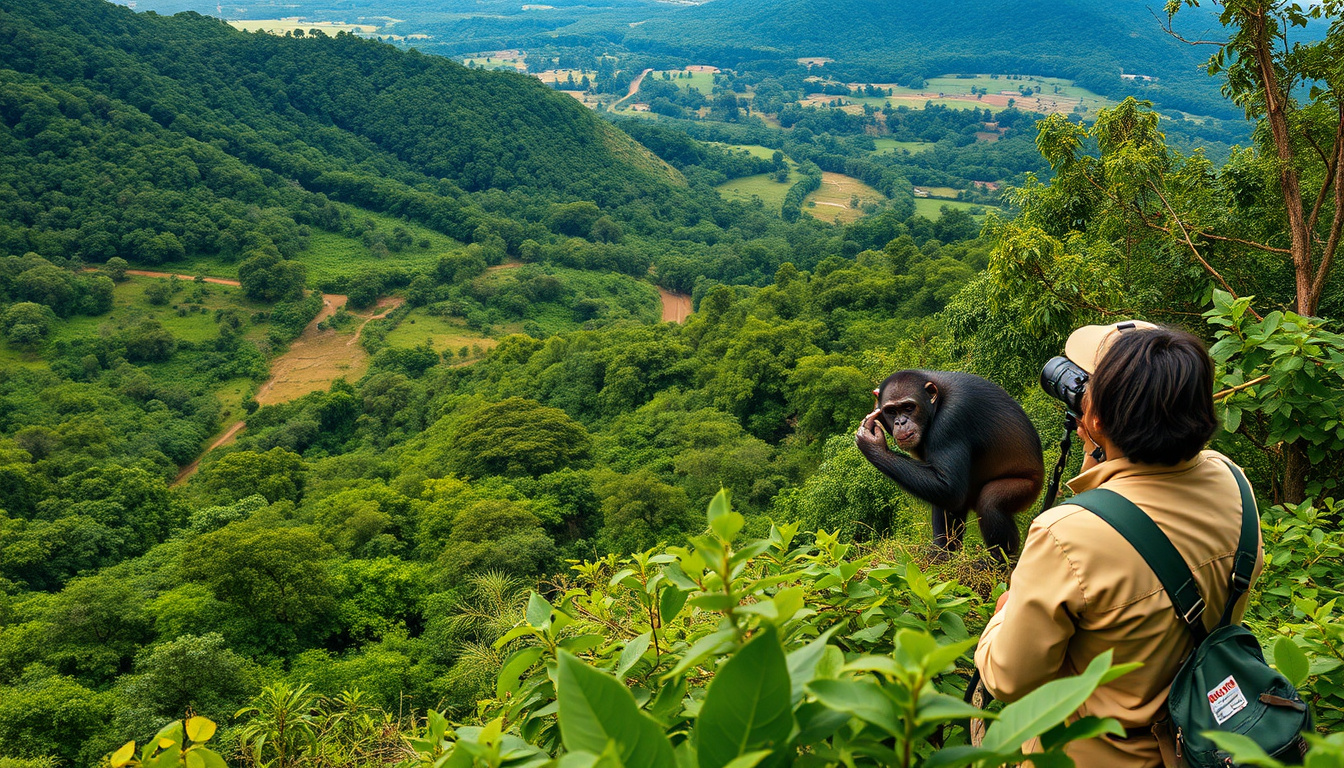
The study of the Ngogo Chimpanzee War involved rigorous research methods including direct observation and behavioral tracking.
The findings provide invaluable lessons on the intricate interplay of natural instincts, social cohesion, and survival strategies among the Ngogo chimpanzees, echoing the complexities of nature versus nurture.
Conclusion: Broader Insights into Primate Behavior
The Ngogo Chimpanzee War offers extraordinary insights into primate political and social dynamics, echoing many facets of human society.
This understanding pushes the boundaries of how we perceive intelligence and emotion across species, urging us to consider deeper empathy and responsible stewardship of natural habitats.