

“`html
Understanding Chimpanzee Group Conflict: Insights into Social Dynamics and Behavior
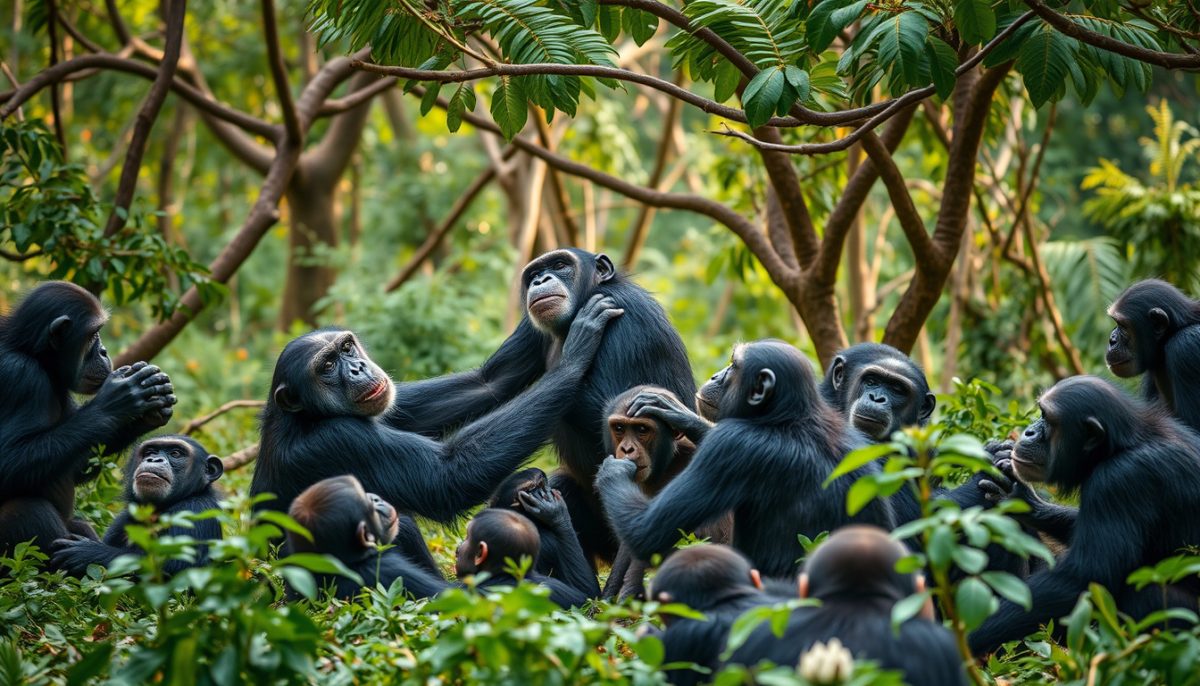
As the sun rises over the lush forests of Uganda, an intricate drama unfolds beneath the canopy—the age-old tale of conflict among troops of chimpanzees.
These intelligent primates, often mirroring human social interactions, engage in group conflicts that unveil a complex social dynamics tapestry.
Understanding chimpanzee group conflict opens a window into their world, challenging our perceptions of nature’s harmony and illuminating the evolutionary roots of social behavior.
In a dance of power, alliances, and territorial disputes, we unravel not only the motivations behind their conflicts but also the broader implications for their survival in an increasingly human-impacted landscape.
Key Takeaways
- Chimpanzees exhibit complex social structures influencing group dynamics.
- Conflicts among chimpanzee groups arise from competition for resources and social hierarchies.
- During conflicts, chimpanzees display a range of behavioral responses, including aggression and coalition-building.
- Alliances play a crucial role in resolving conflicts and maintaining group stability.
- Group conflicts can significantly impact chimpanzee populations, underscoring the importance of conservation efforts.
Introduction to Chimpanzee Social Structures
In the lush forests of Uganda, where the calls of wildlife weave a narrative of survival and adaptation, chimpanzees exhibit some of the most complex social structures found in the animal kingdom.
Understanding chimpanzee group conflict is crucial for anyone interested in these emotionally rich primates.
Like humans, chimpanzees are social beings, influenced by a myriad of factors including competition for resources, mating rights, and social hierarchies.
Within their tightly-knit communities, relationships can be nurturing yet fraught with tension.
From alliances formed during times of scarcity to frictions arising from power struggles, each conflict paints a vivid picture of their daily lives.
Exploring these dynamics not only deepens our understanding of chimpanzee behavior but also highlights the complex balance of cooperation and rivalry that defines their existence in Uganda’s pristine wilderness.
Understanding Group Conflict Among Chimpanzees
Chimpanzee group conflict is a fascinating topic that unveils the complexities of social behavior among our closest relatives in the animal kingdom.
Just like humans, chimpanzees live in intricate social structures, often leading to intense rivalries and skirmishes.
Several factors can spark these conflicts within groups, including competition for resources such as food, mates, and territory.
Resource Competition
One of the primary causes of conflict among chimpanzees is the competition for food, especially in environments where resources are limited.
As fruit-bearing trees bear their produce, several chimpanzee troops may converge in a single area, leading to confrontations.
The struggle to secure food not only brings about tension but can create alliances among individuals within the group who support each other in disputes against outsiders.
Mating Pressures
Mating opportunities can also incite conflict, particularly during periods when females are in estrous.
Male chimpanzees often engage in aggressive displays and confrontations to win mating rights, resulting in fierce rivalries.
This competition can sometimes lead to physical confrontations, as males establish dominance through displays of strength and aggression.
Hierarchical Dynamics
Within chimpanzee groups, complex hierarchies dictate interactions.
Conflicts can arise when lower-ranking individuals challenge the established order, seeking greater status or access to resources.
These power struggles are often marked by aggressive behaviors such as chest-beating, vocalizations, and even physical confrontations to assert dominance.
Territoriality
Chimpanzees are highly territorial; they establish areas in which they forage, play, and nest.</p
Conflicts often erupt when neighboring troops trespass, as chimpanzees will defend their territory from perceived threats.
Vocal displays, such as hooting or pant-hooting, serve as warnings that may deter intruders while also attracting potential mates in the process.</p
Each of these elements illustrates how chimpanzee group conflict is not merely a display of aggression but intricately tied to their social structure and survival.
‘In the midst of chaos, there is also an opportunity.’ – Sun Tzu
Behavioral Responses During Conflict
In the complex social structures of chimpanzees, chimpanzee group conflict emerges as a critical area of study that reveals much about both their instincts and intelligence.
When two groups encounter one another, various behavioral responses illustrate the depth of social dynamics at play.
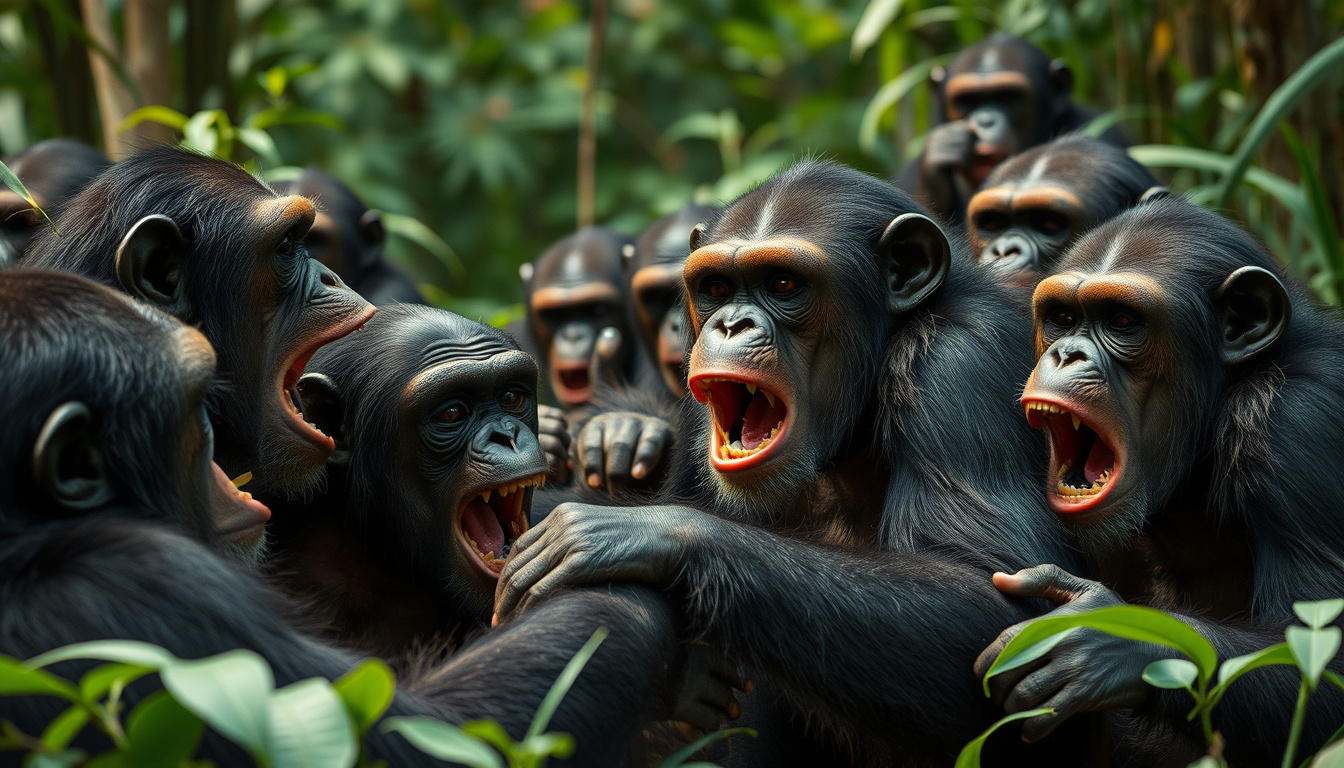
Rather than rushing into aggression, chimpanzees often engage in strategic display behaviors.
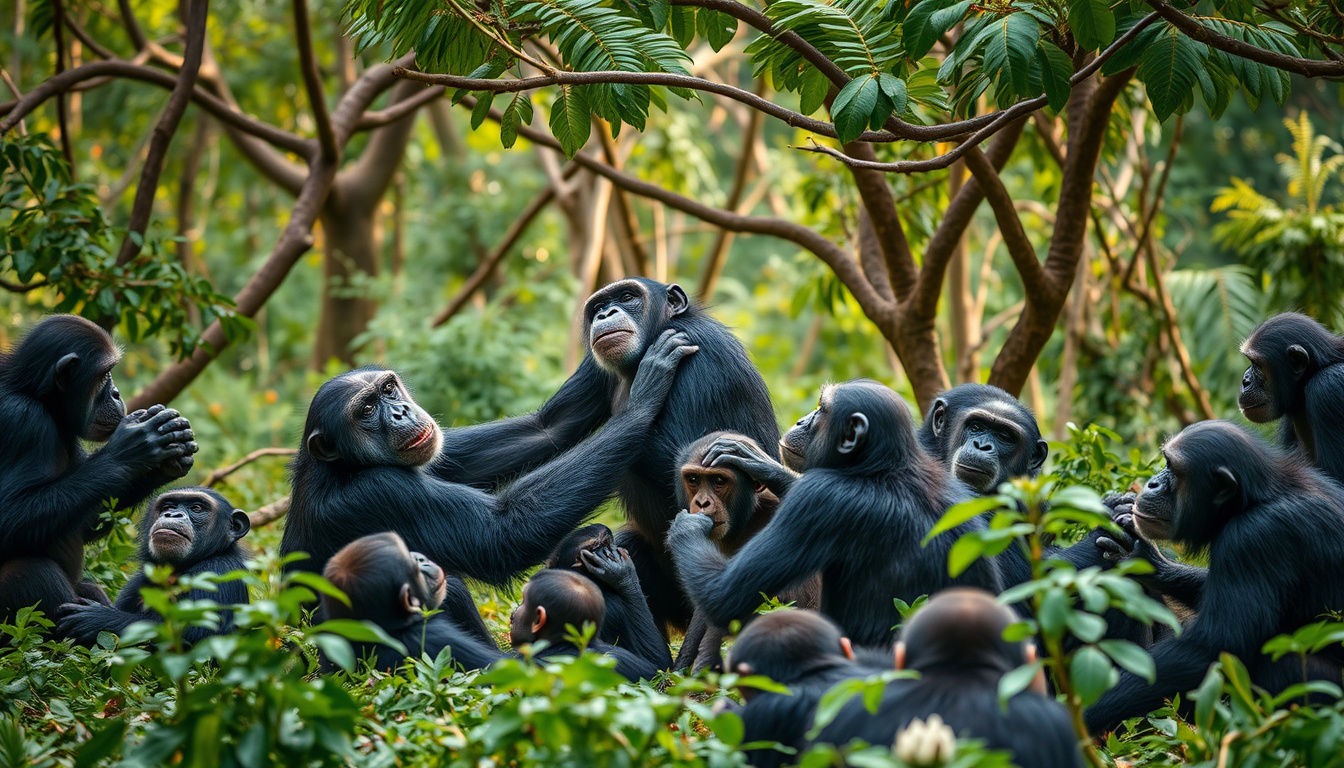
These include vocalizations, intense grooming, and forming coalitions with supportive group members.
Interestingly, dominance hierarchies heavily influence these interactions; higher-ranking individuals may lead the charge while lower-ranking members hold back, waiting for cues from their leaders.
This reluctance to engage directly can be attributed to a survival instinct that has been honed over millennia.
Instead of outright conflict, some groups employ avoidance strategies, often retreating to more secure environments.
Such behaviors are not simply reactions but reflect complex cognitive processes, such as the assessment of threats and social bonds within the group.
The nuanced responses observed during these encounters remind us of the delicate balance in chimpanzee societies, embodying both aggression and cooperation as they navigate their world.
Role of Alliances in Conflict Resolution
Conflict is an inherent part of social dynamics, not only among humans but also in the animal kingdom, particularly among our closest relatives: chimpanzees.
Understanding chimpanzee group conflict requires a deep dive into their social structures and how alliances play a pivotal role in resolving disputes.
Chimpanzees live in complex social groups where hierarchy, relationships, and alliances are crucial.
When conflicts arise, whether due to competition for food, mating rights, or territorial disputes, the importance of forming alliances becomes apparent.
Alliances can be seen as social contracts among chimpanzees, where individuals support one another to achieve common goals or to bolster their positions within the group.
Those who form strong bonds often find themselves with greater security and an increased likelihood of overcoming disputes.
For instance, an individual who is viewed favorably by multiple partners is less likely to face retaliation or isolation, providing a strategic advantage in any conflict situation.
Moreover, chimpanzee behavior reveals a remarkable intricacy when it comes to alliances.
These social bonds are frequently maintained through grooming, vocalizations, and even acts of support during physical confrontations.
Such cooperation is not only vital for immediate conflict resolution but also plays a significant role in the long-term dynamics of the group.
In some cases, alliances may set the stage for mediation, where third parties engage in bridging gaps between conflicting groups.
This behavior draws parallels to human conflict resolution strategies, showcasing the evolutionary roots of social cooperation and diplomatic engagement in primates.
The resolution of conflict through alliances highlights not only the intelligent social behavior of chimpanzees but also raises questions about the nature of cooperation and competition in all species, including our own.
Understanding the role of alliances in these social structures provides deeper insights into the evolutionary pressures that shape social living.
“`