

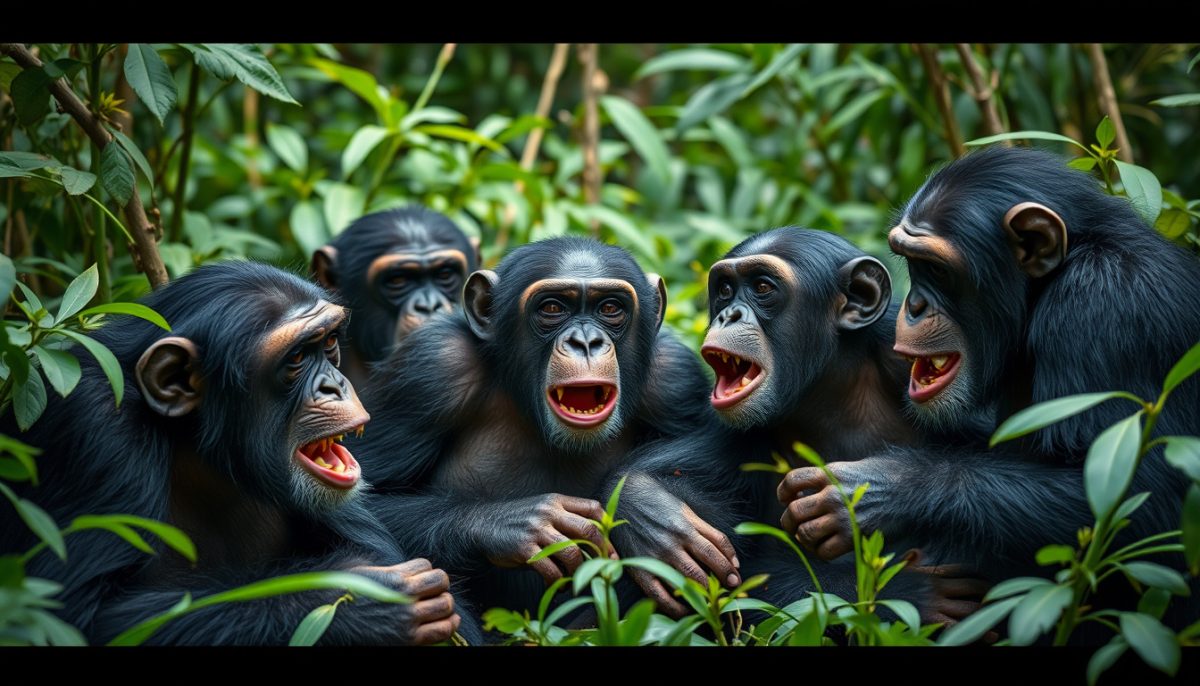
Unraveling Chimpanzee Aggression: Evolutionary Insights into Our Closest Relatives
As the sun rises over the lush forests of Uganda, a symphony of sounds fills the air—birdsong, the rustle of leaves, and the distant calls of primates. Among these voices, the echoes of chimpanzees resonate, drawing us into their complex world.
Are they playful and gentle, or can they be fierce and aggressive too? Understanding chimpanzee aggression evolution reveals the intricate balance of their social behaviors and the evolutionary whispers connecting them to us.
In this exploration, we will delve into the depths of chimpanzee aggression, discovering why these magnificent creatures exhibit such behaviors and what it means for both their survival and ours.
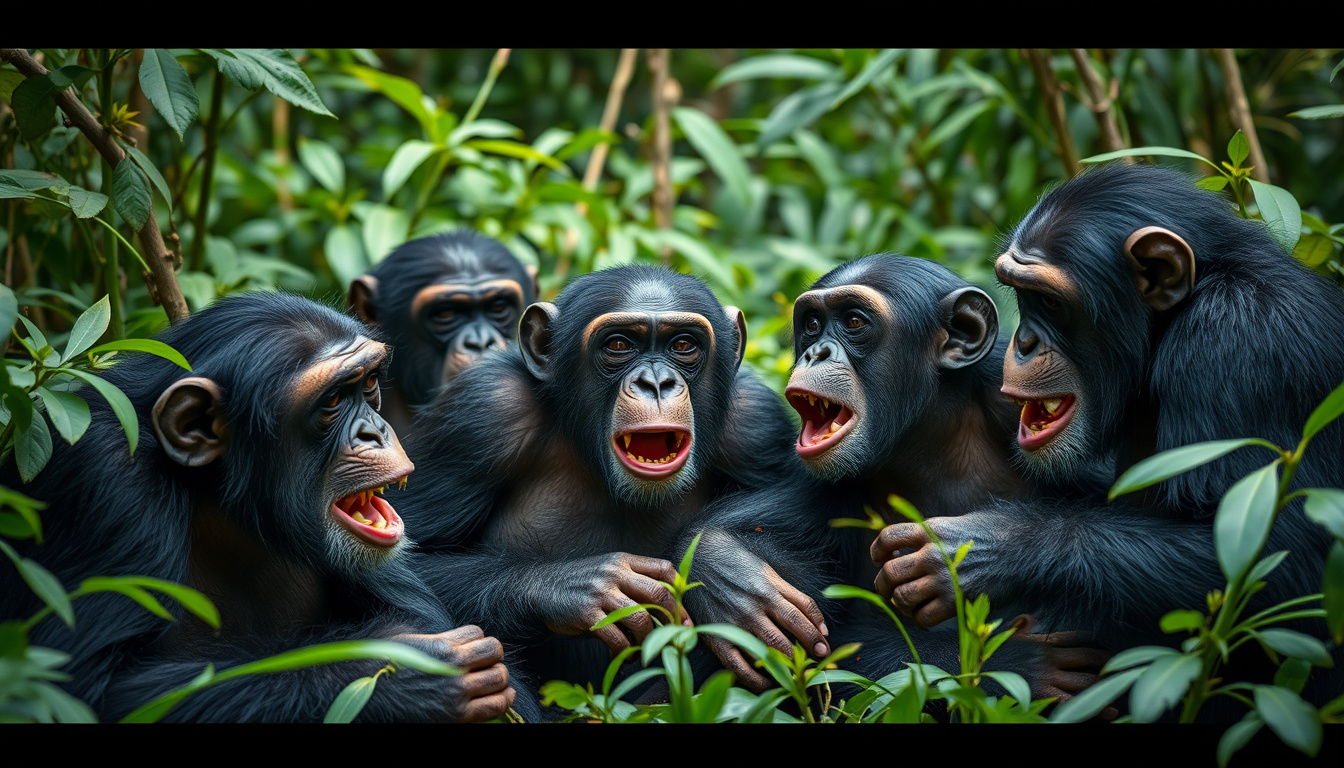
Key Takeaways on Chimpanzee Social Dynamics
- Chimpanzee aggression is a complex behavior influenced by social and environmental factors.
- The evolutionary context provides insights into the survival strategies of our closest relatives.
- There are both similarities and differences between chimpanzee and human aggression patterns.
- Social structure plays a significant role in the expression and management of aggression among chimpanzee groups.
- Natural habitat studies offer valuable data for conservation efforts and improving human-chimpanzee interactions.
Deciphering Chimpanzee Aggression: Understanding Causes and Impact
Chimpanzee aggression is a captivating and complex aspect of primate behavior, offering insights into both animal and human social dynamics.
Understanding the roots of aggression helps trace how these traits have evolved over millions of years. Aggression among chimpanzees primarily arises when their survival, kinship, or social hierarchy is threatened.
Unlike instinctual aggression seen in many animals, chimpanzee aggression intertwines deeply with their social structures and environmental pressures.
Chimpanzees exhibit a variety of aggressive behaviors, from vocal threats to physical confrontations. These behaviors, often strategic, serve as means of establishing dominance, securing resources, or reinforcing social bonds through loyalty and alliance displays.
In evolutionary terms, those who managed their aggressive impulses were more adapted to their environments and ensured the continuation of their genes.
Moreover, the development of chimpanzee aggression involves not just physical strength but also cunning and social intelligence. Deceptive tactics used by chimpanzees highlight the cognitive demands of their aggressive interactions.
By exploring chimpanzee aggression evolution, we gain deeper understanding of chimpanzee societies and appreciate the parallels with human behavior, reminding us of our shared ancestry.
The Evolutionary Context in Chimpanzee Behaviors
Understanding ‘chimpanzee aggression evolution‘ requires examining the social structures and behaviors that have shaped these primates over millennia. Sharing about 98% of our DNA with chimpanzees makes this study particularly revealing.
In their natural habitats, chimney behaviors are governed by complex societies and intricate dynamics. Aggression often arises from resource conflicts or social dominance, serving as a crucial mechanism within their evolutionary framework.
Unlike humans, whose aggressive behaviors can be shaped by societal norms, chimpanzees follow more instinctual patterns driven by survival and reproductive success.
‘We share 98% of our DNA with chimpanzees, and their behaviors reflect an evolutionary mirror showing our own past aggression and social structures.’ – Unknown

Aggression Patterns: Chimpanzees vs. Humans
Chimpanzees, our closest living relatives, display a range of aggressive behaviors, shedding light on primate evolution. By understanding chimpanzee aggression evolution, we unlock insights into both primate and human behaviors.
Primarily, chimpanzee aggression is tied to survival instincts such as resource competition, mate access, and territory. Dominant males often boost their status through displays of power within their social hierarchies.
Interestingly, while human aggression can stem from complex contexts and moral dilemmas, chimpanzee aggression is often direct and survival-focused. This understanding offers a profound look at the evolutionary roots of aggression, emphasizing the differences in motivations and contexts between chimps and humans.
Impact of Social Hierarchy on Chimpanzee Aggression
Chimpanzee aggression evolution reveals much about their complex social structures. Social hierarchy, particularly, plays a central role in aggression dynamics within communities.
Males often use overt aggression to establish dominance, yet these behaviors are also deeply interwoven with the social fabric of the troop. Sometimes, lower-ranking males form coalitions to challenge the alpha, leading to critical reordering of social hierarchies.
This intricate interplay, while occasionally leading to conflict, often reinforces group cohesion, demonstrating a meticulously evolved strategy to maintain social stability.

Nature and Nurture: Aggression in Chimpanzee Societies
Research in the dense forests of Uganda shows that aggression among chimpanzees serves not only as individual survival mechanisms but also as community stabilizers.
These studies reveal how dominant males use aggression to retain power while subordinates employ various strategies like alliances or deceit. This nuanced view of aggression as a communication tool emphasizes its role in delineating territories and reinforcing social bonds.
Moreover, territorial conflicts between groups, reminiscent of human societal struggles, underscore the complex role of aggression in both competition and cooperation, providing key insights into our evolutionary past and guiding effective conservation approaches.
Paths Forward: Conservation and Understanding
Chimpanzee aggression evolution understanding is vital for conservation and enhancing human-animal relationships. Acknowledging their natural aggressive behaviors helps devise strategies promoting coexistence and safeguarding natural habitats.
For tourists and guides, recognizing these behaviors allows richer, respectful interactions with these formidable primates. Knowledge of their aggression’s evolutionary roots enriches experiences, promoting deeper engagement and commitment to conservation.
Frequently Asked Questions
Main Causes and Influences of Chimpanzee Aggression
Chimpanzee aggression stems from competition for resources, territory, and social hierarchies. Environmental stress can also trigger aggressive behaviors.
Comparing Aggression: Chimpanzees vs. Humans
While both species show aggressive tendencies, human aggression is colored by complex social and cultural factors, unlike the more direct survival-driven aggression in chimpanzees.
Role of Social Structure in Chimpanzee Aggression
The complex interplay of social hierarchies and relationships significantly impacts how aggression is manifested and managed within chimpanzee groups.
Conservation Insights from Aggression Studies
Understanding aggression in natural settings underscores the importance of preserving social groups and habitats, guiding strategies that mitigate conflicts and support ecosystem health.
Evolutionary Studies on Chimpanzee Aggression
Direct observations and analyses of social interactions have deepened our understanding of the evolutionary forces shaping chimpanzee aggression.
If intrigued by these insights, experience them first hand.
Bushman Safaris offers expertly curated chimpanzee tracking experiences in Uganda. For highly recommended tours, simply text “chimpanzee” to info@bushmansafaris.com
or WhatsApp +256 704 902398.