

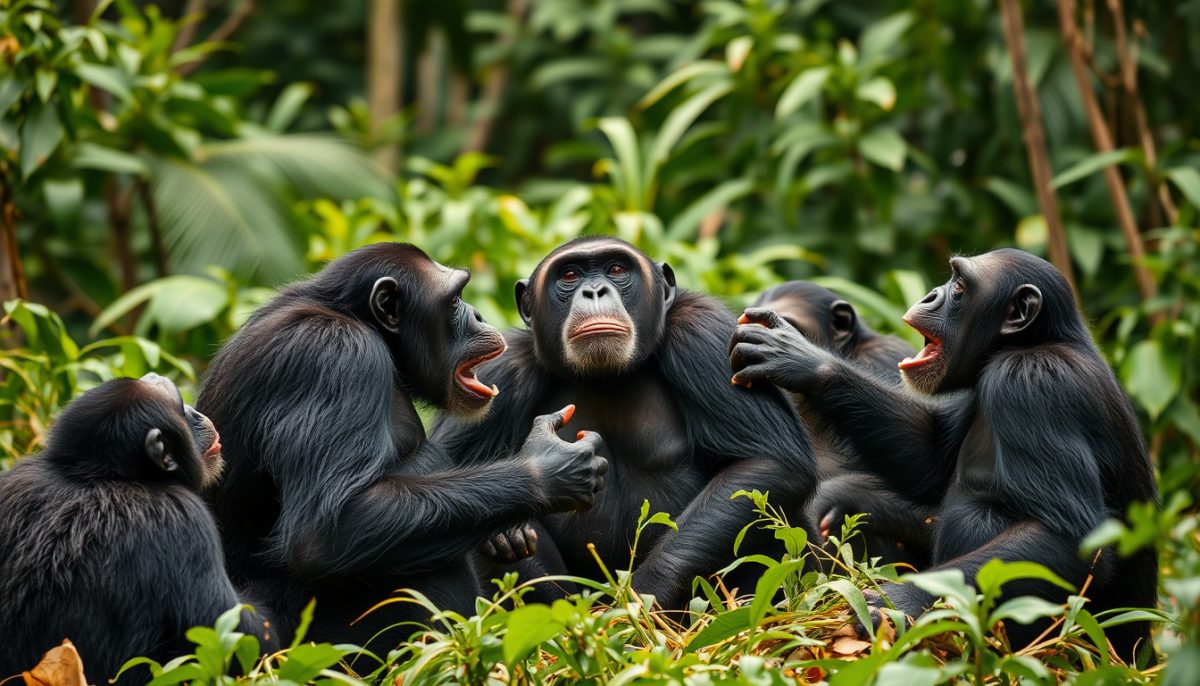
Understanding Chimpanzee Territorial Aggression: Complex Dynamics and Conservation
As the sun peeks above the dense canopy of Uganda’s lush jungles, the air thrums with life.
Among the cacophony of chirping birds and rustling leaves, a distant thump can be heard—an echo of primal instincts.
Here, in the trees, the world’s most intelligent primates navigate their complex world of social play, alliances, and fierce territorial disputes with chimpanzee territorial aggression.
In this article, we will delve into the intricacies of chimpanzee territorial aggression, exploring how these behaviors shape their societies and influence their survival.
Come, let us uncover the rich tapestry of dynamics that define the existence of chimpanzees in the wild.
Key Takeaways
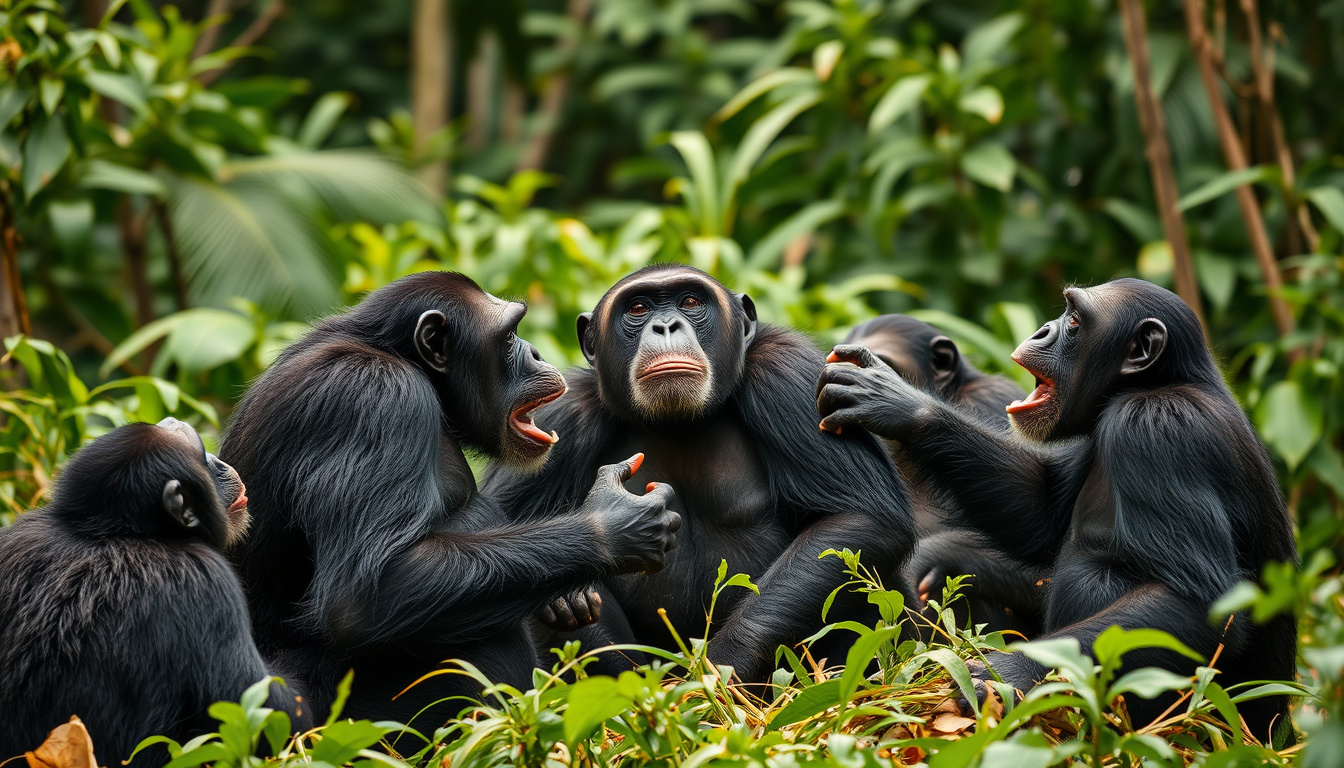
- Chimpanzee social structures are hierarchical and heavily influenced by territoriality.
- Territory serves as a critical resource that shapes chimpanzee communities and their interactions.
- Territorial aggression often arises from competition over resources and protection of group members.
- Chimpanzees employ various behavioral strategies to resolve conflicts over territory, including displays of aggression or diplomatic interactions.
- Understanding territorial aggression is essential for effective conservation strategies in chimpanzee habitats.
1. Introduction to Chimpanzee Social Structures
In the lush, vivid rainforests of Uganda, a world unfolds that echoes the complexities of our own society—a world inhabited by one of our closest relatives: the chimpanzee.
As you traverse through the dense foliage, the playful sounds of these intelligent primates resonate, hinting at a rich tapestry of social interactions laden with emotions, hierarchies, and, interestingly, territorial aggression.
Despite their endearing qualities, chimpanzees can exhibit intense behaviors to defend their territories, showcasing an intriguing blend of cooperation and competition that raises questions about survival and dominance in the animal kingdom.
Understanding chimpanzee territorial aggression is crucial for comprehending their social structures and behaviors, particularly as they navigate the intricate balance of their communities in the wild.
2. The Role of Territory in Chimpanzee Communities
Chimpanzee territorial aggression plays a crucial role in the social dynamics and survival strategies of these intelligent primates.
In their natural habitats, chimpanzees establish defined territories that provide access to vital resources such as food, water, and safe nesting sites.
These territories are often fiercely defended against rival groups, showcasing a complex range of behaviors that can include vocal displays, physical confrontations, and strategic alliances.
Understanding this aspect of chimpanzee behavior not only sheds light on their ecological roles but also draws intriguing parallels with human society, particularly in terms of competition for resources and social cohesion.
By observing chimpanzees in their territories, researchers gain invaluable insights into the evolution of social structures and the intricate balance of conflict and cooperation that governs their communities.
This fascinating interplay of aggression and diplomacy within chimpanzee groups adds depth to our understanding of primate behavior and the natural world.
‘The strongest man is he who is able to conquer himself, the second strongest is he who can conquer others. ‘ – Lao Tzu

3. Causes and Triggers of Territorial Aggression
Territorial aggression in chimpanzees is a complex behavior influenced by several factors, both ecological and social.
Firstly, the availability of resources such as food, water, and shelter directly impacts territorial behavior.
When resources are abundant, chimpanzees are less likely to exhibit aggression; however, during food shortages, they are more prone to defend their territory fiercely to secure vital resources.
Secondly, social hierarchy plays a significant role—dominant males often engage in aggressive displays to assert their control and deter rivals.
This aggression can escalate during breeding seasons when competition for mates intensifies.
Finally, environmental stressors, such as habitat destruction, encroachment by humans, or changes in ecosystem dynamics, can trigger heightened territorial aggression as chimpanzees fight to protect their diminishing habitat, leading to increased conflicts not only with other chimpanzee groups but also with neighboring species during resource contests.
4. Behavioral Strategies in Territorial Conflicts
Chimpanzee territorial aggression is a fascinating aspect of their behavior that unfolds as a complex strategy in the context of group dynamics and environmental pressures.
When resources such as food and mating opportunities become scarce, different groups of chimpanzees may find themselves in direct conflict over their claimed territories.
These confrontations can become quite aggressive, showcasing a remarkable interplay of tactics and social interactions.
For instance, male chimpanzees often lead these territorial disputes, using displays of strength and vocalizations to assert dominance.
Interestingly, they may also engage in strategic diplomacy; sometimes a show of aggression is less about physical confrontation and more about intimidating rivals without resorting to violence.
In essence, chimpanzee territorial aggression highlights not only their instinctual urges but also their capacity for social planning, revealing similarities in how primates, including us humans, navigate disputes over space and resources.
5. The Impact of Territorial Aggression on Social Bonds
Chimpanzee territorial aggression plays a pivotal role in shaping the social dynamics and bonds within their groups.
Unlike many other primates, chimpanzees display a complex social structure that can be both cooperative and competitive.
This dual nature is largely evident in how they establish and defend their territories.
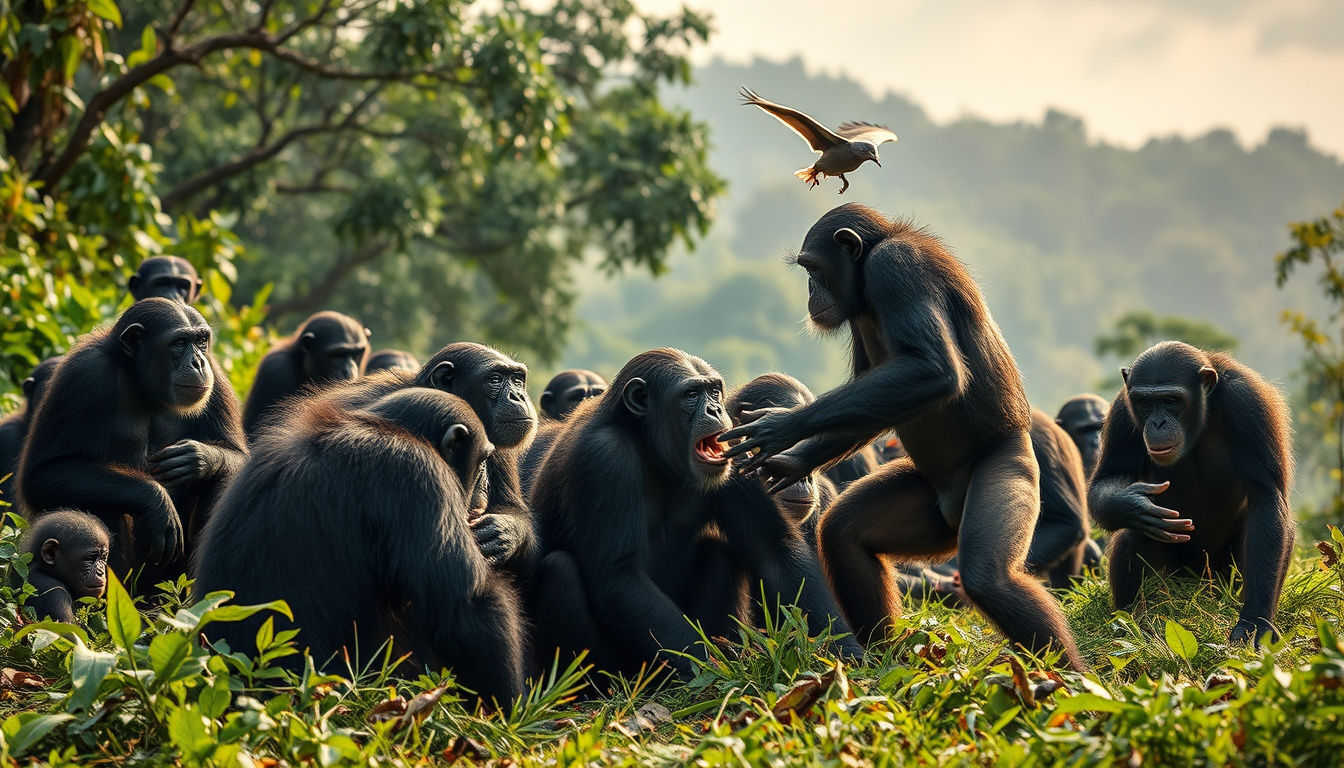
When one group encroaches on another’s territory, aggressive encounters can erupt, leading to displays of strength and dominance.
These aggressive interactions are not random; they often involve strategic planning and alliances, showcasing the sophisticated intelligence that chimpanzees possess.
Interestingly, while such aggression is crucial for asserting dominance and securing resources, it can simultaneously disrupt social bonds within and between groups.
For instance, when conflicts arise, stress levels can spike, leading to fractures in relationships among kin or friends as individuals choose sides or express fear.
This creates a ripple effect, affecting group cohesion and potentially leading to future aggression as tensions simmer.
Moreover, evidence suggests that chimpanzees may use reconciliation strategies post-conflict, indicating that they value their social relationships.
Such behaviors serve to mend ties and foster a supportive social environment.
In contrast, prolonged aggressive encounters can lead to rifts that jeopardize the unity of chimpanzee troops, thereby impacting their overall well-being and survival.
Thus, while territorial aggression serves as a protective measure for resources and status, its ramifications ripple through the intricate web of chimpanzee social interactions, illustrating how conflicts can both forge and fracture bonds.
6. Conservation Implications: Addressing Territorial Issues in Chimpanzee Habitats
Chimpanzee territorial aggression is an intriguing, complex aspect of their behavior that holds significant implications for conservation efforts.
In the dense forests of Uganda, where lush canopies provide both sanctuary and battlegrounds, understanding this aggressive behavior is essential for creating effective conservation strategies.
Territorial disputes among chimpanzee groups not only lead to social instability but can also impact genetic diversity and population dynamics.
When groups vie for control over resources, it often results in aggressive encounters that can be detrimental to both individuals and the community as a whole.
In the context of conservation, recognizing the significance of these territorial behaviors allows wildlife managers and ecologists to implement strategies that minimize conflicts.
For instance, creating designated protected areas that provide adequate resources—like food and water—can help reduce aggression by ensuring overlapping territories have ample resources to sustain multiple groups.
Additionally, educating local communities about the importance of preserving natural habitats reduces the encroachment that often leads to stress and territorial disputes.
By addressing the root causes of chimpanzee territorial aggression, we can foster healthier populations and promote harmonious coexistence between humans and our distant relatives in the wild.
Frequently Asked Questions
What is chimpanzee territorial aggression?
Chimpanzee territorial aggression refers to the aggressive behaviors exhibited by chimpanzees to defend their territory from intruders, which can include other chimpanzee groups and individuals.
This behavior plays a critical role in maintaining their social structure and resource availability.
What factors contribute to territorial aggression among chimpanzees?
Factors that contribute to territorial aggression among chimpanzees include competition for resources such as food and mates, the presence of rival groups, and social hierarchy dynamics within their community.
How do chimpanzees resolve territorial conflicts?
Chimpanzees employ various behavioral strategies during territorial conflicts, including vocalizations, displays of strength, and physical confrontations.
They may also use social bonds and alliances to navigate conflicts without direct aggression.
What impact does territorial aggression have on chimpanzee social bonds?
Territorial aggression can strain social bonds between individuals and groups.
However, it can also reinforce group cohesion when members unite to defend their territory, ultimately affecting their social dynamics.
What are the conservation implications of understanding territorial aggression in chimpanzees?
Understanding territorial aggression is vital for conservation efforts, as it helps address habitat encroachment and encourages strategies that minimize conflict between human activities and chimpanzee populations, thus promoting their survival.
If this story sparked your curiosity, you can experience it firsthand.
Bushman Safaris offers curated chimpanzee tracking experiences in Uganda, including access to Kibale National Park and the Ngogo region where these remarkable behaviors have been observed.
For our top 3 recommended Uganda chimpanzee tours, simply text “chimpanzee” to info@bushmansafaris.com
or WhatsApp +256 704 902398, and we’ll send you tailored options based on your travel preferences.