

Unraveling the Chimpanzee Dominance Hierarchy: Insights into Social Structure and Behavior
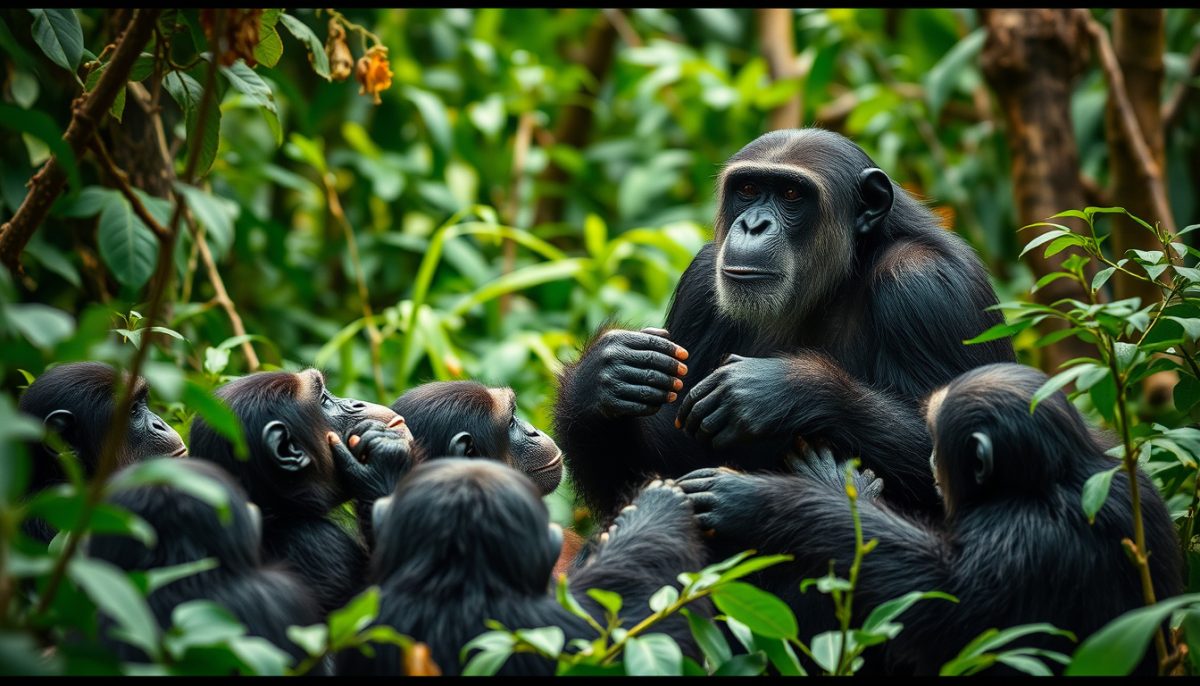
As the sun begins to rise over the dense forests of Uganda, a captivating drama unfolds among the trees. A gathering of chimpanzees, the closest relatives of humans, engages in a complex dance of social interaction, marked by silent power plays and vocal expressions.
Understanding the chimpanzee dominance hierarchy is not just an academic exercise; it provides a deeper insight into their fascinating social structure and behavior, illuminating the intricacies of relationships that govern their daily lives.
In this exploration, we delve into the intricate web of dominance among these remarkable primates, uncovering the factors at play and the implications for their survival and social stability.
Key Takeaways
- Chimpanzees exhibit complex social structures shaped by dominance hierarchies.
- Dominance hierarchies in chimpanzees are influenced by various factors including age, aggression, and social alliances.
- Female chimpanzees play a critical role in establishing and maintaining the social order within their groups.
- Chimpanzee behavior, including mating and foraging, is significantly affected by their position in the dominance hierarchy.
- Studying dominance hierarchies in chimpanzees provides valuable insights into primate social behavior and its evolutionary implications.
Introduction to Chimpanzee Social Structure
Chimpanzees, our closest living relatives in the animal kingdom, exhibit a complex social structure that is as fascinating as it is intricate.
At the heart of this social organization lies the chimpanzee dominance hierarchy, a system that governs interactions and relationships within their communities.
This hierarchy is not merely a social formality; it plays a vital role in the survival and well-being of chimpanzees, influencing feeding rights, mating opportunities, and even coalition-building.
In essence, chimpanzee groups are ruled by an alpha male who occupies the top tier of this hierarchy, often attaining his position through a combination of strength, intelligence, and social skills.
However, maintaining this status is an ongoing challenge—alpha males must navigate alliances, negotiate rivalries, and engage in both assertive and strategic behaviors to stay dominant.
The dynamics of the chimpanzee dominance hierarchy also highlight the importance of social bonds.
Female chimpanzees, though often less visible in the hierarchical structure, wield significant influence through their networks of relationships, participating actively in nurturing their young and supporting one another.
This complex interplay of dominance and cooperation shapes not only the social fabric of chimpanzee communities but also offers profound insights into the evolution of social behavior shared with humans.
Understanding these dynamics deepens our appreciation of chimpanzees in their natural habitat, particularly in Uganda’s lush rainforests.
The opportunity to observe such intricate social behaviors in the wild adds a layer of enrichment to any wildlife experience.
Understanding Dominance Hierarchies in Primates
The chimpanzee dominance hierarchy is a fascinating aspect of their social structure, underlining the complex interactions within chimpanzee communities.
Dominance hierarchies in primates, particularly among chimpanzees, are established through a combination of physical strength, intelligence, and social skills.
Unlike many other species, these hierarchies are not rigid; they can shift due to various factors, such as individual relationships and environmental conditions.
Male chimpanzees often hold the highest ranks within a group, but females can exert considerable influence too, especially in nurturing roles.
Studying these hierarchies offers insights into not only chimpanzee behavior but also parallels between human social dynamics, shedding light on the evolutionary roots of cooperation and competition.
‘To understand the society of chimpanzees is to understand the fundamental dynamics of social power in primates, including ourselves.’ – Frans de Waal
Factors Influencing Chimpanzee Dominance
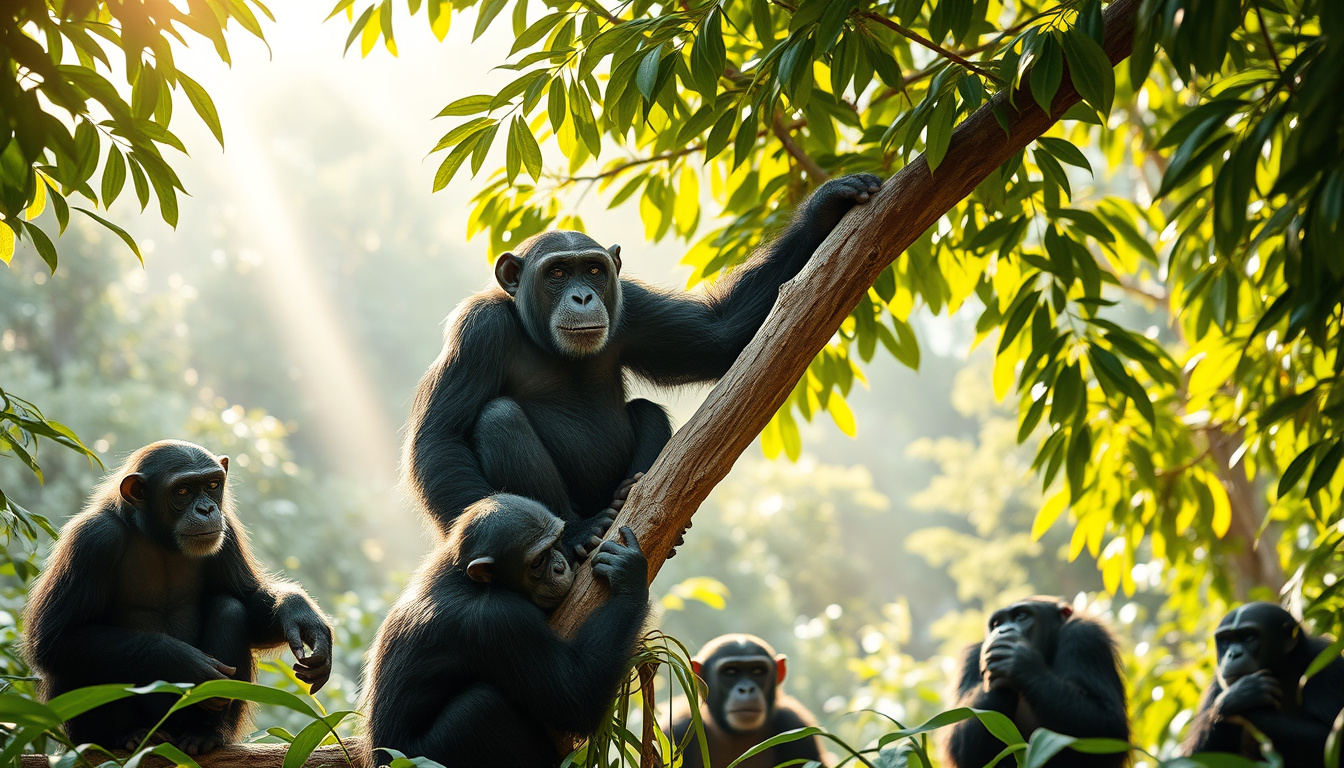
The chimpanzee dominance hierarchy is a complex social structure that not only dictates the interaction dynamics within a troop but also influences individual behaviors and reproductive success.
Several factors contribute to the establishment and maintenance of this hierarchy. One of the most pivotal elements is the strength and assertiveness of the individuals involved.
Dominant males often display physical prowess through grooming rituals, vocalizations, and aggressive posturing to establish their status.
Additionally, alliances formed through grooming and social interactions can bolster an individual’s standing, highlighting the importance of social bonds in this intricate pecking order.
Moreover, age plays a significant role in dominance hierarchies, with older individuals typically commanding more respect and authority due to their experience and established relationships.
This correlation between age and dominance mirrors social structures seen in human cultures, where wisdom and experience often translate to leadership roles.
Environmental factors, such as resource availability, also significantly impact these social structures. In times of abundant food, such as during fruiting seasons, competition may become relaxed, allowing for more egalitarian behaviors among the group.
Conversely, during scarcity, tensions rise, and the established hierarchy might become more pronounced as individuals compete for limited resources.
Understanding these dynamics offers a fascinating glimpse into the complexities of chimpanzee societies.
The Role of Females in the Dominance Hierarchy
In many primate species, including chimpanzees, dominance hierarchy is a crucial aspect of social structure, influencing access to resources, mating opportunities, and social interactions.
While much of the focus has traditionally been placed on male dominance, recent studies have highlighted the significant role females play within these hierarchies.
Female chimpanzees not only navigate complex social networks but also can exert considerable influence within their groups.
This influence often manifests in various forms, from forming alliances to engaging in grooming behaviors that enhance social bonds.
Interestingly, female chimpanzees have been observed exhibiting competitive behaviors, especially when it comes to securing food, asserting their status among peers, and in the context of mating rights.
Unlike their male counterparts, females often rely on a coalition-driven strategy, which can serve as a counterbalance to male dominance.
They utilize social alliances effectively, often staging subtle power plays that allow them to maintain a stable position in the hierarchy.
This dynamic brings to light the idea that the well-being of the group and the stability of social structures may rely on the cooperative tactics of females, thus reshaping our understanding of chimpanzee behavior.
As we explore the intricate web of relationships within chimpanzee societies, it becomes evident that the female contributions to the dominance hierarchy are not merely passive but rather essential to the overall social fabric of their communities.

Implications of Dominance on Chimpanzee Behavior
The chimpanzee dominance hierarchy plays a critical role in shaping the social structure and daily interactions of these intelligent primates. In the wild, chimpanzees live in complex communities where individuals vie for status, power, and access to resources such as food and mates.
The implications of dominance extend beyond mere rankings; they influence group dynamics, conflict resolution, and the nurturing of relationships within the community.
Dominant individuals often have preferential access to resources and can exert influence over the behavior of their subordinates.
This leads to nuanced social behaviors, such as coalitions and alliances, where lower-ranking chimpanzees may support or challenge higher-ranking individuals based on personal or collective goals.
Understanding this hierarchy not only provides insight into chimpanzee society but also invites comparisons to human social structures, revealing the instinctive drives and social strategies that have implications for conservation and empathy towards these incredible beings.
Conclusion: The Importance of Studying Dominance Hierarchies
In the intricate world of chimpanzees, the dominance hierarchy plays a pivotal role in their social structures and interactions.
Understanding the chimpanzee dominance hierarchy not only offers insights into their complex behaviors but also enhances our knowledge of animal social systems more broadly.
As we observe these primates establishing relationships through power and submission, we uncover layers of social dynamics that mirror aspects of human behavior.
This understanding emphasizes the need for conservation efforts, as these social structures can be fragile amidst habitat loss and human interference.
By studying the dominance hierarchies of chimpanzees, researchers can inform strategies that protect not only these majestic creatures but also the ecosystems they inhabit.
The lessons drawn from the lives of chimpanzees resonate beyond their world—challenging us to reflect on our interactions and the sociopolitical structures within our own societies.
Frequently Asked Questions
What is a chimpanzee dominance hierarchy?
A chimpanzee dominance hierarchy is a social structure that organizes individuals within a group based on their ranking and power.
It reflects the relationships and influences among group members, determining access to resources, mates, and overall social standing.
How do researchers study chimpanzee dominance hierarchies?
Researchers study chimpanzee dominance hierarchies through direct observation in the wild or in captivity, employing methods such as behavioral coding, tracking social interactions, and monitoring grooming patterns to determine social rank and relationships.
What factors influence the dominance hierarchy in chimpanzee groups?
Factors influencing the chimpanzee dominance hierarchy include age, sex, personality, social bonds, and physical strength. Additionally, the presence of allies or coalitions can significantly impact an individual’s rank and influence within the group.
What role do female chimpanzees play in the dominance hierarchy?
Female chimpanzees play a significant role in the chimpanzee dominance hierarchy, although they are often overshadowed by males. Females can form alliances, influence group dynamics, and may even achieve high ranks, especially in matriarchal societies.
Why is studying chimpanzee dominance hierarchies important?
Studying chimpanzee dominance hierarchies is crucial for understanding social behavior, evolutionary biology, and the implications of social structures on individual well-being. Insights gained can also inform conservation efforts and our understanding of human social behaviors.
If this story sparked your curiosity, you can experience it firsthand.
Bushman Safaris offers curated chimpanzee tracking experiences in Uganda, including access to Kibale National Park and the Ngogo region where these remarkable behaviors have been observed.
For our top 3 recommended Uganda chimpanzee tours, simply text “chimpanzee” to info@bushmansafaris.com
or WhatsApp +256 704 902398, and we’ll send you tailored options based on your travel preferences.