

Exploring Chimpanzee Coalition Behavior: Unveiling Social Bond Secrets
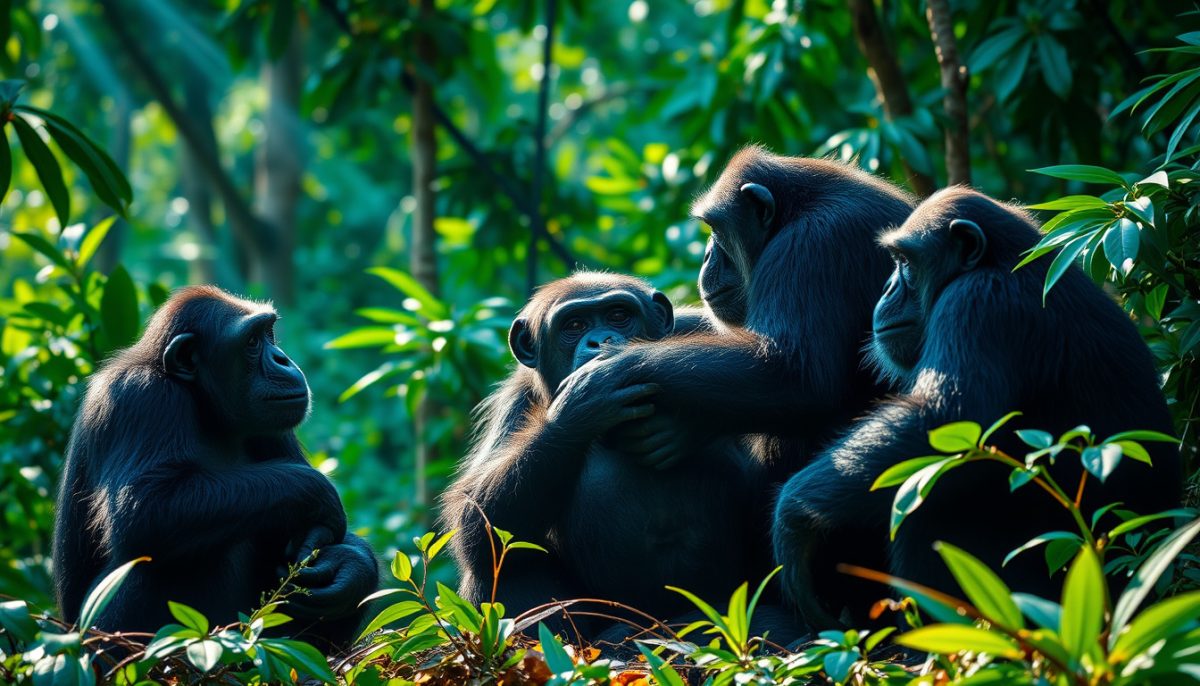
Imagine standing in the lush, verdant landscapes of Uganda, watching as a group of chimpanzees moves gracefully among the trees.
Their interactions are not just playful; they reveal a fascinating world of coalition behavior that speaks volumes about their complex social structures.
Understanding chimpanzee coalition behavior provides profound insights into their lives and opens up a window into the evolutionary strands that connect us with our primate cousins.
We will explore the intricate social bonds that unite these remarkable animals, examining their cooperation and cohesion in communities, while also considering broader implications for conservation and our own understanding of social behaviors.
Key Takeaways
- Chimpanzee coalition behavior is crucial for understanding their social dynamics.
- Strong social bonds within chimpanzee groups enhance group cohesion and stability.
- Various factors, including resource availability and individual relationships, influence coalition formation.
- Coalition behaviors differ significantly across different environments, affecting survival strategies.
- Studying chimpanzee coalitions provides insights for conservation efforts and habitat preservation.
Introduction to Chimpanzee Coalition Behavior
In the lush forests of Uganda, amidst vibrant sounds of nature, a remarkable social structure thrives—one that echoes complex behaviors within chimpanzees.
This interaction, known as chimpanzee coalition behavior, reveals much about their relationships, survival strategies, and intelligence.
A coalition forms when individuals come together to strengthen social bonds or achieve common goals—defending territory, acquiring food, or overcoming challenges.
Observing these coalitions is an education in primate social dynamics and offers a glimpse into the evolutionary roots of cooperation and competition that mirror our human experiences.
With each encounter, we uncover profound connections among these fascinating creatures, igniting curiosity about the deep meaning of community in the wild.
The Importance of Social Bonds in Chimpanzee Groups
Chimpanzees are known for their intricate social structures, characterized by dynamic and sophisticated nature.
One pivotal aspect of their society, chimpanzee coalition behavior, involves forming alliances that significantly influence social dynamics within their communities.
These coalitions serve various purposes, from support during conflicts to enhancing reproductive success. For instance, male chimpanzees often form coalitions to win mating opportunities, while females may align to protect their offspring.
This behavior highlights their intelligence and emphasizes the importance of relationships in their world.
Understanding these social bonds offers insights into chimpanzees’ emotional lives and survival strategies, revealing parallels with human social behavior.
‘The greatness of a nation and its moral progress can be judged by the way its animals are treated.’ – Mahatma Gandhi
Factors Influencing Coalition Formation
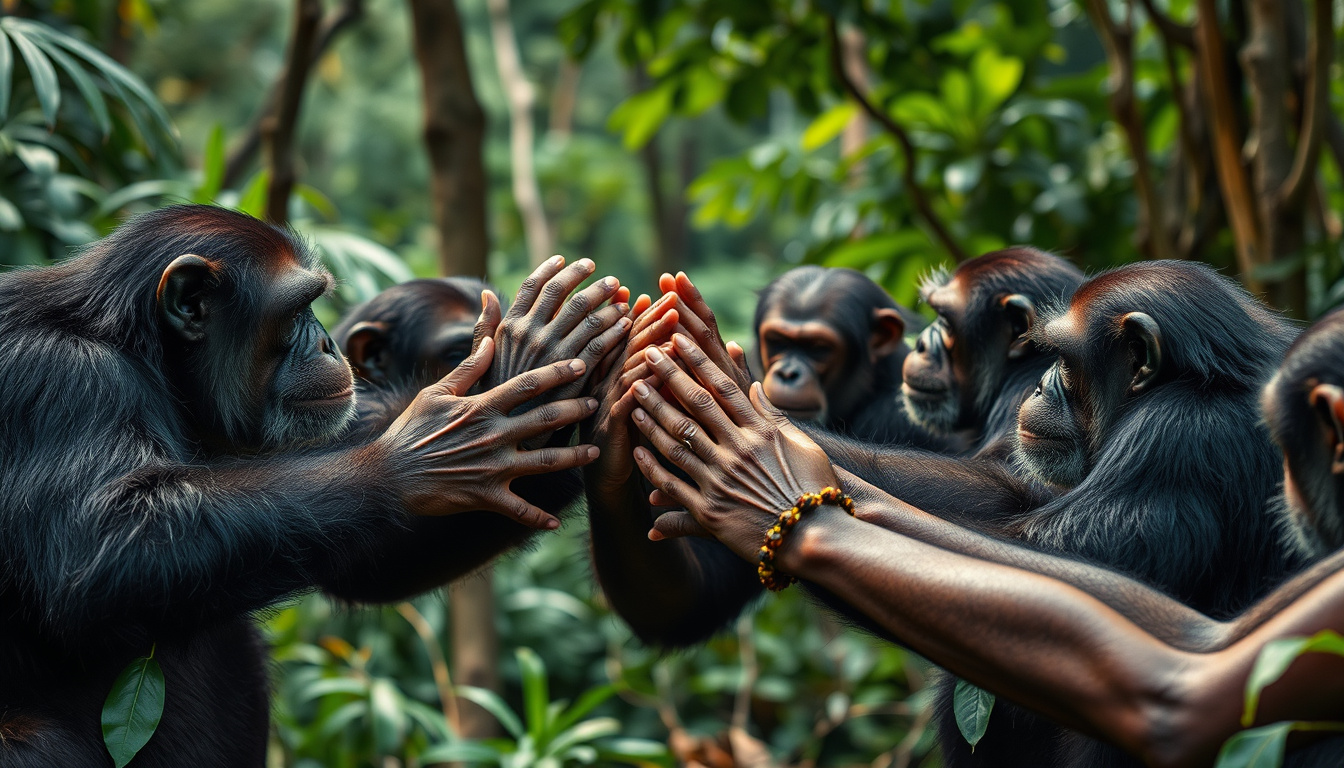
Chimpanzee coalition behavior showcases how these intelligent primates navigate relationships, power dynamics, and survival in their habitats. Understanding the factors that influence coalition formation sheds light not only on chimpanzee societies but also on human social behaviors.
Social Structure: The hierarchical structure of chimpanzee communities plays a pivotal role. Mature males dominate, while younger males and females form strategic alliances, promoting survival and increasing status.
Kinship: Mother-offspring and sibling relations facilitate stronger alliances among related individuals. Kin selection theory suggests cooperation among kin promotes lineage survival and impacts group dynamics during conflicts.
Resource Availability: Access to resources triggers coalition behaviors. Food scarcity prompts chimpanzees to band together to defend resources, while abundance might lead to a breakdown in coalition as individual interests take precedence.
Reproductive Strategies: Males form coalitions to gain access to fertile females and fend off competitors. Females influence coalition dynamics by selecting mates with strong social bonds and support.
Intergroup Relations: Chimpanzees engage with neighboring communities, forming temporary alliances as strategic responses to external threats, vital for understanding coalition dynamics.
Coalition Behavior in Different Environments
In Uganda’s dense forests, chimpanzee coalition behavior unveils a broader narrative of survival and social unity in the wild.
Chimpanzees form alliances to achieve social goals like hunting, defending territory, or gaining access to mates. Their coalition behavior is a hallmark of their social life and highlights their intelligence and strategic thinking.
Densely forested areas stimulate the formation of larger, robust coalitions for protection and resource acquisition. In contrast, more open habitats may see the emergence of smaller, more flexible coalitions due to immediate threats, leading to dynamic shifts in group membership.
This adaptability to environmental pressures is fundamental to their survival and offers insights into conservation strategies, emphasizing the importance of preserving their natural habitats for the continuation of these complex social behaviors.
Curious about experiencing this yourself? Text “chimpanzee” to info@bushmansafaris.com or +256 704 902398 for top Uganda chimpanzee tours.
Frequently Asked Questions
What is chimpanzee coalition behavior?
Chimpanzee coalition behavior refers to the alliances formed between individual chimps that collaborate to achieve common goals, such as defending territory or resources, and establishing social hierarchy within their groups.
Why are social bonds important in chimpanzee groups?
Social bonds in chimpanzee groups are crucial for survival and reproduction, enhancing cooperation, increasing protection against predators, and strengthening social hierarchies, which contribute to overall group stability.
What factors influence coalition formation among chimpanzees?
Factors influencing coalition formation among chimpanzees include kinship, social rank, environmental conditions, resource availability, and previous interactions, all crucial in determining partnership dynamics.
How does coalition behavior vary in different environments?
Coalition behavior varies based on habitat type, population density, and resource availability; resource-rich environments may focus on competition, while harsher conditions prioritize defense against threats.
What are the implications of understanding chimpanzee coalition behavior for conservation efforts?
Understanding chimpanzee coalition behavior is critical for conservation as it aids in developing strategies that protect their social structures, enhance habitat preservation, and implement conflict resolution measures among human and chimpanzee populations.