

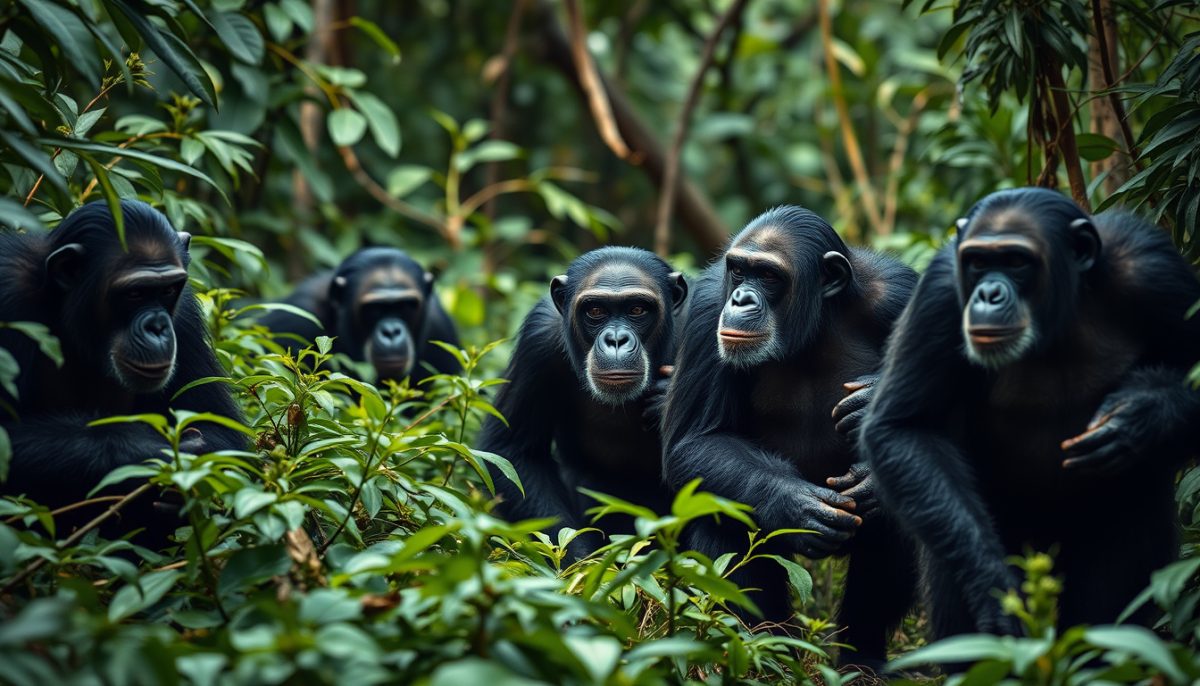
Understanding Chimpanzee Patrol Behavior: Insights into Their Social Dynamics and Territory Protection
In the heart of Uganda’s lush rainforests, a world brimming with life pulses under the dense canopies. The vibrant call of the wild resounds, echoing the lively activities of its inhabitants.
Chimpanzees, our closest living relatives, participate in an intriguing display known as chimpanzee patrol behavior. This complex social activity is pivotal for their community structure, involving more than territorial defense. It showcases advanced cooperation and strategy.
Exploring chimpanzee patrol behavior sheds light on their social interactions and survival tactics. This insight is crucial for primatologists and wildlife enthusiasts, offering a deeper understanding of their societal complexities.
Join us as we delve into the significance of chimpanzee patrol behavior in their conservation and social dynamics.
Key Takeaways
- Chimpanzee patrol behavior is key for understanding their social organization and territorial strategies.
- Patrols reinforce social bonds and hierarchies within communities.
- Resource availability and population density are among the factors that influence their strategies.
- Differences in behavior across communities are evident, underscoring the adaptive nature of chimpanzees.
- These behaviors are integral to conservation efforts and habitat protection.
Introduction to Chimpanzee Patrol Behavior
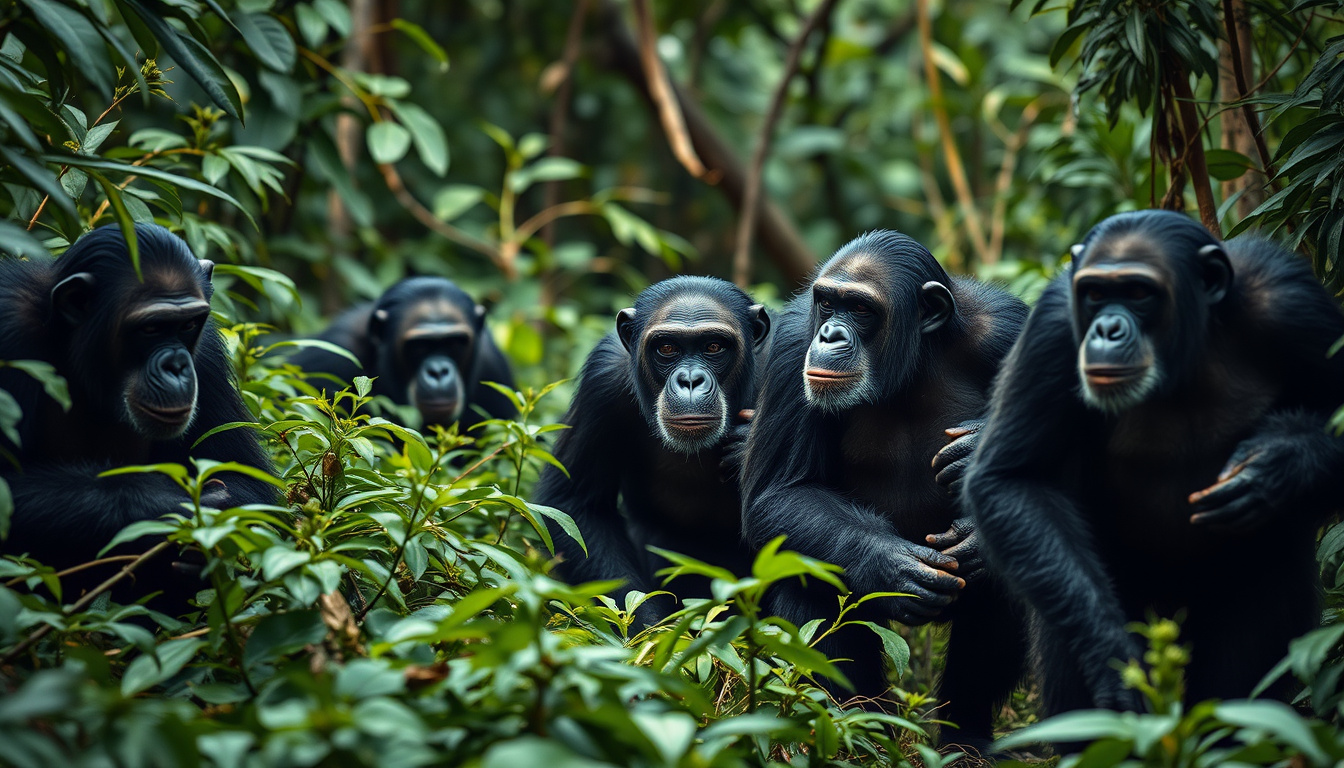
In Uganda’s verdant rainforests, chimpanzees partake in a complex series of activities known as chimpanzee patrol behavior. Imagine a group of chimpanzees, strategically moving through the underbrush, exhibiting behaviors that denote more than mere play—it’s a view into their structured, social fabric.
These patrols, thrilling as a live nature documentary, reveal the calculated world of these primates. By understanding chimpanzee patrol behavior, we are invited to a deeper comprehension of their evolutionary strategies.
Such experiences are not just educational; they’re transformative for anyone witnessing this phenomenon in Uganda.
The Role of Patrols in Social Dynamics
Chimpanzee patrol behavior significantly influences the social fabric within communities. During patrols, chimpanzees display behaviors crucial for defense and social organization.
Participants in these patrols usually hold notable social statuses, reinforcing in-group relationships and affirming their roles through collective action.
However, not all individuals share equal involvement, leading to varied social implications and competitive dynamics. This mirror to human social structures provides fascinating insights into the natural world.
‘In every walk with nature one receives far more than he seeks.’ – John Muir
Factors Influencing Patrol Behavior
The strategic movements of chimpanzee patrol behavior are shaped by environmental pressures, social structures, and inter-group relations.
For example, the presence of dominant males can significantly influence patrol dynamics, as they often lead these excursions to display their status. Social bonds and past alliances often dictate the formation of these patrol teams, emphasizing the role of cooperation in their societal constructs.
Understanding these factors provides invaluable insights into the adaptive nature of chimpanzee societies, paralleling human organizational structures.
Comparative Analysis of Patrol Behavior Across Communities
Chimpanzee patrol behavior varies significantly among communities, influenced by environmental conditions and competition levels.
In areas with intense competition for resources, like the dense forests of Uganda, patrols are frequent and structured. Conversely, in resource-scarce environments like the East African savannahs, patrols may focus more on conservation of energy.
This comparative approach highlights the sophisticated understanding chimpanzees have of their ecosystems, enhancing our appreciation of their complex social strategies.
Interested in experiencing this remarkable behavior? Contact us for our exclusive chimpanzee tracking experiences in Uganda.
Implications for Conservation and Habitat Protection
Observing chimpanzee patrol behavior provides crucial insights for conservation strategies focused on habitat protection and biodiversity preservation.
This understanding helps guide effective conservation policies that protect chimpanzee habitats and ensure their social and ecological wellbeing. Efforts to preserve these behaviors through educational initiatives and habitat maintenance are vital for the sustainability of our planet’s biodiversity.
Conclusion: The Importance of Understanding Patrol Behavior
By studying chimpanzee patrol behavior, we gain insights into the complex social and survival mechanisms of chimpanzees. This not only aids conservation efforts but also offers a profound connection to our closest living relatives.
Embarking on a journey to observe these behaviors in the wild offers a unique opportunity to connect directly with these fascinating creatures, deepening our commitment to their preservation.
Frequently Asked Questions
What is chimpanzee patrol behavior?
It involves the organized movement of chimpanzee groups within their territories to monitor and defend against intruders, especially from other communities.
Why are patrols important for chimpanzee social dynamics?
They reinforce in-group relationships and establish social hierarchies, essential for maintaining community harmony and avoiding external conflicts.
What factors influence chimpanzee patrol behavior?
Resource availability, population density, mating seasons, and rival presences are significant influences on patrol frequency and nature.
How does patrol behavior differ across chimpanzee communities?
Diverse ecological and social conditions lead to variations in patrol intensity and strategies among different chimpanzee communities.
What are the implications of chimpanzee patrol behavior for conservation?
Understanding these behaviors is crucial for developing conservation strategies that protect chimpanzees and their habitats, preserving their complex social structures and territorial integrity.
Keen to witness these fascinating behaviors yourself? Contact Bushman Safaris for an unforgettable chimpanzee tracking experience in Uganda’s lush landscapes. Simply email info@bushmansafaris.com or call +256 704 902398.