

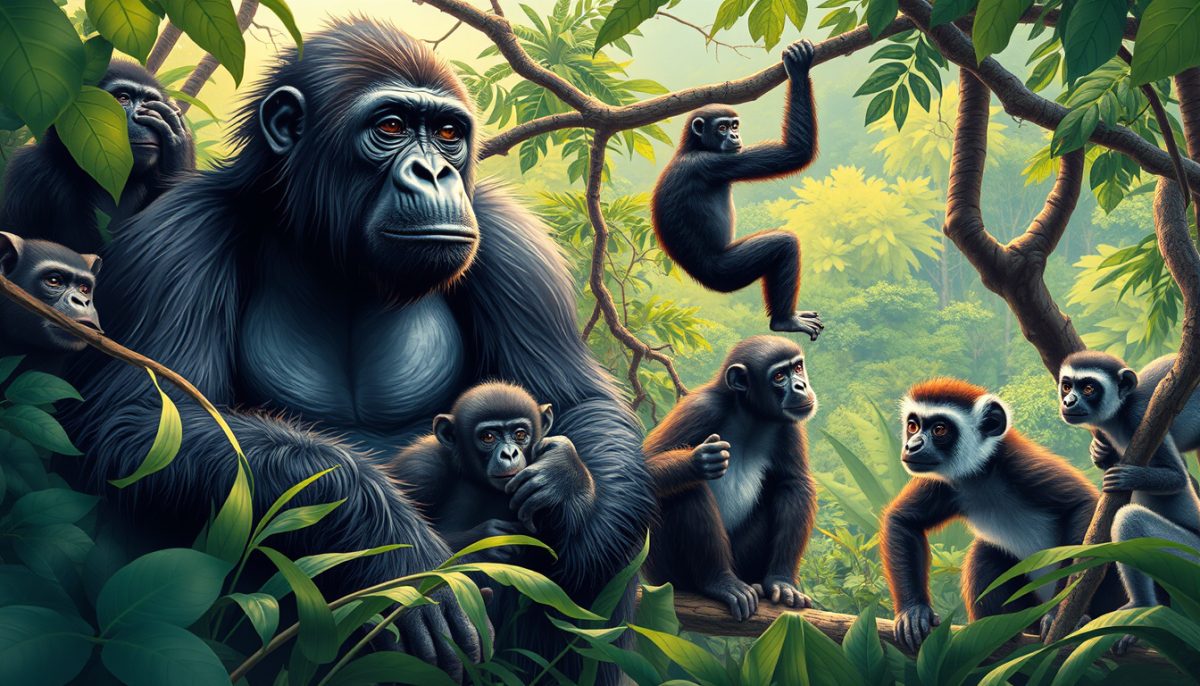
Unraveling Primate Evolution: Insights into Behavior and Adaptation
In the lush, dense jungles around the globe, a fascinating story unravels—a narrative spanning millions of years that traces the complex pathways of evolution influencing our close relatives: the primates.
Their behaviors, adaptations, and social dynamics offer a window into their world and reflect a history of survival and transformation.
This rich tapestry unlocks the essence of primates, shedding light on the ties that connect us to them.
Join us as we explore the intriguing world of primate evolution and behavior, uncovering the significant adaptations that define their existence and have influenced our own.
Key Takeaways
- Understanding primate evolution reveals crucial insights into their behavior and adaptations.
- Primate behaviors are significantly shaped by their adaptive significance in different environments.
- Social structures among primates are essential for understanding their hierarchies and interactions.
- Cognitive abilities and tool use in primates highlight their advanced problem-solving skills and adaptability.
- Future research on primate evolution can deepen our understanding of ecological influences on their behavior.
Introduction to Primate Evolution
As the sun casts its golden glow over the lush jungles of Africa, a fascinating tale unfolds beneath the thick forest canopy—one that intertwines our existence with the creatures sharing our planet.
Welcome to the mesmerizing world of primate evolution and behavior, where we delve into the roots of humanity and the vibrant lifestyles of our closest living relatives.
Every rustle of leaves transports you back in time to discover the adaptability and resourcefulness of these intriguing beings, shaping themselves into unique entities – from the playful lemurs of Madagascar to the formidable chimpanzees of Uganda.
This journey is not just an exploration of biology; it’s an invitation to uncover the layers of social structures, communication skills, and survival strategies that resonate deeply within us all.
Join us as we unravel the threads of evolution, revealing how these remarkable traits have influenced behaviors across countless generations.
The Adaptive Significance of Primate Behavior
Understanding primate evolution offers key insights into how our closest relatives have adapted to their environments over millions of years.
From the smallest lemurs to the powerful gorillas, primates exhibit a variety of behavioral adaptations crucial for survival.
For example, the complex social structures of chimpanzees and bonobos have evolved mainly to enhance group cohesion, reproductive success, and survival against predators.
Intricate communication methods, like vocalizations and facial expressions, and even tool use are significant markers of their intelligence.
Grooming, which promotes hygiene and reinforces social bonds, demonstrates the interconnectedness of individual survival and group dynamics.
The adaptive significance of these behaviors emphasizes not only their practical utility but also the evolutionary pressures that have molded primate life.
Continued research into primate behavior enhances our appreciation for both their unique qualities and their similarities to us.
‘The greatest discoveries of the 21st century will be those that help us understand the evolution of ourselves.’ – Richard Dawkins
Social Structures and Hierarchies in Primate Groups
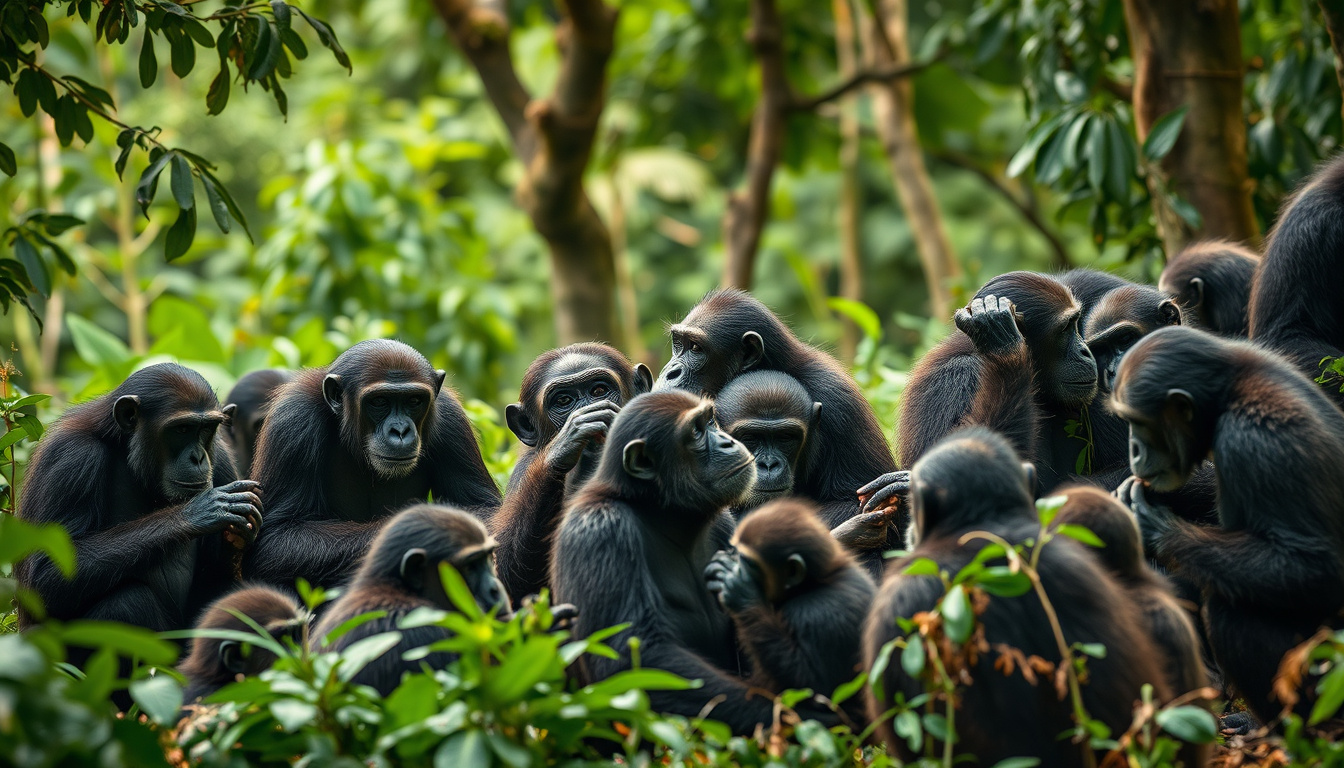
In the realm of primate evolution, the social structures and hierarchies of primate groups play a crucial role in understanding their interactions and survival strategies.
Primarily driven by evolutionary pressures, these structures often reflect intricate relationships characterized by dominance, cooperation, and communication.
For instance, strong social bonds in some species like chimpanzees are vital for group cohesion and resource sharing, showing how behaviors such as grooming and vocalizations can reinforce social ties.
Observing these social systems provides insights into not only the adaptations shaping primate behavior over millennia but also potential parallels in human social interactions.
Studying prim