

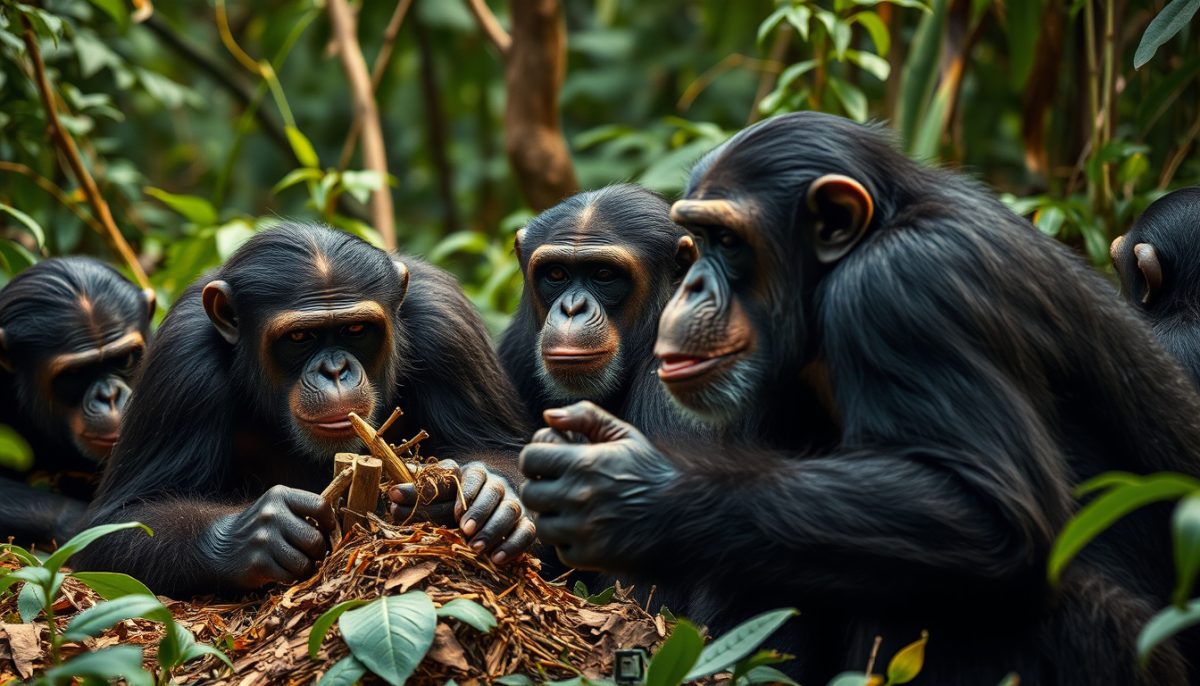
Are Chimpanzees Similar to Humans in War?
In the heart of the African rainforest, a silent conflict brews among the trees.
Chimpanzees, our closest relatives, engage in behaviors that mirror human warfare, raising unsettling yet fascinating questions about the nature of aggression and conflict in the animal kingdom.
Could it be that the primal instincts we associate primarily with humans also thrive in these intelligent primates?
As you delve into the compelling world of chimpanzee interactions, you’ll uncover a tapestry of aggression, social dynamics, and even strategy that leaves us pondering the very essence of our own violent tendencies.
Overview
The exploration of war is often associated exclusively with humans—a complex orchestration of strategy, emotion, and socio-political factors.
But what if these elements also existed in the animal kingdom?
Chimpanzees, belonging to the species Pan troglodytes, exhibit striking similarities in their aggressive behaviors, territorial disputes, and group dynamics, aligning more closely with human warfare than previously imagined.
This intriguing parallel opens a window into understanding the fundamental aspects of behavior shared between species, encouraging a deeper reflection on our own societal structures.
Deep Dive
To appreciate the nature of war among chimpanzees, one must first consider their social structure.
Living in communities that range from 20 to over 100 individuals, these primates establish complex hierarchies.
Struggles for dominance and resource control can lead to aggressive encounters reminiscent of human conflicts.
Observations reveal that chimpanzees organize themselves into coalition groups.
When a rival community encroaches on their territory, a planned attack may ensue, showcasing not just instinct but a degree of strategy akin to human warfare.
Such scenarios demonstrate that primates possess the ability to understand social relationships and coordinate actions, blending emotion with tactical thinking.
Key Insights
The behavioral similarities between chimpanzees and humans in warfare provide profound insight into the evolutionary origins of aggression and conflict.
Both species exhibit territorial disputes, use of tools, and group cohesion to enforce dominance.
Furthermore, the psychological factors at play—fear, anger, and competition for resources—mirror the very emotions that fuel human wars.
Additionally, the presence of social bonds among the chimpanzees informs their war strategies.
A study by Dr.
Jane Goodall has shown that communities which maintain strong social ties are better prepared for conflict, demonstrating how relationship dynamics can influence not only fighting strategies but also the outcomes of confrontations.
The interplay of social structure and emotion in chimpanzee behavior reflects a broader evolutionary narrative about survival, resource acquisition, and social standing.
Practical / Experiential Layer
To witness these behaviors firsthand, a journey into Uganda’s lush forests offers an unparalleled experience.
Imagine stepping into the habitat of the very creatures that hold a mirror to our own societal dilemmas.
Guided chimpanzee tracking in Uganda not only provides an opportunity to observe these fascinating dynamics in action but also allows you to connect with the underlying themes of coexistence, competition, and intelligence shared between species.
Want to experience this in the wild?
You can request our top chimpanzee tracking experiences in Uganda by messaging “chimpanzee” to info@bushmansafaris.com or +256 704
902398.
As you explore, consider staying at Igwara Lodge, a serene retreat that immerses you in nature while providing a premium experience after your daily adventures.
Here, you can reflect on your day’s discoveries, nestled in the tranquility of the surrounding wilderness.
Conclusion
The exploration of whether chimpanzees are similar to humans in war unveils a rich narrative about the roots of aggression that transcends species.
These social but sometimes hostile primates reveal not just reflections of our behaviors but also deep insights into our collective psychology.
As we continue to unravel the complexities of conflict in the animal kingdom, we are reminded of our shared evolutionary heritage, prompting us to ponder—what lessons can we learn from our closest relatives about peace and warfare?
Understanding their behaviors not only enriches our knowledge of animal societies but encourages a profound reflection on what it means to be human.
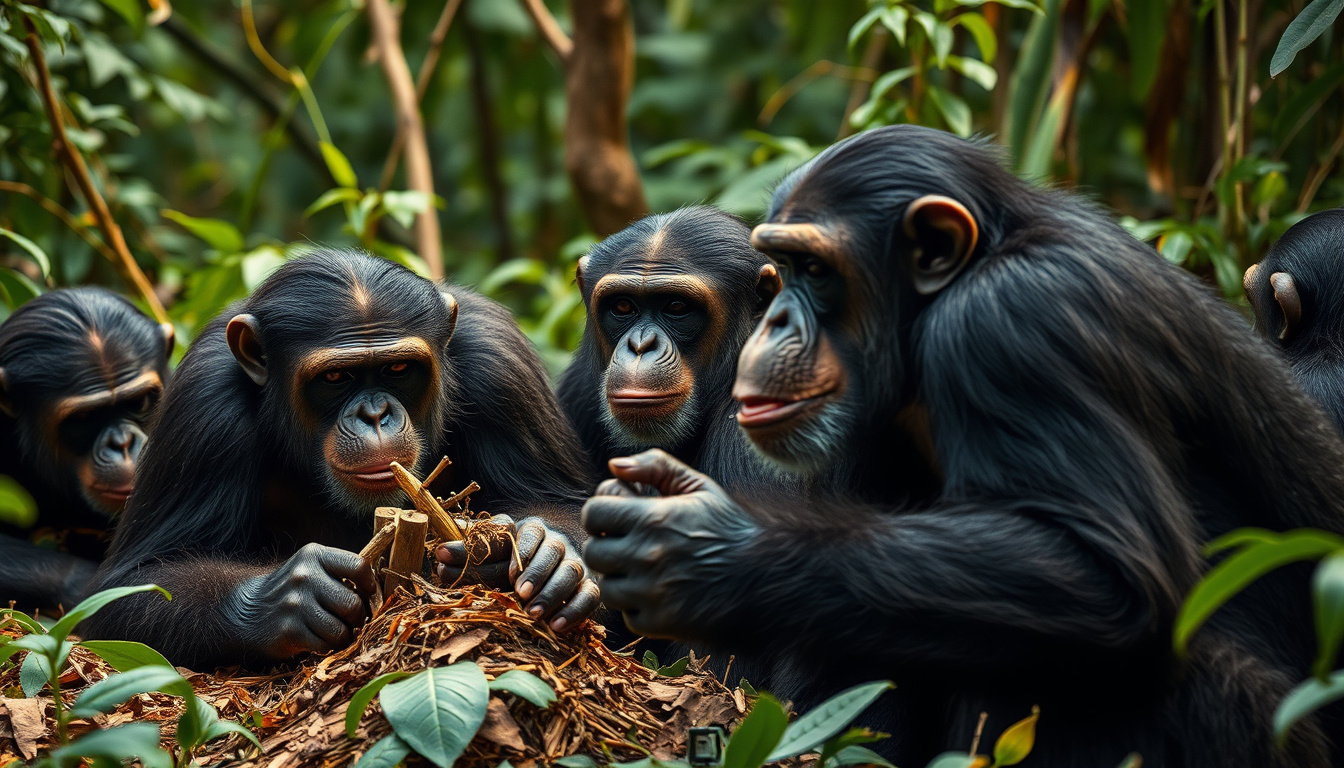
Case Studies: Chimpanzee Raids and Territorial Conflicts
### Case Studies: Chimpanzee Raids and Territorial Conflicts
In the fascinating world of primatology, a striking question emerges: are chimpanzees similar to humans in war?
Scientific observations have revealed parallels between the aggressive behaviors of chimpanzees and human warfare, particularly in terms of territorial conflicts and organized raiding.
In various East African forests, researchers have documented instances of chimpanzee groups engaging in coordinated attacks on rival communities, not merely driven by aggression but also influenced by social hierarchy and resource scarcity.
For instance, in Gombe Stream National Park, Jane Goodall observed male chimpanzees strategically collaborating to attack neighboring groups, often leading to a marked population decline in their rivals, reminiscent of human territorial disputes and warfare.
In a 2010 study at the Budongo Forest in Uganda, researchers noted that chimpanzee raids often involved well-organized strategies, suggesting a form of group cohesion and planning.
These raids were not impulsive acts of aggression but rather reflected an understanding of social dynamics and the necessity of survival, highlighting their complex social structure that resonates with our own.
These chimpanzee behaviors prompt us to contemplate the evolutionary origins of warfare, raising the question of whether these instinctual actions are merely a reflection of their survival needs or a deeper, innate tendency paralleling humanity’s own history of conflict.
Engaging with these insights not only deepens our understanding of chimpanzees but also enriches the conversation about the complexities of human nature itself.
Psychological and Social Factors Influencing Aggression
### Psychological and Social Factors Influencing Aggression: Are Chimpanzees Similar to Humans in War?
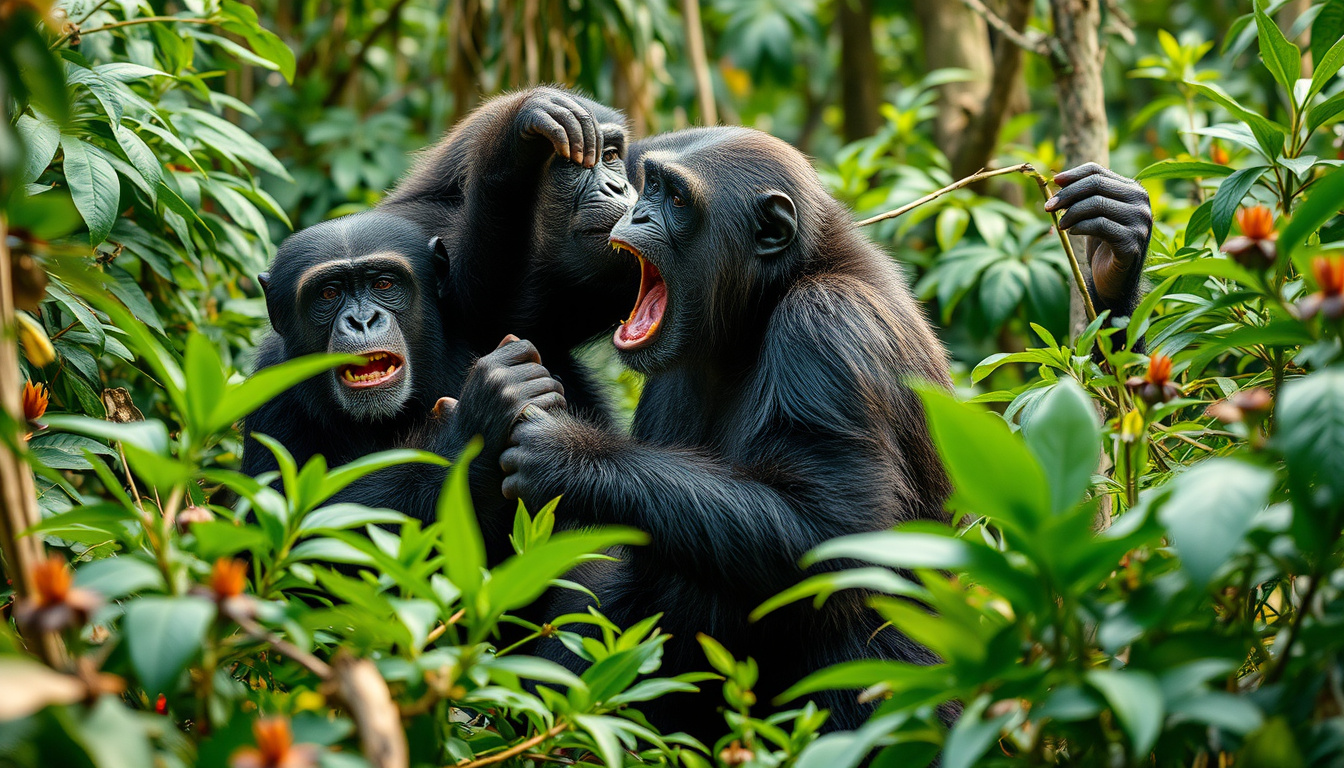
The exploration of aggression in chimpanzees offers intriguing parallels to human behavior, especially in the context of conflict and war.
Much like humans, chimpanzees exhibit complex social structures governed by psychological factors that can fuel aggressive encounters.
These primates live in tightly-knit communities where hierarchy, territoriality, and alliances can drive behaviors akin to war.
Chimpanzees demonstrate territorial aggression when defending their resources or family members, a behavior eerily reminiscent of human territorial wars.
Research indicates that male chimpanzees often engage in organized group attacks against rival communities, displaying strategic planning and cooperation that reflect early human conflict dynamics.
Their decision-making processes concerning aggression are influenced by social relationships, competition for mating rights, and the maintenance of group cohesion—factors that humans also navigate in times of conflict.
Interestingly, the psychological underpinnings of such aggressive behaviors point to a shared evolutionary past, suggesting that the propensity for war-like conduct isn’t exclusively human but is also mirrored in our closest primate relatives.
Therefore, understanding these relationships helps us explore the deeper connections between primate behavior, human psychology, and the evolutionary origins of conflict.
This connection aligns with the theme that while social and cultural constructs differentiate humans from chimpanzees, the roots of aggression may run remarkably parallel.
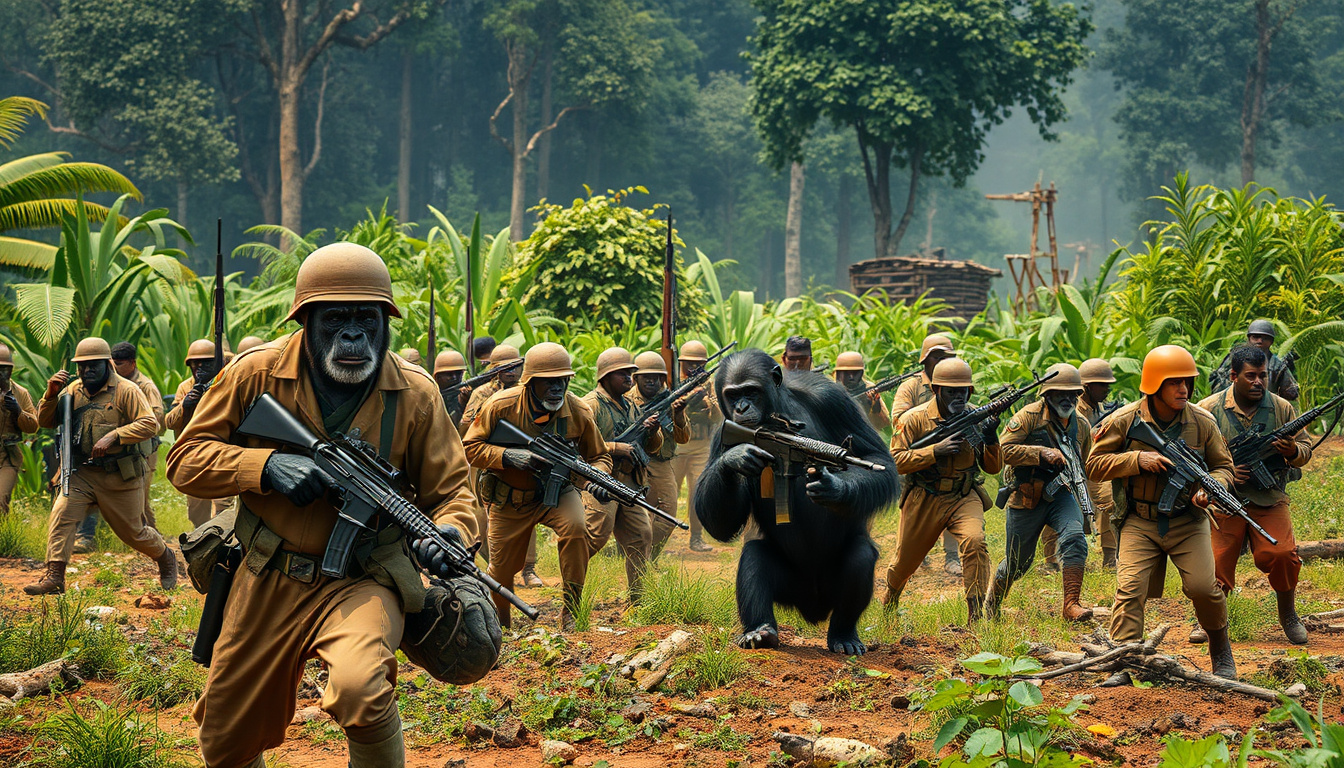
Comparative Analysis of Warfare Strategies
## Are Chimpanzees Similar to Humans in War?
A Comparative Analysis of Warfare Strategies
When considering the complex nature of warfare, one cannot help but draw parallels between human conflict and the ways in which our closest primate relatives, chimpanzees, engage in aggression.
The fascinating question of whether chimpanzees exhibit behaviors similar to human warfare offers a unique lens through which to understand our own violent tendencies.
While often dismissed as mere animalistic behavior, studying chimpanzee conflict reveals significant insights into the evolutionary underpinnings of warfare and teamwork.
Chimpanzees display a range of aggressive behaviors that can be likened to human warfare strategies.
For instance, they are known to form coalitions that target rival groups, using tactics reminiscent of military strategy.
Members of a group will often plan ambushes, exhibiting a sense of teamwork that suggests an understanding of strategy not entirely dissimilar from human planning during conflicts.
Interestingly, rival chimpanzee groups may engage in what can be characterized as territorial warfare, similar to human conflicts over land or resources.
These skirmishes can result in serious injury or even death, signifying the high stakes involved in such confrontations, akin to human wars fought over territory or dominance.
However, it’s essential to note the differences that separate human warfare from chimpanzee aggression.
Human conflict is often influenced by various social, economic, and political factors, while chimpanzee conflicts typically arise from primal needs such as food, territory, and mate selection.
Another layer of complexity is added when considering the emotional elements involved.
Chimpanzees are capable of experiencing a range of emotions, including empathy and compassion, which also play a role in their interpersonal dynamics.
In contrast, human warfare frequently involves ideologies and beliefs that transcend mere survival instincts, often leading to far-reaching consequences beyond physical confrontation.
The study of chimpanzee behavior gives us valuable insights not only into our evolutionary past but also into the fundamental aspects of conflict resolution and cooperation.
By analyzing their aggressive behaviors, we can better understand the origins of human warfare, illuminating the intricate dance between evolution, survival, and social structure.
In conclusion, while chimpanzees exhibit behaviors that can be comparable to human strategies in warfare, the underlying motivations and implications significantly differ.
As such, the study of these fascinating creatures serves as a crucial reminder of both our similarities and differences in the context of conflict.
Conclusion: What Chimpanzee Behavior Reveals About Human Nature
The exploration of chimpanzee behavior unveils profound insights into the essence of human nature, especially when we consider concepts as complex as war.
Are chimpanzees similar to humans in war?
The answer is layered and nuanced.
Both species exhibit aggressive tendencies that can lead to conflict, particularly when it comes to resource competition, territory disputes, or social hierarchy maintenance.
In many ways, the way chimpanzees organize themselves during such confrontations—forming coalitions, strategizing against rival groups, and displaying loyalty to their comrades—mirrors human military behavior.
This understanding prompts a deep reflection on the roots of our own conflicts.
By studying chimpanzees, we can gain perspective on the primal instincts that drive not just animal behavior, but also human decisions in times of strife.
Ultimately, as we observe these intelligent primates, we are compelled to confront the darker parts of our nature, fostering a greater empathy and awareness of both our similarities and differences.
Frequently Asked Questions
What are the key similarities between chimpanzees and humans in terms of warlike behavior?
Chimpanzees exhibit behaviors such as forming coalitions, strategizing attacks, and exhibiting territorial aggression, which parallel human warfare dynamics.
Are there specific case studies that illustrate chimpanzee aggression similar to human conflicts?
Yes, several case studies document chimpanzee raids on neighboring groups, where they demonstrate tactical planning and social cooperation akin to human warfare.
What psychological factors influence chimpanzee aggression and war-like behaviors?
Chimpanzee aggression can be influenced by factors such as social hierarchies, resource competition, and stress, reflecting some underlying psychological similarities with humans.
How do chimpanzee warfare strategies compare to those of humans?
Both chimpanzees and humans employ strategies of ambush, deception, and forming alliances; however, human conflicts tend to be more complex and influenced by culture and advanced planning.
What does studying chimpanzee behavior reveal about human nature?
Examining chimpanzee warfare offers insights into the evolutionary roots of human aggression and social behavior, suggesting that some aspects of our conflict-driven nature may be deeply ingrained.
If this story sparked your curiosity, you can experience it firsthand.
Bushman Safaris offers curated chimpanzee tracking experiences in Uganda, including access to Kibale National Park and the Ngogo region where these remarkable behaviors have been observed.
For our top 3 recommended Uganda chimpanzee tours, simply text “chimpanzee” to info@bushmansafaris.com
or WhatsApp +256 704 902398, and we’ll send you tailored options based on your travel preferences.