

“`html
Exploring Chimpanzee Intergroup Conflict: Behavioral and Social Dynamics
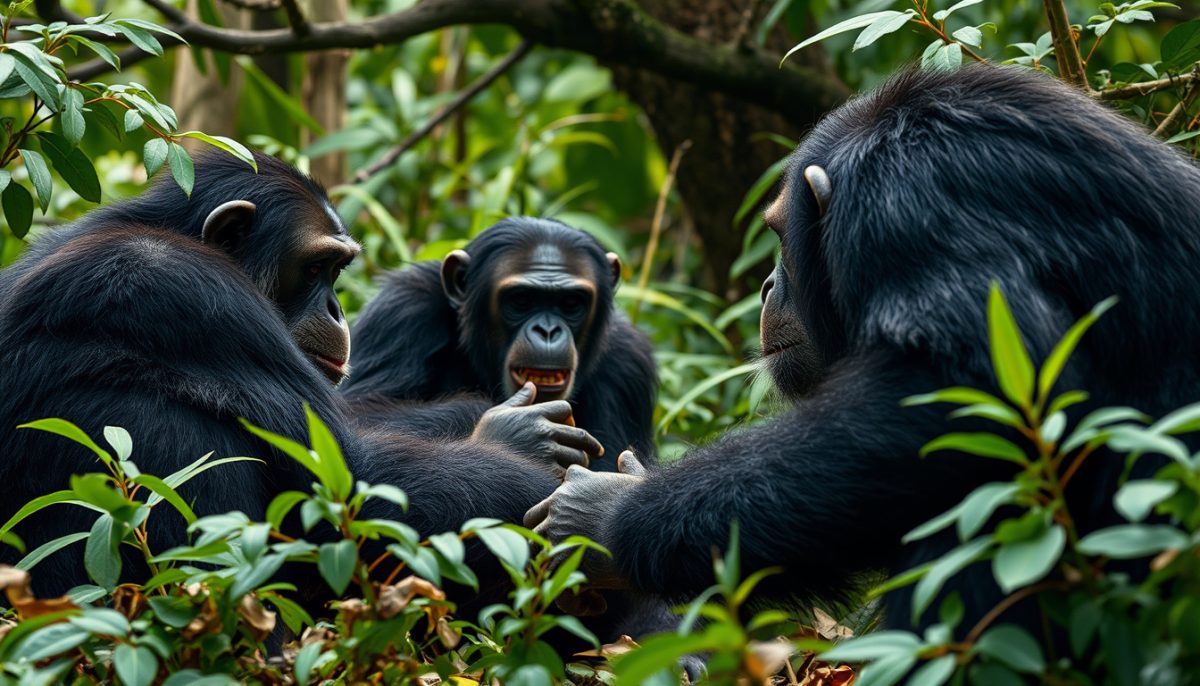
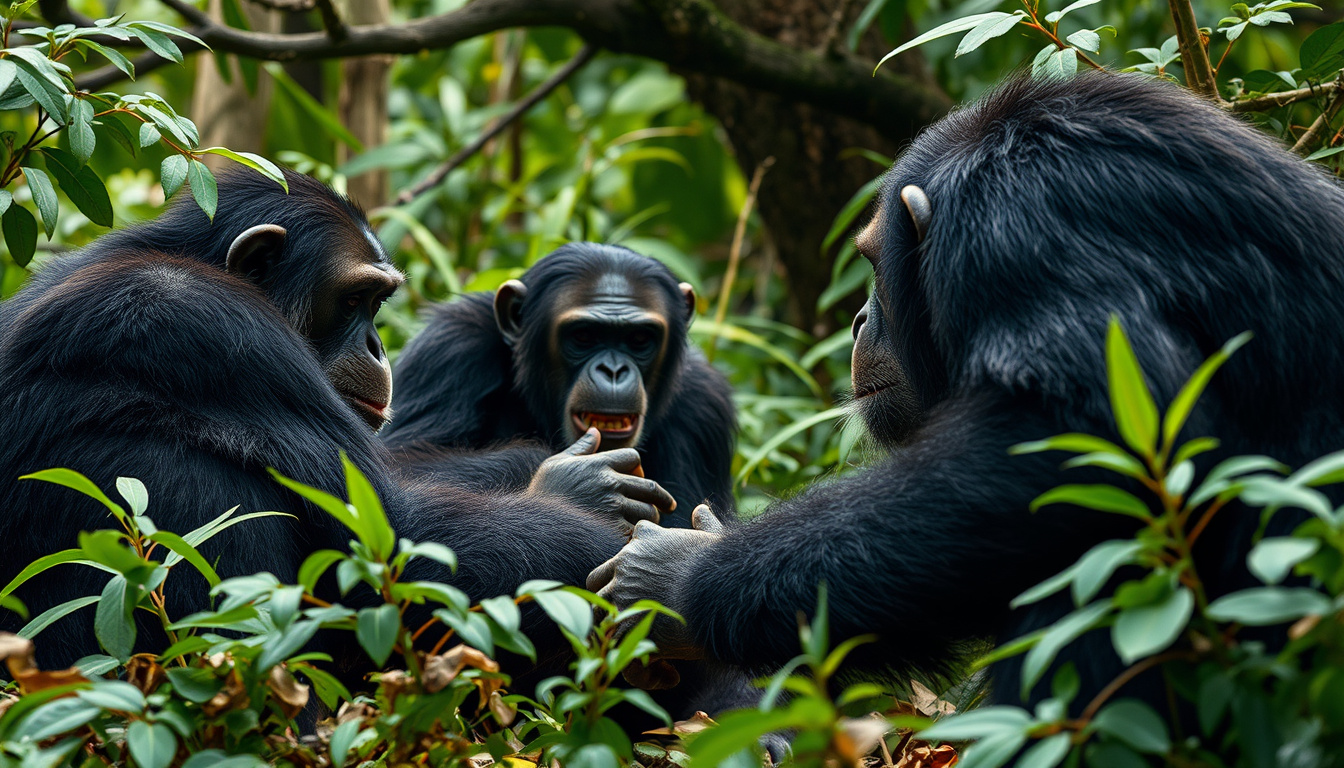
In the dense, vibrant rainforests of Uganda, a drama unfolds that rivals the most gripping wildlife documentaries. Here, our closest relatives—the chimpanzees—navigate their lush habitat with a complex and often tumultuous social structure.
Amongst their compelling interactions lies the fascinating phenomenon of chimpanzee intergroup conflict.
This phenomenon, marked by fierce confrontations and strategic maneuvering, reveals not only the primal instincts that govern their societies but also mirrors human social dynamics in many ways.
As we delve deeper into the intricate web of chimpanzee behavior, we uncover the threads of competition, cooperation, and survival that interlace their lives, providing invaluable insights into their world—and even our own.
Key Takeaways
- Chimpanzees have complex social structures that influence their intergroup relationships.
- Intergroup conflict among chimpanzees is driven by factors such as resource competition and social hierarchy.
- The consequences of intergroup conflicts can significantly impact chimpanzee populations and their dynamics.
- Notable case studies illustrate the variations and motivations behind specific instances of intergroup conflict.
- Understanding chimpanzee intergroup conflict is vital for informing conservation efforts and improving human-chimpanzee interactions.
Introduction to Chimpanzee Social Structures
Chimpanzees, our closest living relatives, share not only traits of our DNA but also a rich tapestry of social interactions and dynamics.
Among the many fascinating aspects of their behavior is the phenomenon of chimpanzee intergroup conflict.
These clashes, often misunderstood, play a pivotal role in their social structure, informing us about territoriality, survival, and the complexities of their societies.
Through understanding these conflicts, we get a glimpse into the intricate ballet of cooperation and competition that defines their world, a realm that is both wild and familiar, making the case for why experiencing these beings in their natural habitat is not just a visit, but a revelation.
Understanding Intergroup Conflict in Chimpanzees
In the lush, green canopies of Uganda’s forests, a complex social dynamic unfolds among one of Earth’s most fascinating creatures: the chimpanzee.
While these primates are famed for their intelligence and close-knit family structures, there exists a darker side to their social interactions: intergroup conflict.
This phenomenon, marked by aggressive encounters and territorial disputes, reveals not just the survival instincts of chimpanzees but also sheds light on the evolutionary parallels to human behavior.
Understanding chimpanzee intergroup conflict is not merely an academic pursuit; it opens a window into the intricate tapestry of primate society and the very essence of cooperation and competition in the animal kingdom.
Chimpanzees live in communities that can range from 20 to over 100 individuals, each exhibiting its own social hierarchy and unique behaviors.
These groups vie for resources such as food, mates, and territory, often leading to fierce confrontations with neighboring groups.
Notably, these conflicts can appear spectacularly strategic; chimpanzees will sometimes conduct coordinated attacks, demonstrating a remarkable level of planning and social cohesion.
By analyzing these encounters, researchers have identified patterns that mirror human conflicts, including alliances, revenge, and even the cultural transmission of aggression.
As we delve deeper into the fascinating world of chimpanzee intergroup conflict, we must consider the influence of environmental factors such as habitat availability and food scarcity.
For example, during periods of limited resources, tensions escalate, leading to heightened aggression.
The consequences of such conflicts are profound—not only do they shape the demographics and distribution of chimpanzee populations, but they also provide critical insights into the evolutionary origins of human warfare and social behavior.
If you wish to witness these complex dynamics in action, Uganda offers a unique opportunity for travelers.
Imagine trekking through verdant jungles, attending a live performance of this primal drama as you watch wild chimpanzees navigate their friendships and rivalries.
To fully immerse in this experience, consider planning a stay at Igwara Lodge, a serene retreat where you can unwind amidst nature after a day of tracking these remarkable primates.
Understanding the nuances of chimpanzee intergroup conflict not only enriches our appreciation for these beings but prompts reflection on our own social constructs and the innate drives that lead to cooperation and conflict among humans.
Ready to explore this captivating phenomenon?
You can request our top chimpanzee tracking experiences in Uganda by messaging ‘chimpanzee’ to info@bushmansafaris.com or +256 704
902398.
‘The greatest danger in times of turbulence is not the turbulence; it is to act with yesterday’s logic.’ – Peter Drucker
“`