

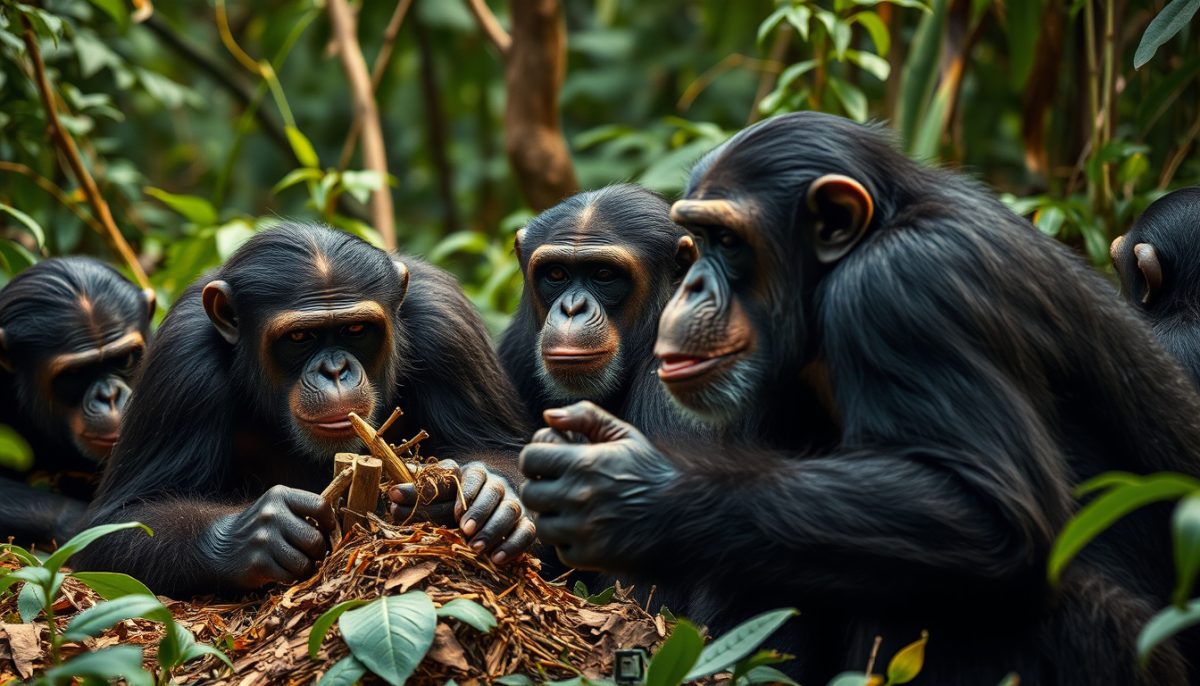
Exploring Chimpanzee Warfare: Are They Similar to Humans in Conflict?
In the silent corners of the African rainforest, a resemblance of human-like war unfolds. Chimpanzees, our closest relatives, engage in behaviors that echo human warfare, stirring up intriguing discussions about the essence of aggression and conflict in the animal kingdom.
Could it be that the violent tendencies we often consider purely human also exist in these intelligent primates? Join us as we delve deeper into the fascinating world of chimpanzee interactions, uncovering aggression, social dynamics, and strategic behaviors that mirror our own confrontations.
Overview
The notion of war typically conjures images of human conflicts, dense with strategy, emotion, and socio-political implications. But what if these aspects also thrive within the animal kingdom? Chimpanzees, belonging to the species Pan troglodytes, display remarkable similarities to human warfare including territorial disputes and complex group dynamics.
This fascinating parallel offers a unique perspective on the shared traits of aggression and societal structure, pushing us to reflect on our own communities.
Deep Dive
To truly appreciate chimpanzee warfare, we must explore their social structures. Residing in communities sometimes exceeding 100 members, chimpanzees establish intricate hierarchies. Dominance battles and resource control within these groups not only resemble human conflicts but often escalate into organized, strategic confrontations.
Observations indicate that when rival communities pose a threat, chimpanzees can orchestrate premeditated attacks, showcasing a parallel to human warfare with a mix of emotion and tactical ingenuity.
Key Insights
The behavioral similarities between humans and chimpanzees in warfare provide profound insights into aggression’s evolutionary origins. Both species engage in territorial conflicts, utilize tools, and display strong group cohesion.
A study by Dr. Jane Goodall illustrates that chimpanzee communities with robust social bonds often fare better in conflicts, highlighting the significant role of relationships in both chimpanzee and human strife.
Practical / Experiential Layer
For those curious to witness these dynamics firsthand, Uganda’s lush forests offer a unique opportunity. Imagine stepping into the habitat of creatures that reflect our own societal behaviors. Guided chimpanzee tracking not only allows observation of these fascinating interactions but also aids in understanding the themes of coexistence and competition that permeate both species.
Interested in this adventure? Contact us to book a trip to Uganda’s prime chimpanzee habitats at info@bushmansafaris.com or call +256 704 902398.
Consider staying at Igwara Lodge during your visit. Nestled in the wilderness, it provides the perfect setting to ponder the day’s discoveries and connect more deeply with nature.
Conclusion
Exploring chimpanzee warfare sheds light on the intrinsic aggression that permeates both human and chimpanzee societies. These observations provoke thought about our shared heritage and the instincts driving our species. As we continue uncovering the complexities of conflict in the animal kingdom, it serves as a compelling reminder of how closely tied we are to our primate cousins, underscoring the lessons we can learn about peace, conflict, and coexistence.
Understanding chimpanzee behavior enriches our knowledge of animal societies and prompts us to reflect on the essence of being human. As you explore these insights, consider the profound connections between us and our closest relatives, and what they reveal about the natural world and ourselves.
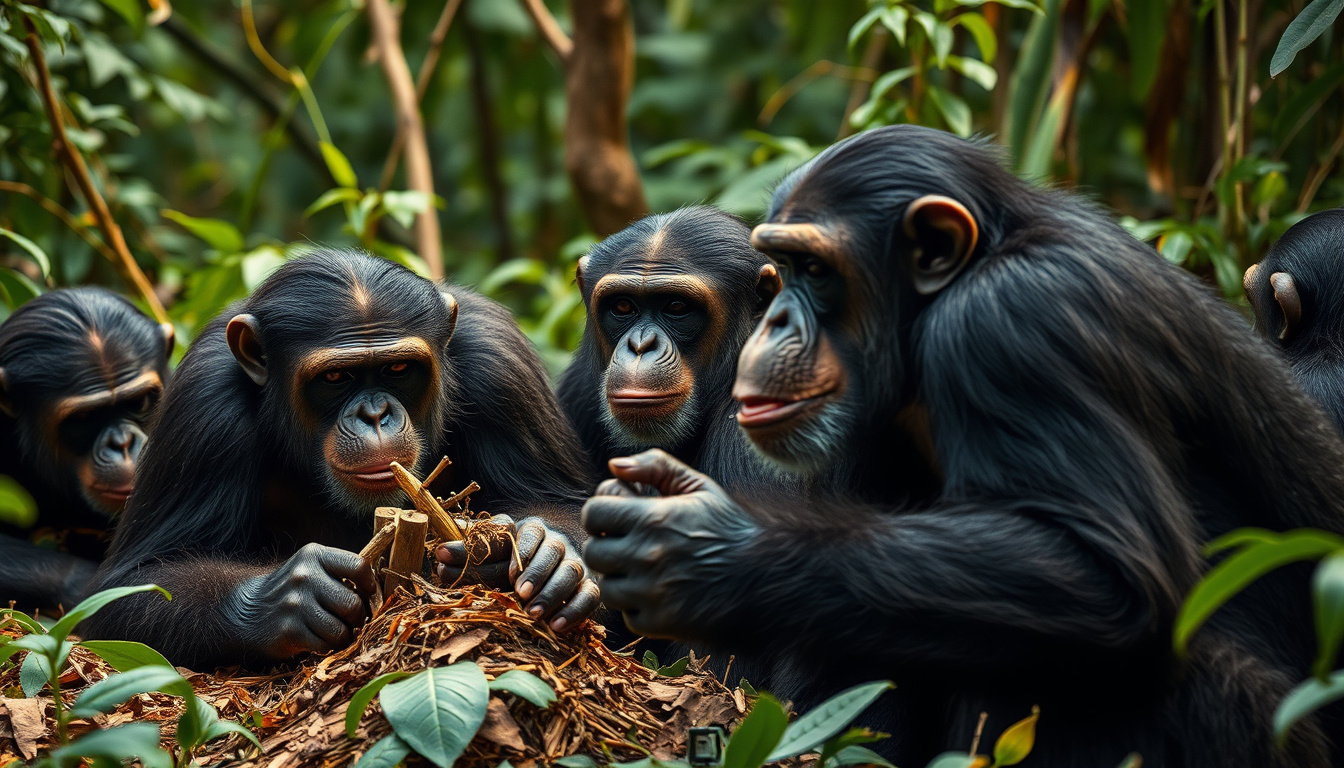
Key Takeaways
- Chimpanzees exhibit complex social structures resembling human societies.
- Their aggression and territorial conflicts are similar to patterns observed in human warfare.
- Specific instances of coordinated chimpanzee raids underscore their strategic behavior.
- Psychological factors like empathy and social bonds significantly impact aggression in both species.
- Through studying chimpanzee warfare, we gain insights into the evolutionary roots of human conflict.
Frequently Asked Questions
What are the key similarities between chimpanzees and humans in terms of warlike behavior?
Chimpanzees form coalitions, strategize attacks, and exhibit territorial aggression, paralleling human warfare dynamics.
Are there specific case studies that illustrate chimpanzee aggression similar to human conflicts?
Yes, documented case studies describe chimpanzee raids on neighboring groups, showcasing tactical planning and cooperation similar to human warfare.
What psychological factors influence chimpanzee aggression and war-like behaviors?
Factors such as social hierarchies, resource competition, and stress influence chimpanzee aggression, reflecting psychological parallels with humans.
How do chimpanzee warfare strategies compare with those of humans?
Both species employ strategies like ambush and alliance formation; however, human conflicts are often more complex, influenced by cultural and advanced planning.
What does studying chimpanzee behavior reveal about human nature?
Examining chimpanzee warfare provides insights into the evolutionary bases of human aggression and social behavior, highlighting how some conflict-driven aspects of our nature are deeply embedded.
If this exploration piqued your interest, you can experience it yourself. Contact Bushman Safaris for a curated chimpanzee tracking adventure in Uganda, accessing areas where these remarkable behaviors have been observed. For our top recommendations, simply message “chimpanzee” to info@bushmansafaris.com or WhatsApp +256 704 902398, and we’ll guide you through the tailored options.