

Unveiling the Secrets: How Chimpanzees Defend Their Territory Like True Warriors
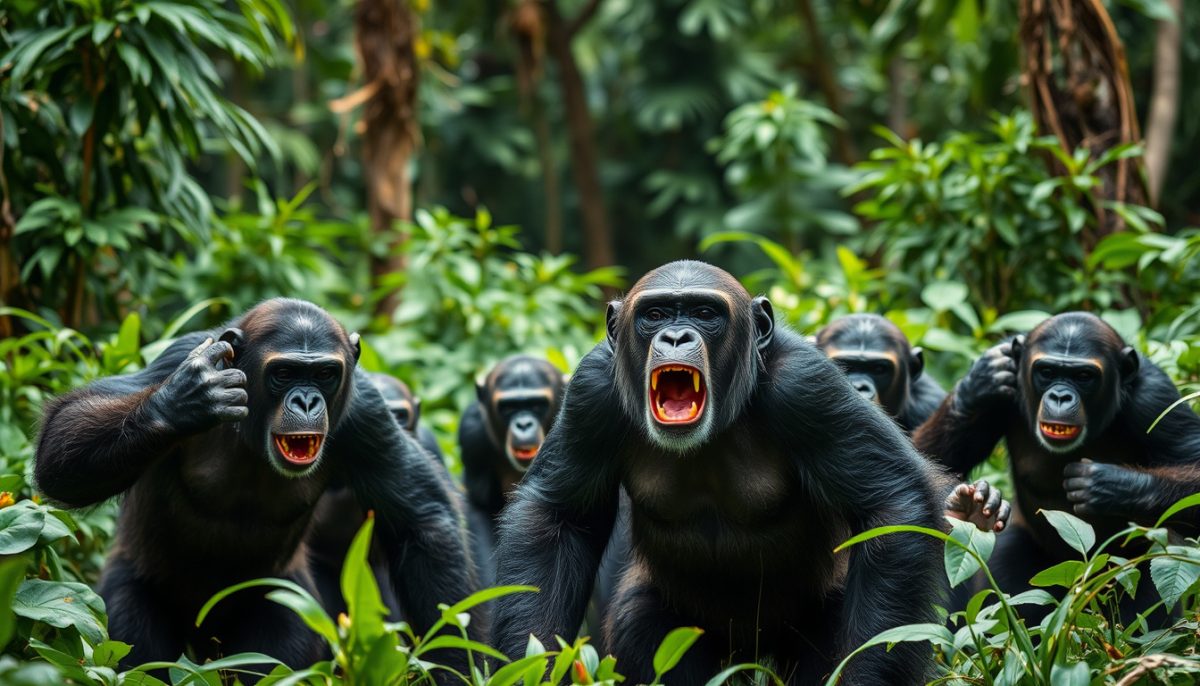
In the heart of Africa, beneath the expansive canopies of lush jungles, chimpanzees engage in silent battles driven by primal instincts of survival and dominance. Their defense of territory is not merely instinctual but represents an intricate dance of intelligence, social structure, and vocal prowess that unveils their warrior spirits.
As these sentient beings patrol their realm, they use strength and cunning to hold their ground, avoiding rival troops while building a community bond crucial for their survival.
This complex tapestry of behaviors draws the attention of observers and nature enthusiasts, offering a fascinating glimpse into the lives of our closest relatives.
What drives these intriguing creatures? Read on as we delve into the secrets of their territorial battles.
Key Takeaways
- Chimpanzees establish and defend territory to secure essential survival resources.
- Their territorial defense strategy includes aggression and strategic displays to deter rivals.
- The social structure within chimpanzee groups significantly influences their collective defense tactics.
- Vocalizations are pivotal in signaling presence and warning off intruders.
- Conservation efforts must account for chimpanzee territorial behaviors to adequately protect their habitats.
Introduction to Chimpanzee Territorial Defense
In Uganda’s vibrant forests, home to over half of the world’s remaining wild chimpanzees, a captivating dance of life unfolds. Here, our closest ancestors display levels of intelligence and emotion often mirroring our own.
How chimpanzees defend their territory reveals both their methods for establishing dominance and the resulting social impacts, shaping their communities.
By observing these interactions, we gain deeper insights into their survival mechanisms and discover striking behavioral similarities to humans.
The Importance of Territory for Chimpanzees
Chimpanzees are not merely fascinating for observation; their behaviors offer profound insights into social structures, survival, and the complexities of life.
Their territorial behavior is pivotal. Securing a territory means access to food, mates, and safety. These primates define and vigorously defend territories spanning several kilometers, the size and boundaries of which are dictated by resource availability and the presence of rival groups.
In Uganda’s dense forests, where resources like fruits and leaves are seasonal, territory defense is critical. When rival groups encroach, chimpanzees engage in vocal confrontations and, if necessary, physical displays of strength to maintain control over their space.
Interestingly, their territorial behaviors often closely resemble human strategies of boundary negotiation and social contracts. This sophisticated approach highlights their intelligence, underscoring the intricate balance between competition and cooperation in the wild.
‘The ape is not a man, but the man is an ape, and the battle for territory is the age-old song of both.’ – Unknown
Methods of Territorial Defense
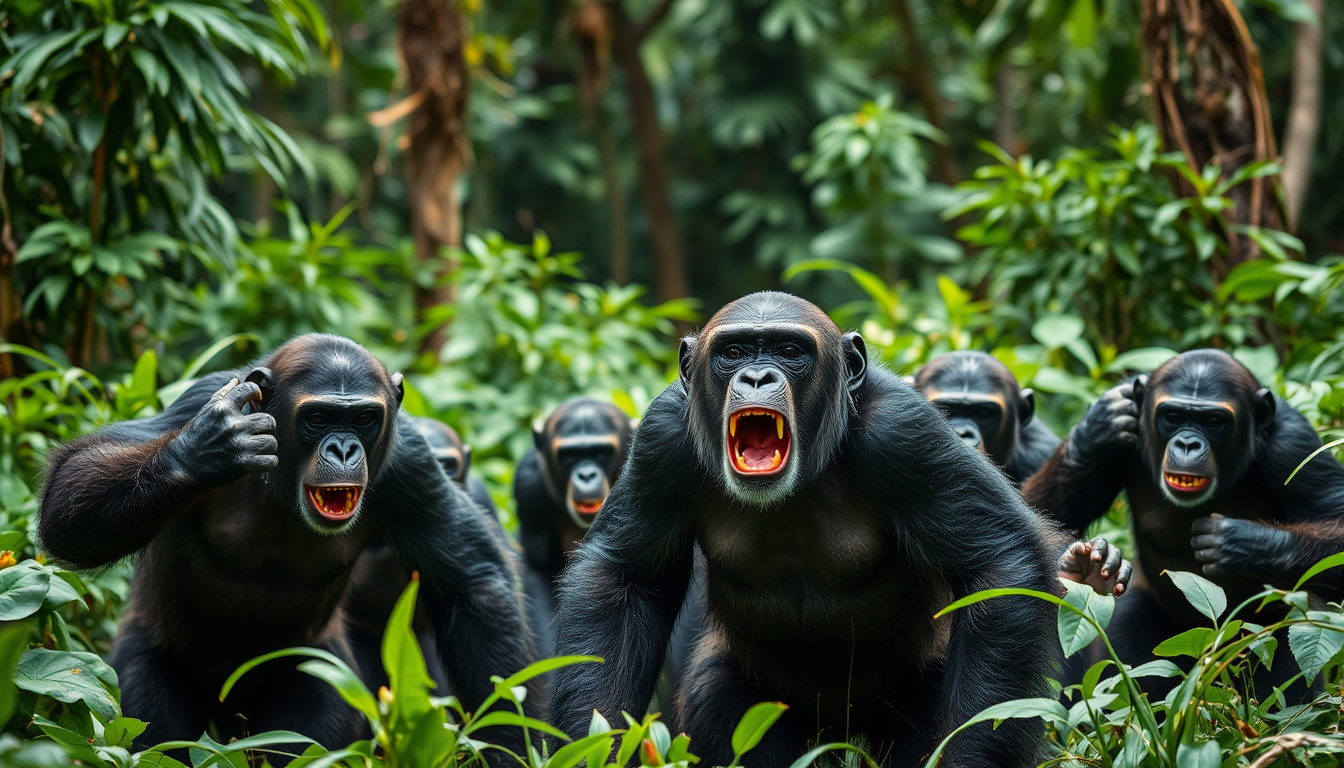
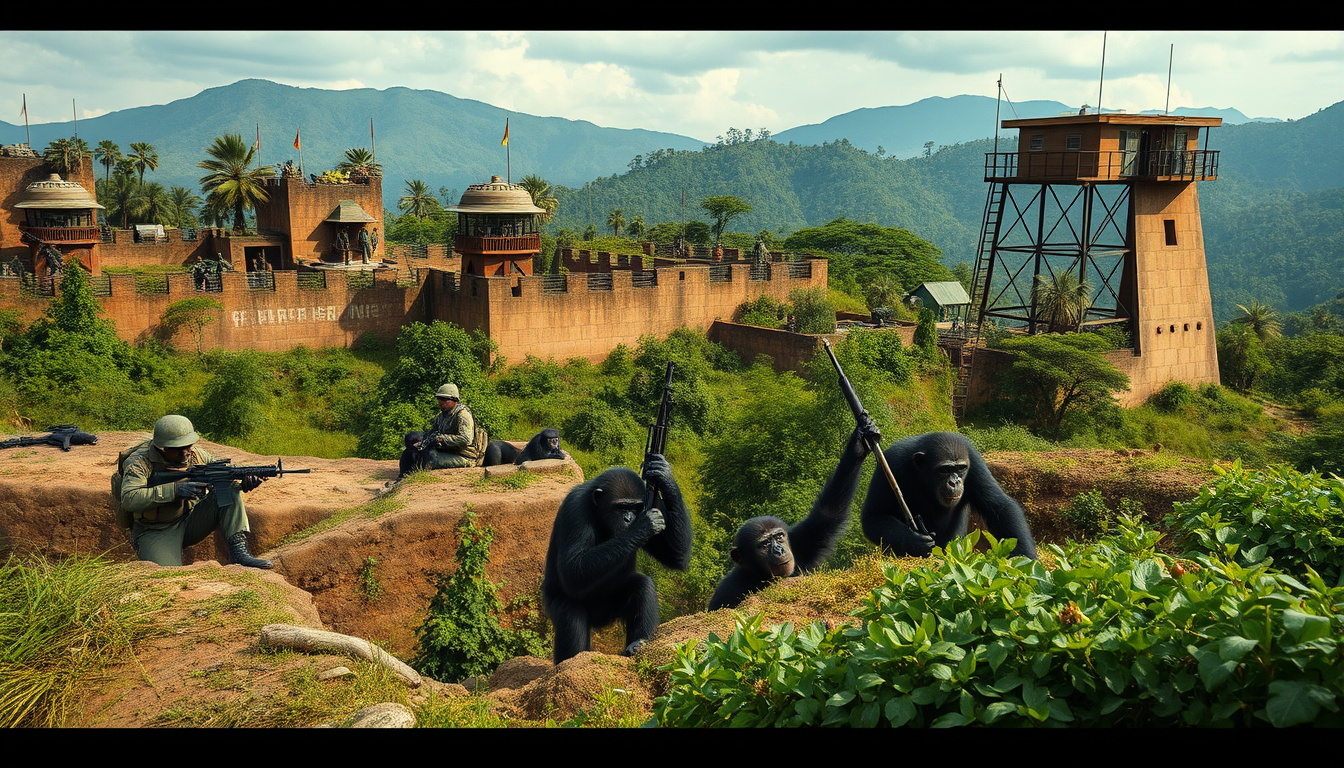
In the rich habitats of East Africa, chimpanzees employ fascinating methods of defense that rival human strategies. They use loud vocalizations, physical displays, and strategic group behaviors to fend off intruders and assert dominance.
Vocal calls play dual roles as warnings and proclamations. The echoed hoots define their territory, deterring rivals effectively without direct confrontation.
Physically, the posturing of males highlights their readiness to defend aggressions. Group patrols of their territory send a clear message of vigilance and unity to nearby troops—suggesting that there is safety in numbers.
These methods reflect a deep understanding of social dynamics and territory rights among chimpanzees. Observing these behaviors provides insights into their complex social systems, mirroring the intricate survival and community interplays found in human societies.
Social Structure and Group Dynamics in Defense
Chimpanzees demonstrate remarkable group dynamics, particularly in defense, thanks to their complex social structures. Living in groups ranging from couple dozen to over a hundred, their social hierarchy influences defensive actions significantly.
Group dynamics are crucial as chimpanzees patrol their territories collectively, using vocalizations to maintain a deterrent presence. Females and juveniles participate, reinforcing social bonds and enhancing group cohesion—a testament to the non-aggressive components of their defensive strategy.
This intelligent approach includes rich communication through vocalizations and displays, deterring intruders while avoiding outright confrontations and highlighting the importance of social bonds in their defensive strategies.

The Role of Vocalizations and Displays
The role of vocalizations and displays is paramount in chimpanzee territorial defense. These not only serve as deterrents but also solidify group cohesion.
Loud hoots and screams vary in tone, serving as alarms or rallying cries to strengthen collective defense. Physical displays reinforce this communication, boosting the group’s intimidation factor and united front.
This behavioral synergy showcases a striking parallel to human social dynamics, underlining the significance of communication and cooperation in survival.
Conservation Implications of Territorial Defense Strategies
Understanding chimpanzee territorial defense is vital for both conserving these engaging primates and protecting their habitats.
The advanced social behaviors involved in their territorial claims – from vocalizations to physical confrontations – are critical for their survival and must be considered in conservation strategies.
In regions like Uganda, conserving these behaviors is as crucial as preserving the landscapes they inhabit. Effective conservation strategies should reflect the complex interplay of chimpanzees with their environment to ensure their continued prosperity.
Frequently Asked Questions
Why do chimpanzees defend their territory?
Chimpanzees defend their territory to secure essential resources supporting survival and reproductive success.
What methods do chimpanzees use to defend their territory?
They use a mix of vocalizations, physical displays, and strategic group behaviors to defend their territory.
How does social structure influence territorial defense in chimpanzees?
The structured hierarchies and alliances within chimpanzee groups significantly enhance their territorial defense tactics.
What role do vocalizations play in chimpanzee territorial defense?
Vocalizations are crucial in deterring intruders and communicating the strength of the defending group, preventing conflicts.
Why is understanding chimpanzee territorial behavior important for conservation efforts?
Recognizing the importance of chimpanzee territorial behavior informs habitat protection strategies, ensuring the stability of their populations especially in locations affected by human activity.