

Uncovering the Ngogo Chimpanzee War: A Real Fight for Survival in Uganda
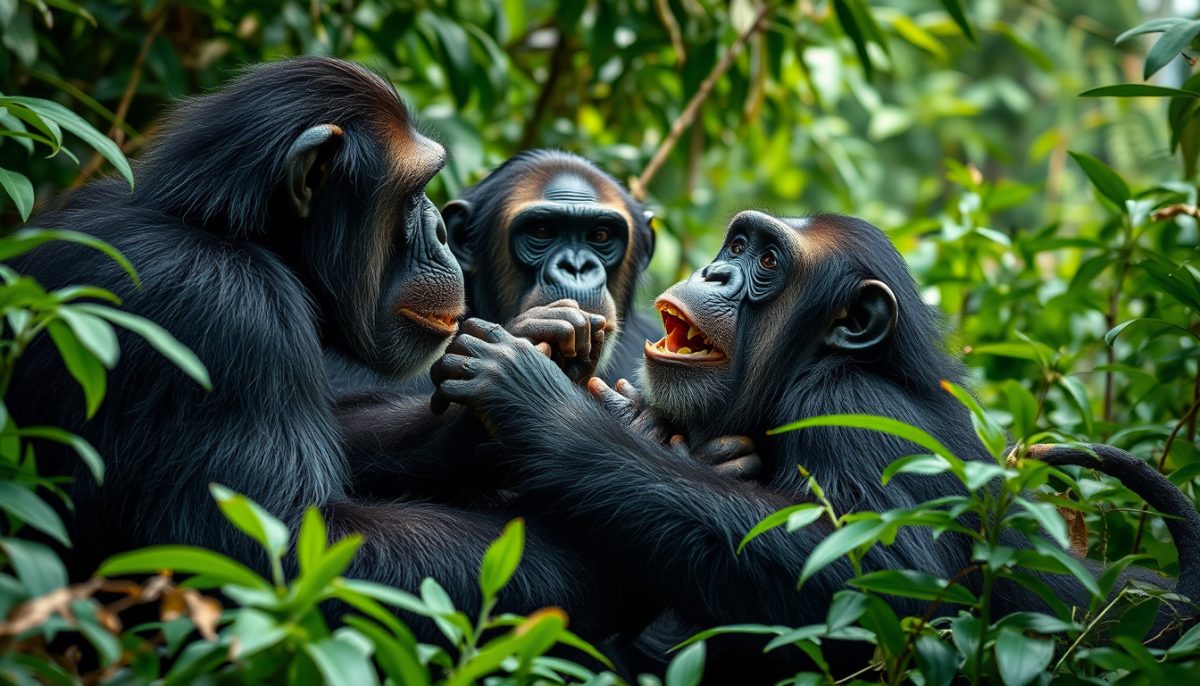
Deep in Uganda’s Kibale National Park, where green leaves rustle and bird calls echo, a dramatic story unfolds. Once united as a peaceful clan, chimpanzee groups now find themselves divided by the Ngogo Chimpanzee War. This fierce conflict puzzles researchers and challenges our perceptions of animal behavior.
The Uganda Chimpanzee Civil War: An Overview
At Ngogo, about 200 wild chimpanzees utilized the dense forests of Kibale for nourishment, shelter, and protection. In 2015, rising stress levels shattered their unity, giving rise to two factions: the Western Ngogo chimpanzees and the Central Ngogo chimpanzees.
These primates, once grooming each other and patrolling together, saw their peace disintegrate. The ensuing battle turned raw and unyielding. Lethal raids, violent power struggles, and the dissolution of bonds characterize what researchers have termed the bloodiest primate conflict on record.
Causes and Behavior: What Sparked the Ngogo Chimpanzee War?
Territorial Conflict
Chimpanzees fiercely guard their territory, patrolling, marking, and defending areas crucial for acquiring food, mates, and building nests. Initially, clearly defined borders maintained peace. However, as relationships frayed, competition intensified, catalyzing brutal clashes over terrain.
Social Hierarchy and Group Dynamics
In the societies of chimpanzees, an alpha male wields significant influence, allocating resources such as food and mates. The death of key leaders from disease and aging in 2015 marked a pivotal diversion in power dynamics. This shift severed longstanding alliances, transforming grooming sessions into platforms for suspicion and turning bridges of trust into barriers of rivalry.
The Conflict: Raids, Coordination, and Violence
The turmoil initiated with intense posturing; soon, the smaller Western group launched attacks. These chimps orchestrated raids on the Central group’s territory, targeting isolated or vulnerable individuals. By 2021, the violence had escalated significantly. The attackers kidnapped infants, committing acts of killing and mutilation. Over a decade, the conflict claimed the lives of more than 28 chimpanzees, including 19 infants.
The Western chimpanzees, employing collaboration and strategic force, mirrored tactics commonly seen in human warfare. As they grew in numbers, their adversaries weakened.

Insight Section: The Evolutionary Mirror Between Chimpanzees and Humans
This intense war provides insights into our ancestral past. Chimpanzees engage in conflict without the complexities of politics or religion, driven by the fracture of once-strong ties and vital needs. Sharing 98% of our DNA, they offer a unique perspective on natural selection and social evolution, suggesting that lethal aggression can emerge from the simplest social structures. Through understanding chimpanzees, we might find strategies to mitigate our own societal conflicts.
From Observation to Experience: Witnessing Chimpanzees in Uganda
The drama of the Ngogo war extends beyond books and screens. In Kibale, you can experience the tense lives of wild chimpanzees firsthand. Guided tours facilitate up-close encounters with these fascinating creatures, offering insights into their calls and behaviors as you traverse the verdant forests.
After your adventure, relax at the serene Igwara Lodge, located five hours from Kibale. This boutique lodge offers a tranquil space to unwind and reflect. For more information, visit https://www.igwara.com/. Combining thrilling wildlife experiences with peaceful retreats provides a comprehensive Ugandan journey.
Conclusion: Reflections on Survival, Conflict, and Coexistence
The Ngogo Chimpanzee War showcases the profound complexities of nature. Allies turned adversaries in a brutal survival contest. This stark conflict highlights basic instincts and shifting allegiances. In observing these chimpanzees, we are reminded of the value of trust and cooperation. Their relentless battle serves as a lesson that even amidst severe strife, new alliances may emerge.