


Understanding Chimpanzee Cooperation and Conflict: Insights into Their Social Dynamics
In the lush forests of Uganda, where the harmony of nature conceals an intricate web of relationships, chimpanzees engage in a daily dance of cooperation and conflict.
These intelligent primates, sharing over 98% of their DNA with humans, present a testament to evolution, showcasing a myriad of social dynamics that are as captivating as they are complex.
Beyond the tree canopies, the allure of their interactions not only reveals the essence of their survival but also challenges our understanding of social behaviors.
What drives their cooperation, and what ignites conflict?
Let us journey into the heart of chimpanzee society and explore the fascinating interplay between harmony and discord.

Key Takeaways
- Chimpanzees have complex social structures that influence their interactions.
- Cooperation among chimpanzees is crucial for group survival and resource sharing.
- Examples of cooperative behaviors highlight the intelligence and adaptability of chimpanzees.
- Conflict often arises from competition for resources and can have significant impacts on group dynamics.
- Understanding chimpanzee social behaviors can shed light on human cooperation and conflict management.
Introduction to Chimpanzee Social Structures
Chimpanzee cooperation and conflict are fascinating aspects of their social structures that not only reveal the complexity of their behaviors but also hold a mirror to our own species.
In the lush rainforests of Uganda, chimpanzees live in communities known as troops, where intricate social bonds and hierarchies develop.
These close-knit groups display remarkable cooperation in activities such as hunting, grooming, and raising young, showcasing the deep social intelligence of these primates.
However, alongside this cooperation often emerge conflicts that arise from competition for resources, mates, and social status.
Understanding how chimpanzees navigate these dynamics offers us invaluable insights into the evolution of social behavior in primates, including humans.
The Significance of Cooperation in Chimpanzee Groups
In the dense jungles of Uganda, chimpanzee groups eloquently showcase the dynamics of cooperation and conflict, resulting in both fascinating interactions and survival strategies.
Observing these primates is like watching a complex dance; they form intricate bonds, establish hierarchies, and engage in collaborative behaviors such as hunting and caregiving.
These social structures rely heavily on cooperation for day-to-day survival, whether it’s foraging together or protecting their territory against rival troops.
Research indicates that cooperative behaviors among chimpanzees can include grooming, which solidifies social bonds and reduces tension within the group.
However, these interactions are not solely peaceful.
Competition for resources like food, mates, or social standing often leads to conflict.
In their world, alliances shift, and individuals must constantly navigate the delicate balance of cooperation and conflict to thrive in their environment.
The nuances of chimpanzee interactions highlight a significant aspect of their intelligence, shedding light on the evolutionary paths that shaped human social behaviors as well.
In the subtleties of their gestures, from a gentle touch to a fierce display of aggression, chimpanzees teach us that cooperation is essential yet frail, reminding us of the intricate ties that bind us to both nature and society.
‘The greatness of a nation and its moral progress can be judged by the way its animals are treated.’ – Mahatma Gandhi
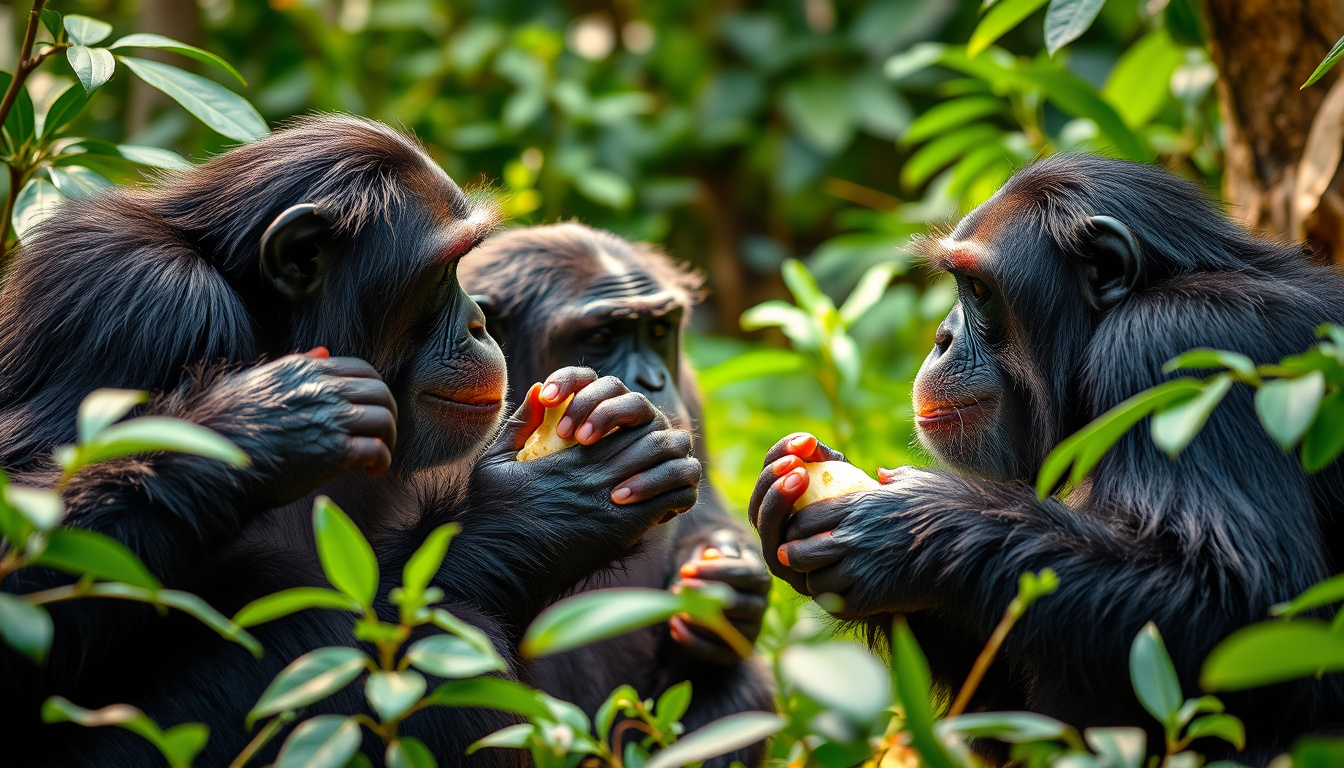
Examples of Cooperative Behaviors Among Chimpanzees
Chimpanzees are not only our closest living relatives, but they also exhibit a remarkable range of social behaviors, demonstrating both cooperation and conflict in their interactions.
One powerful example of chimpanzee cooperation is observed during hunting activities, where males often work together to hunt and capture prey, particularly in groups targeting smaller monkeys like red colobus.
This collaborative effort not only increases their success rate but also strengthens social bonds among the hunters, enabling them to share the rewards more effectively.
In contrast, conflict can arise during these cooperative endeavors, especially when multiple groups compete over the same resources.
For instance, when there’s a successful hunt, rival groups may engage in aggressive encounters