

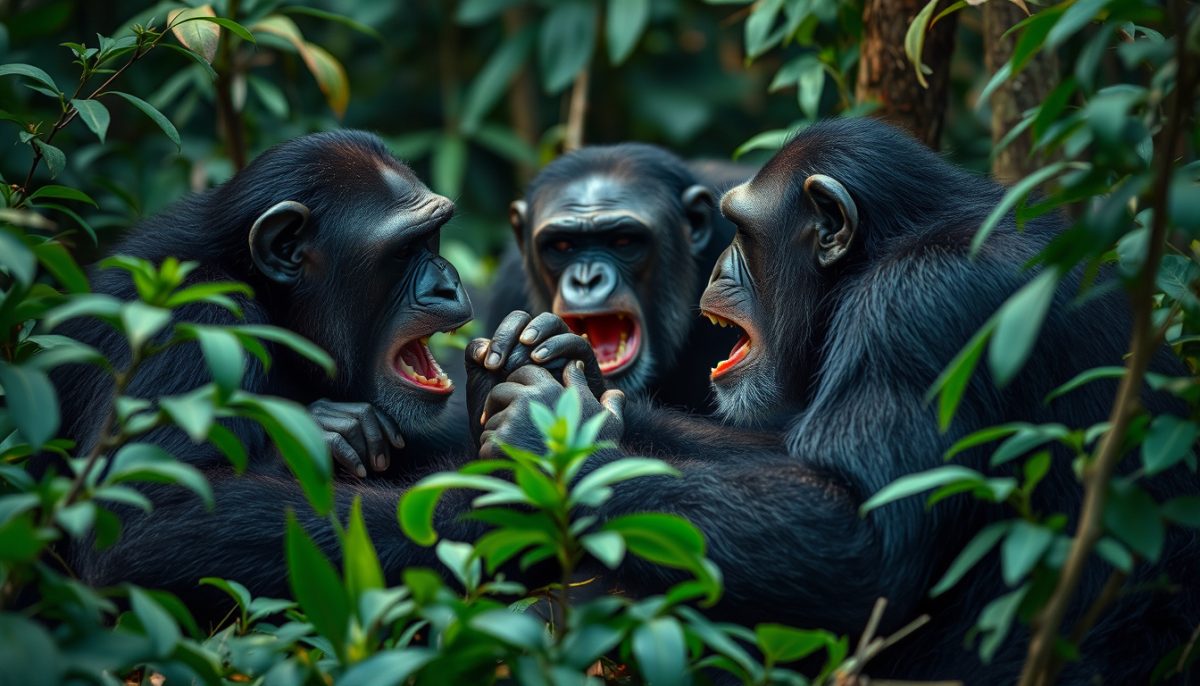
Unveiling the Savage Side: Why Do Chimpanzees Engage in Wars?
High in the verdant canopies of Uganda, a complex world unfurls – one where chimpanzees, our closest living relatives, engage in fierce skirmishes echoing human warfare tactics. But why do chimpanzees engage in wars?
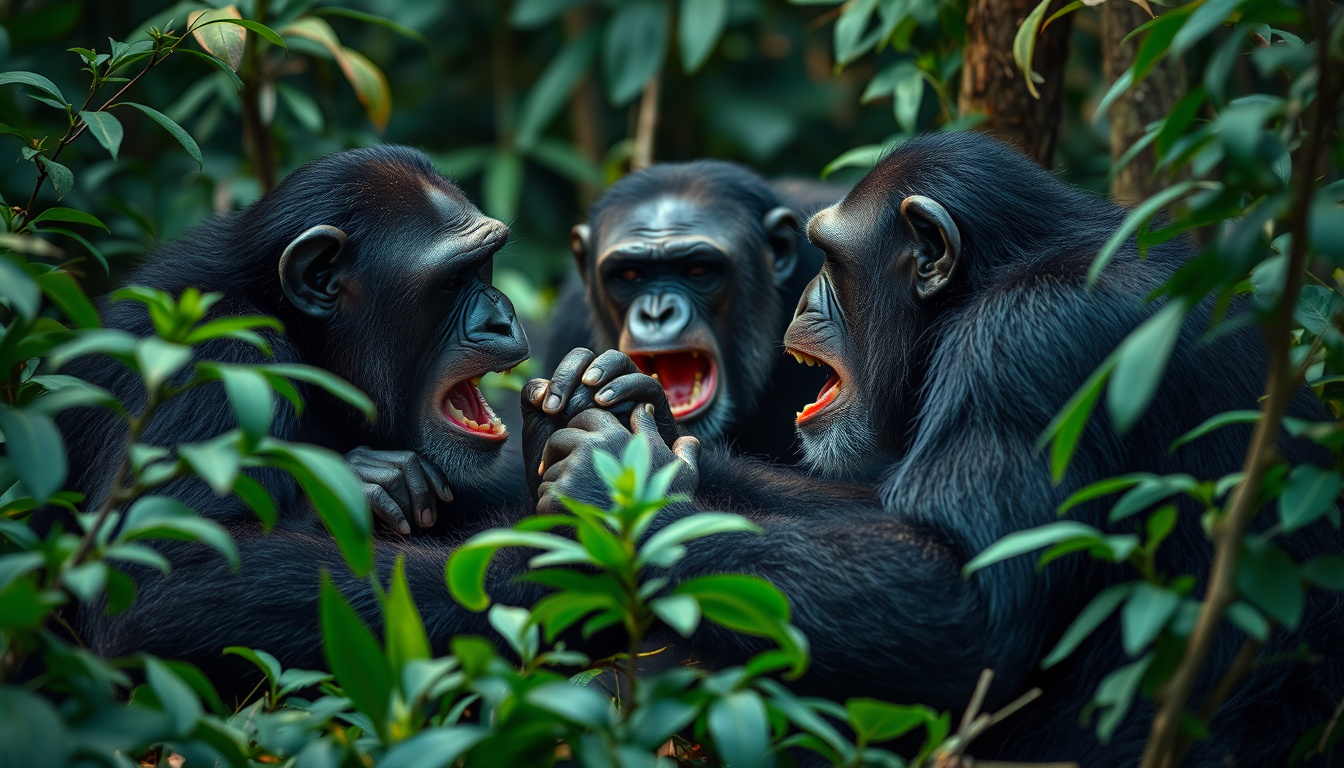
Behind the tender moments of grooming and playful antics lies a darker tale of aggression and territorial disputes.
As the sun filters through the trees, shadows of these majestic creatures reveal a profound truth of nature: the struggle for survival often pits one against another.
In this exploration, we will dive deep into the motivations, social structures, and conflicts that drive chimpanzee behavior, illuminating the savage side of these intelligent primates.
Key Takeaways
- Chimpanzees engage in wars primarily due to territorial disputes.
- Aggression in chimpanzees is driven by competition for resources and social dominance.
- The social hierarchy within a chimpanzee community influences the dynamics of warfare.
- Notable case studies reveal that chimpanzee wars can be both brutal and strategic.
- Studying chimpanzee conflicts can provide insights into the evolutionary roots of human aggression.
Understanding Chimpanzee Behavior: An Introduction
In the lush, verdant landscapes of Uganda, the nuanced lives of chimpanzees unfold, often mirroring human interactions.
With their complex social structures and profound intelligence, chimpanzees surprise us with their capacity for conflict. But why do chimpanzees engage in wars?
To understand this, we delve into their social dynamics, territorial disputes, and the underlying motivations driving these incredible creatures to aggressive behaviors.
Like humans, chimpanzees experience competition for resources, social hierarchies, and the struggle for survival, which can occasionally escalate into violent confrontations.
Observations made in the wild have revealed chilling instances of organized raids and aggressive encounters among different communities of chimpanzees, akin to human warfare, inviting us to explore the dark yet fascinating aspects of their social interactions.
What Drives Aggression in Chimpanzees?
Understanding the aggressive behaviors of chimpanzees can shed light on the fascinating social dynamics within their communities.
Research has revealed that aggression among chimpanzees often stems from competition for resources, mating opportunities, and territory.
In the wild, these primates live in structured hierarchies, where dominance influences their social interactions.
Conflicts can arise when groups infringe on each other’s territory, leading to skirmishes that escalate into organized attacks.
This behavior mirrors certain aspects of human conflict, particularly in terms of group loyalty and defense of territory against perceived threats.
Moreover, chimpanzees have been observed exhibiting complex social strategies that contribute to their aggression, such as forming alliances or coalitions during conflicts. These social bonds make attacks more effective, showing that their conflicts are deeply rooted in social hierarchies and relationships.
‘In the wild, the world is not a stage and the creatures are not actors. They are all in play, and exhibit violence and cooperation, all dictated by the fundamental laws of survival.’ – Unknown
The Concept of Territory and Its Role in Chimpanzee Conflicts
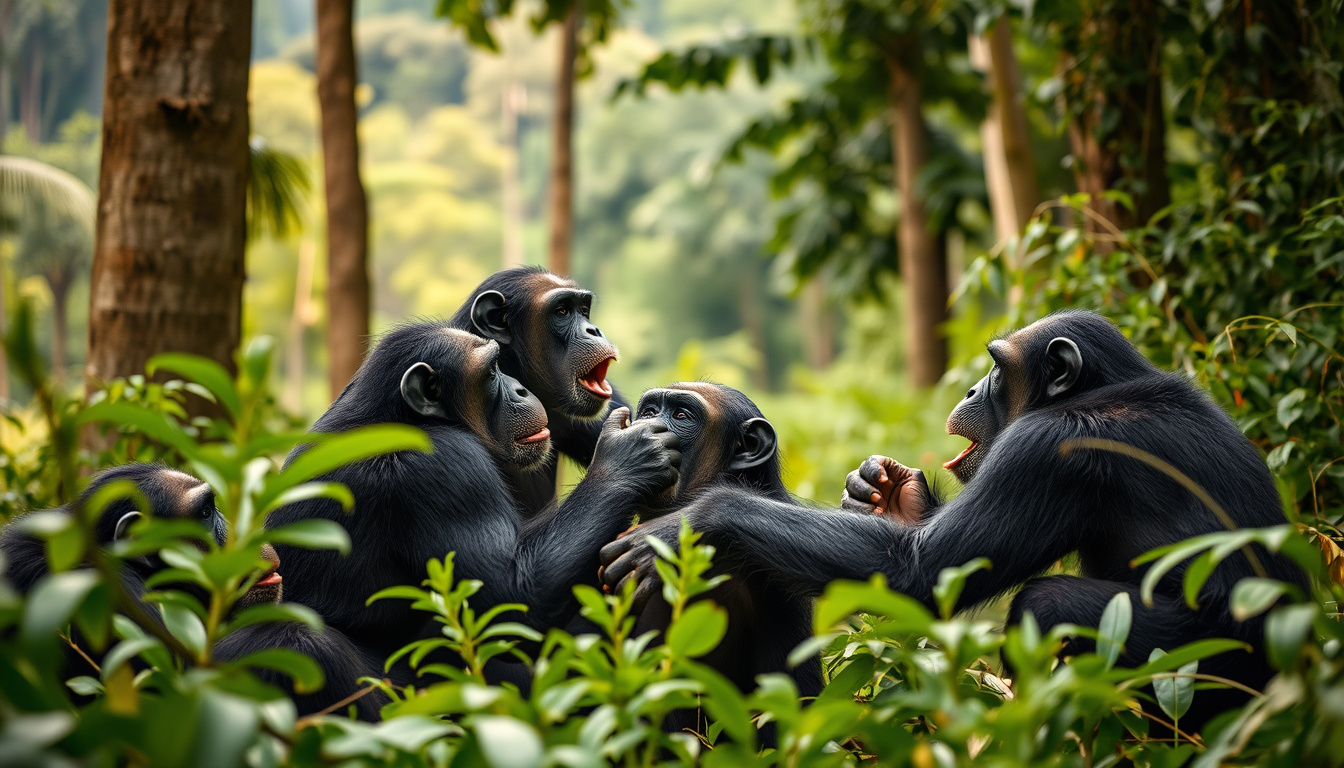
In the lush landscapes of Uganda, chimpanzees—our closest relatives—forge a world filled with social hierarchies, alliances, and occasionally, violent conflicts.
Why do chimpanzees fight wars, you ask? The answer lies deep within their enigmatic social structure and individual behaviors, akin to human societies.
For chimpanzees, territory is vital; it serves as a resource hub, providing food, shelter, and security.
Territory acts as both a physical and social marker, establishing the boundaries within which a specific community operates. Each community, consisting of 20 to 150 individuals, fiercely defends its territory against encroachment from other groups.
This territoriality drives chimpanzees to engage in conflicts, where they demonstrate aggression and assertiveness, echoing a battle for surviva